Nobel Prize in Chemistry Awarded for Mirror-Image Molecules
Henri B. Kagan and Kenso Soai share the 12 million kronor award for discovering how chemical reactions can selectively amplify single mirror-image molecules.
Key takeaways
- Henri B. Kagan and Kenso Soai won the 2026 Nobel Prize in Chemistry for discoveries in non-linear effects and autocatalysis in asymmetric organic synthesis.
- The laureates solved a century-old question of how chemical reactions can produce a single mirror-image form, or homochirality, without relying on preexisting biological chiral templates.
- The discoveries underpin modern methods for manufacturing pure single-enantiomer pharmaceuticals, agricultural chemicals, and fragrances.
The Royal Swedish Academy of Sciences awarded the 2026 Nobel Prize in Chemistry on October 7, 2026, to Henri B. Kagan and Kenso Soai for discovering how chemical reactions can selectively generate an overwhelming excess of a single mirror-image molecule. According to the Nobel Prize press release, the duo received the honor "for the discovery of non-linear effects and autocatalysis in asymmetric organic synthesis." Kagan, 95, professor emeritus at the Université Paris-Sud in France, and Soai, 76, professor emeritus at the Tokyo University of Science in Japan, will equally split the 12 million Swedish kronor prize (approximately $1.2 million).
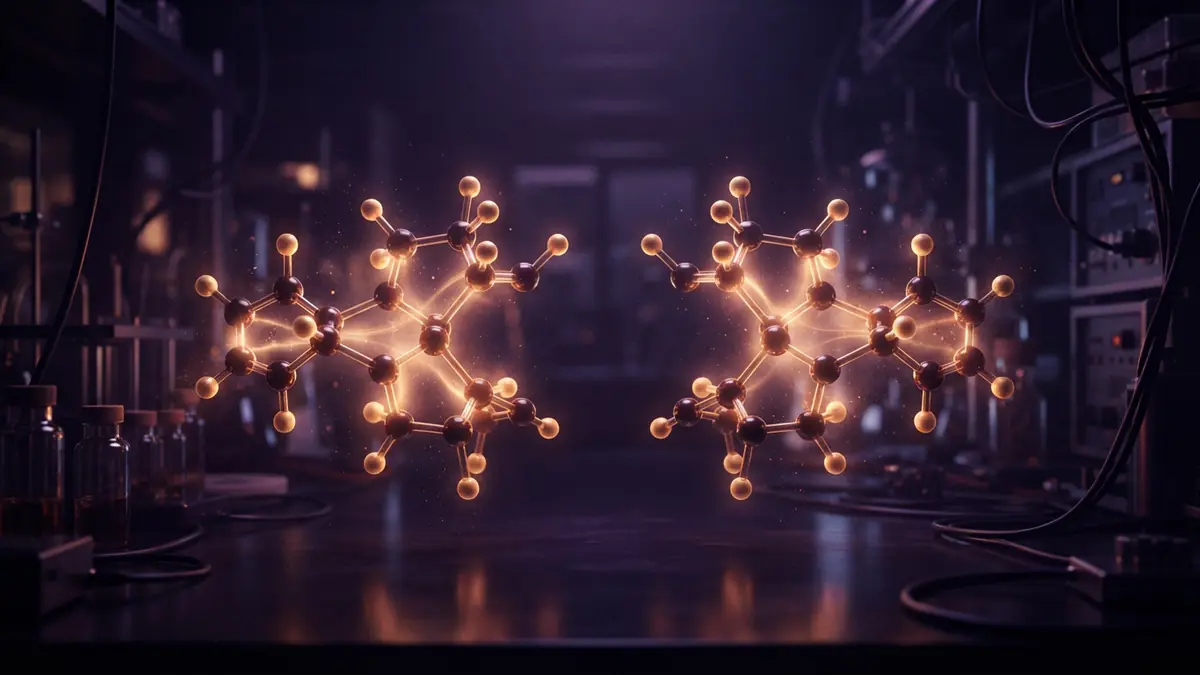
Many chemical compounds display chirality, a property where two molecular structures contain identical atoms arranged as nonsuperimposable mirror images of one another, like left and right hands. In living organisms, biological architecture is homochiral: proteins consist almost entirely of left-handed amino acids, while DNA and RNA backbones rely on right-handed sugars. Laboratory reactions historically generated an equal, 50-50 mixture of both enantiomers, leaving scientists without an explanation for how biological one-handedness arose or how to reliably duplicate that selectivity in industrial chemistry.
Solving a Century-Old Molecular Mystery
When molecules interact with living systems, their three-dimensional orientation dictates how they function. Mirror-image molecules can exhibit completely different biological activity. For example, one enantiomer of carvone smells like mint, whereas its mirror image smells like caraway seed, as reported by Phys.org. In pharmacology, chirality is critical: the drug thalidomide caused severe birth defects in thousands of children during the 1960s because its two mirror-image forms exhibited vastly different biological consequences in the human body.
"Henri Kagan and Kenso Soai have provided a solution to a chemical mystery that is over a century old: how homochirality can emerge spontaneously. The chemical reactions they have developed are spectacular," said Heiner Linke, chair of the Nobel Committee for Chemistry, in the official academy announcement. Linke noted that Soai's reaction represented the first time since the prebiotic origin of life that an organic reaction spontaneously produced a single mirror image without the initial involvement of other chiral compounds.
From Non-Linear Catalysis to Autocatalytic Amplification
The road to controlling molecular handedness began in 1986. Kagan examined asymmetric reactions and discovered non-linear effects: pairing unequal mixtures of catalyst enantiomers could trigger a far greater proportion of a single mirror-image product than the catalytic ratio predicted, according to The Guardian. Kagan's breakthrough revealed that reaction pathways could naturally magnify slight chiral imbalances.
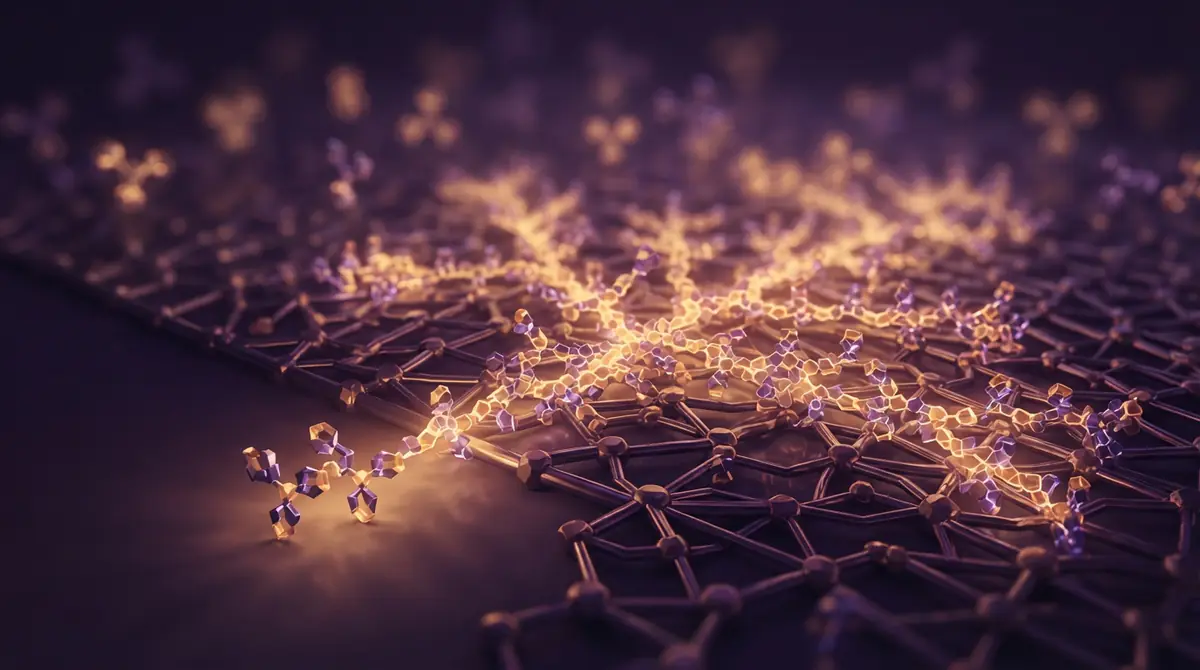
Soai expanded on Kagan's findings by designing reactions capable of autocatalysis, where the resulting product molecule functions as a catalyst to produce copies of itself. In 1995, a key publication described how Soai designed the first chemical reaction that had the potential to be homochiral, and in 2003, his team demonstrated a reaction that amplified tiny, minute initial imbalances into a product that was almost 99.99 percent composed of a single enantiomer, as documented by The Scientist. Peter Somfai, an organic chemist at Lund University and member of the Nobel Committee for Chemistry, called Soai's demonstration "probably the coolest experiment in organic chemistry ever."
Speaking by phone to the Royal Swedish Academy of Sciences, Soai said hearing the news was "one of the most exciting days of my life" and expressed pride that his laboratory work offered a plausible explanation for the spontaneous origins of life's homochirality. In France, President Emmanuel Macron praised Kagan's lifetime of research, calling the award an immense source of national pride.
Industrial Impact on Drug Discovery and Synthesis
The laureates' work transformed the baseline protocols that synthetic organic chemists use to build therapeutic compounds. Because human cellular receptors and drug targets are chiral, producing pure single enantiomers prevents dangerous side effects and improves pharmacological efficacy. The insights of non-linear effects and self-amplification are now standard considerations across pharmaceutical, agrochemical, and fragrance manufacturing facilities worldwide.
"It might be difficult to say that this drug or that drug was developed using this. I would say all of them because we use this as a tool. We use this as an understanding of how to develop catalysts and how they function," Somfai explained to The Guardian. Dawn George, interim chief science officer at CAS, noted to The Scientist that the duo's pioneering research gave chemists a stronger foundation for making chiral drug molecules.
With the chemistry prize decided, the Nobel Foundation schedule proceeds with the literature prize on Thursday, the peace prize on Friday, and the Nobel Memorial Prize in Economic Sciences on Monday.
Frequently asked questions
What is molecular chirality?
Chirality refers to molecules that exist in two forms containing identical atoms arranged as nonsuperimposable mirror images of one another, like left and right hands.
Why is homochirality critical for medicines?
Because biological targets like proteins and DNA are chiral, one mirror-image form of a pharmaceutical may provide therapeutic value, while the other enantiomer could be ineffective or cause harmful side effects.
What is the Soai reaction?
The Soai reaction is an asymmetric autocatalytic reaction discovered by Kenso Soai where the reaction product acts as a catalyst to reproduce itself, amplifying minor initial imbalances into a near-pure single mirror-image product.
Sources
- Nobel prize in chemistry awarded for work on mirror-image moleculesThe Guardian · Oct 7, 2026
- Scientists win chemistry Nobel for discoveries about mirrored molecules that led to many drugsPhys.org · Oct 7, 2026
- Nobel Prize in Chemistry 2026NobelPrize.org
- Chemistry Nobel Prize for Asymmetric Organic Synthesisthe-scientist.com · Oct 7, 2026
How this story was made: the newsroom picked it up from phys.org, science.org and Google News, gathered the full text of the sources above, and drafted it with AI assistance. Every factual claim was then checked against those sources before publishing (22 claims checked). Illustrations marked as AI-generated are not photographs. Spotted an error? Tell us.
Published October 8, 2026 at 00:09 UTC