Shankar Balasubramanian Awarded 2026 Wolf Prize in Chemistry
The Indian-born Cambridge chemist shares the award with David Klenerman and Pascal Mayer for pioneering high-speed, low-cost next-generation sequencing.
Key takeaways
- Shankar Balasubramanian, David Klenerman, and Pascal Mayer share the 2026 Wolf Prize in Chemistry for creating low-cost, large-scale DNA sequencing methods.
- The sequencing approach achieved a million-fold improvement in speed and cost, reducing the cost of human genome sequencing to under $200.
- The 2026 Wolf Prizes honor eight laureates across medicine, physics, chemistry, and mathematics, with the official ceremony scheduled for June 2027 in Jerusalem.
University of Cambridge chemist Shankar Balasubramanian has been named a recipient of the 2026 Wolf Prize in Chemistry. Announced at the President's Residence in Jerusalem, the award honors Balasubramanian alongside British physical chemist David Klenerman and French scientist Pascal Mayer for their foundational work in creating high-speed, low-cost DNA sequencing methods that reshaped modern genomics.
According to the Wolf Foundation, the trio received the award "for developing impactful, low-cost, large-scale DNA sequencing methods for genomic medicine." Their collective contributions laid the technical foundations of Next-Generation Sequencing (NGS), which replaced slow, expensive laboratory procedures with massively parallel reading systems.
The Chemistry Behind Next-Generation Sequencing
Balasubramanian's path to the award began with fundamental investigations into single-molecule DNA synthesis. Working in collaboration with Klenerman at Cambridge, he invented a massively parallel, solid-phase enzymatic sequencing method, as reported by Hayadan.
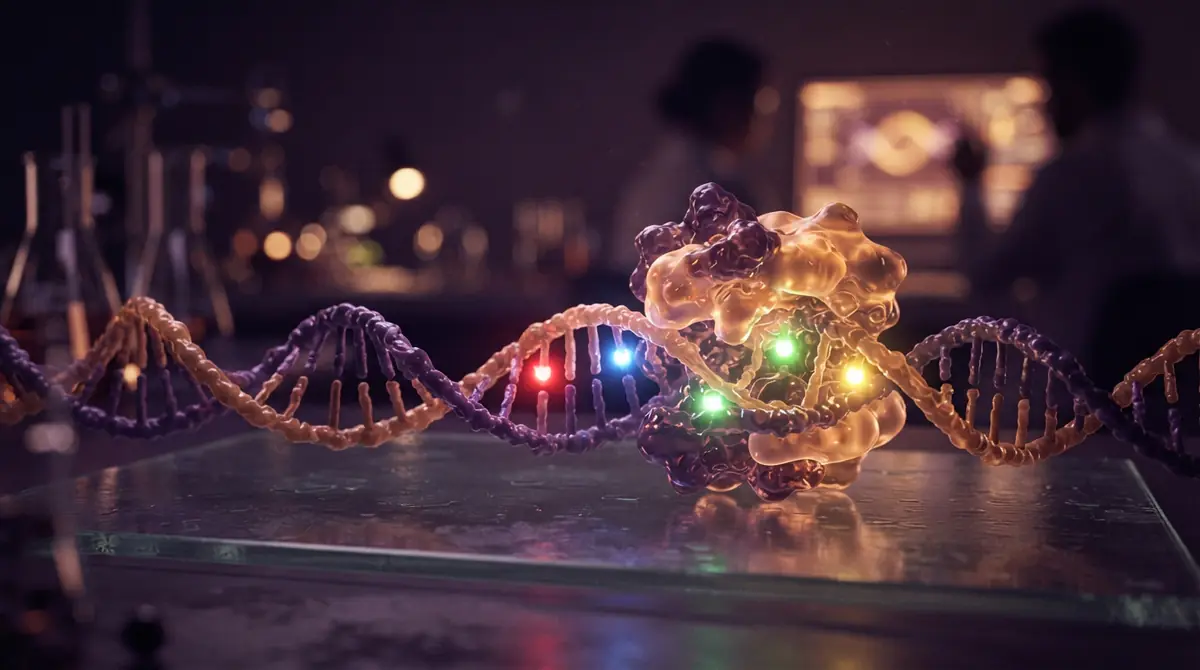
The technique relies on immobilizing DNA fragments on a surface inside a flow cell and reading their sequences base by base using DNA polymerase. The system integrates fluorophore-coded nucleotides equipped with a reversible block. When an enzyme incorporates a matching base into the growing complementary strand, the device records a fluorescent optical signal. The block and fluorescent marker are then removed chemically, allowing the enzyme to add the next base in subsequent cycles.
To commercialize the discovery, Balasubramanian and Klenerman co-founded Solexa. The resulting technology delivered a million-fold improvement in sequencing speed and cost, enabling a human genome to be sequenced for under $200, according to the Wolf Foundation.
Complementary Breakthroughs in Signal Amplification
The chemistry prize recognizes complementary innovations that made large-scale sequencing practical. While Balasubramanian and Klenerman contributed the sequencing chemistry, polymerase mechanics, and fluorescence microscopy tools, Pascal Mayer resolved the issue of detecting faint optical signals from individual molecules.
As noted by Hayadan, Mayer conceived the idea of creating DNA colonies directly on a surface in 1996, filed patent applications in 1997, and demonstrated experimental proof in 1998. By generating localized stacks of identical DNA copies, Mayer's amplification technique produced distinct, intensified signals that optical cameras could read reliably across millions of sites simultaneously. This colony technology, initially developed at Manteia, was subsequently integrated into the Solexa platform.

The 2026 Wolf Prize Laureates and Ceremony
The Wolf Prize is awarded annually by the President of the State of Israel to recognize achievements in the interest of humanity. The 2026 announcement recognized eight laureates across four scientific fields, reported JNS.
In medicine, Charles S. Zuker of Columbia University received the prize for research uncovering the cellular receptors and neural pathways underlying the sense of taste. The physics prize went jointly to Immanuel Bloch of the Max Planck Institute and LMU Munich and Jun Ye of NIST and the University of Colorado for advances in ultracold atomic systems, optical lattices, and optical atomic clocks. The mathematics prize was awarded to David Kazhdan of the Hebrew University of Jerusalem and Joseph Bernstein of Tel Aviv University for foundational work in geometric representation theory.
Five of this year's laureates—Balasubramanian, Klenerman, Kazhdan, Bernstein, and Bloch—have received funding support from the European Research Council, according to the ERC. Balasubramanian previously received an ERC Advanced Grant in 2013 to study the chemical biology of RNA G-quadruplexes.
Each prize category includes a certificate and a $100,000 monetary award. The laureates are scheduled to formally receive their awards at a ceremony at the Knesset in Jerusalem in June 2027.
Frequently asked questions
Who shares the 2026 Wolf Prize in Chemistry?
Shankar Balasubramanian shares the prize with David Klenerman of the University of Cambridge and Pascal Mayer of the University of Strasbourg.
What specific achievement is recognized by the chemistry award?
The award recognizes the development of low-cost, large-scale next-generation DNA sequencing methods used in genomic medicine.
When will the 2026 Wolf Prize ceremony take place?
The official award ceremony is scheduled to be held at the Knesset in Jerusalem in June 2027.
Sources
- Shankar BalasubramanianWolf Foundation · Oct 1, 2026
- Five ERC grantees win 2026 Wolf PrizesERC · Sep 17, 2026
- 2026 Wolf Prize laureates announcedIsrael & Jewish News - JNS · Oct 4, 2026
- From DNA reading to atomic clocks: The other six winners of the 2026 Wolf Prizeהידען - Hayadan · Oct 3, 2026
- Shankar Balasubramanian wins 2026 Wolf Prize in Chemistry | New India Abroadnewindiaabroad.com · Oct 2, 2026
- Shankar Balasubramanian - Mashable Indiain.mashable.com · Oct 2, 2026
How this story was made: the newsroom picked it up from Google News, gathered the full text of the sources above, and drafted it with AI assistance. Every factual claim was then checked against those sources before publishing (26 claims checked). Illustrations marked as AI-generated are not photographs. Spotted an error? Tell us.
Published October 5, 2026 at 01:15 UTC