Google DeepMind Launches SynthID Bio to Watermark AI-Designed Proteins
DeepMind's open-source tool embeds verifiable signatures into synthetic amino acid sequences and structural models to bolster DNA synthesis screening.
Key takeaways
- Google DeepMind introduced SynthID Bio on September 30, 2026, embedding imperceptible yet highly detectable signatures into AI-designed protein sequences and 3D structures.
- Wet-lab experiments showed watermarked protein binders matched non-watermarked designs in hit rate, natural diversity, and binding affinity across three target proteins.
- SynthID Bio supports sequential generation tools like ProteinMPNN and fine-tunes AlphaFold 3 weights to preserve structural accuracy while embedding signatures.
- DeepMind released its methods paper in Nature, open-sourced the SynthID Bio repository on GitHub, and shared model weights and in vitro datasets with the research community.
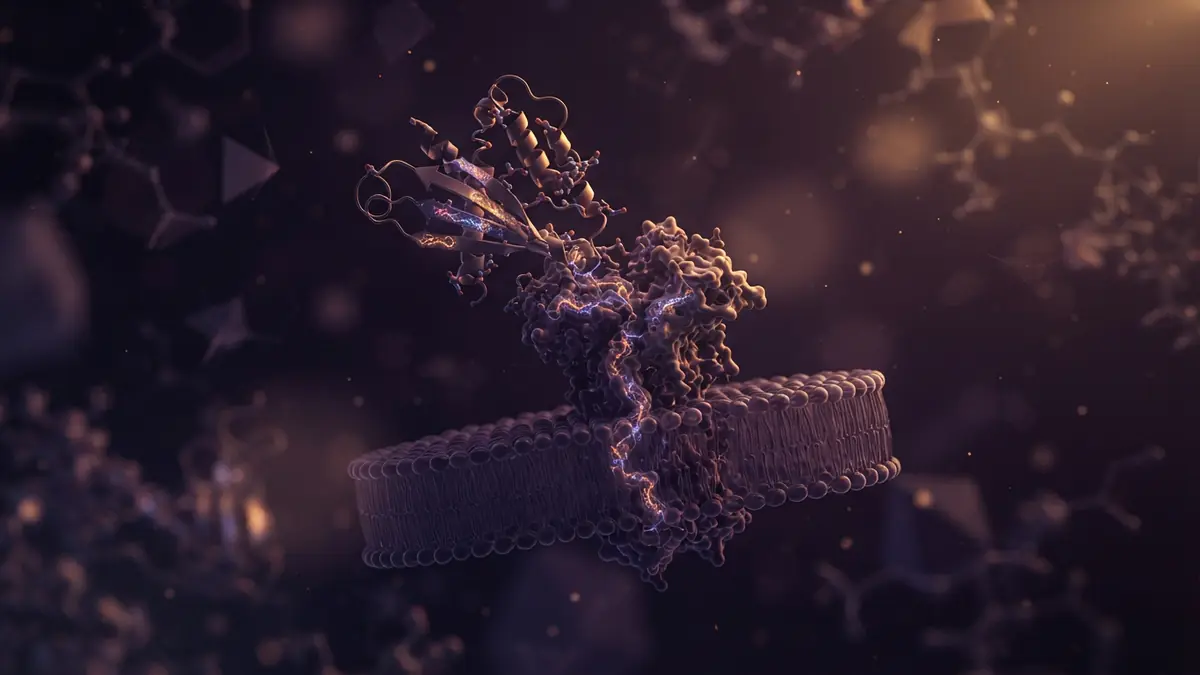
Google DeepMind announced SynthID Bio on September 30, 2026, establishing a watermarking framework that inserts imperceptible yet highly detectable signatures into AI-designed protein sequences and predicted 3D structures. The technique enables biosecurity screeners and researchers to identify AI-generated biological designs without disrupting their physical shape or biological function.
Generative AI models have accelerated the creation of novel proteins, but they present novel risks for biosecurity. Digital designs converted into physical molecules must pass screening checks at commercial DNA synthesis providers. Traditionally, screeners evaluated unknown orders against databases of documented biological hazards, but novel AI sequences rarely match cataloged pathogens. By embedding watermarks directly into the biological code, SynthID Bio provides an automated signal verifying that an engineered molecule originated from a trusted model with safety guardrails.
How SynthID Bio Embeds Watermarks in Sequences and Structures
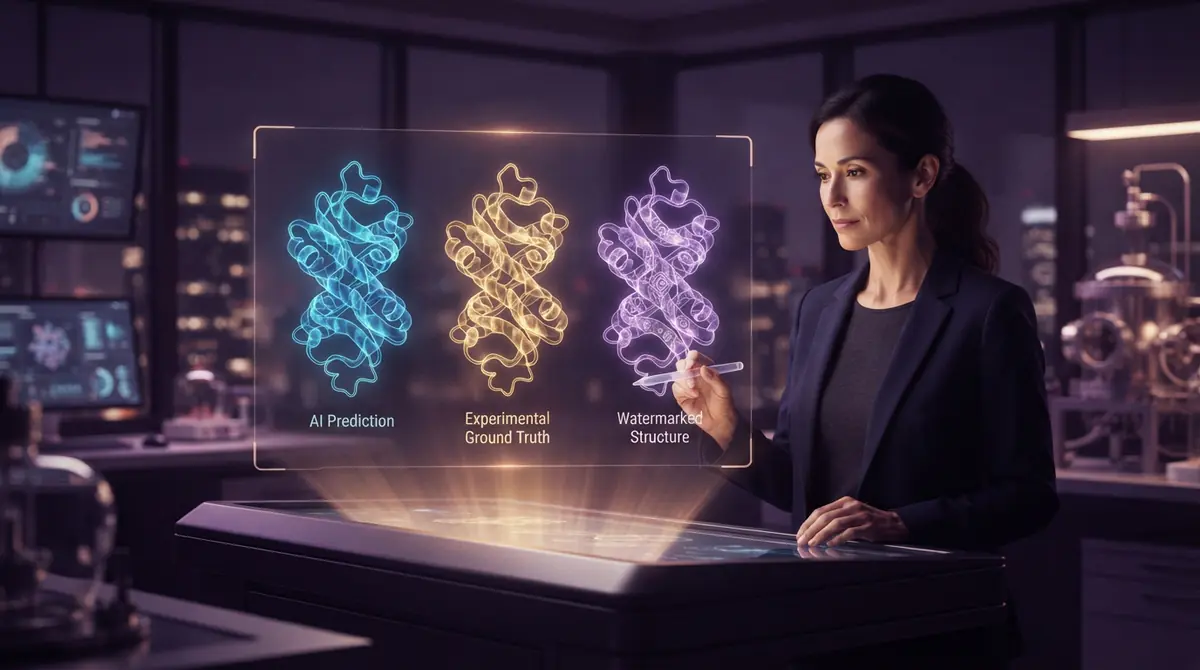
SynthID Bio adapts its marking strategy based on whether it is processing linear sequence code or complex spatial coordinates. For autoregressive sequence generation models such as ProteinMPNN, the system integrates during step-by-step decoding. As the model selects amino acids to populate a structural backbone, SynthID Bio uses cryptographic-style integer keys to evaluate potential residue options. It introduces a subtle bias toward watermark-compatible amino acids, picking them only when they preserve the physical constraints and chemical requirements of the protein backbone.
For 3D biomolecular structures, DeepMind fine-tuned a small portion of the diffusion network in AlphaFold 3. This alteration embeds the watermark directly into the model's underlying weights. When the modified model generates atomic coordinates, the resulting spatial output inherently contains a detectable signature that survives minor digital noise and coordinate shifts without reducing AlphaFold 3's baseline prediction accuracy, according to Google DeepMind's announcement.
DeepMind published the technical details of the framework in a paper titled "Function-preserving watermarking of AI-generated proteins" in Nature.
Wet-Lab Validation Confirms Biological Function
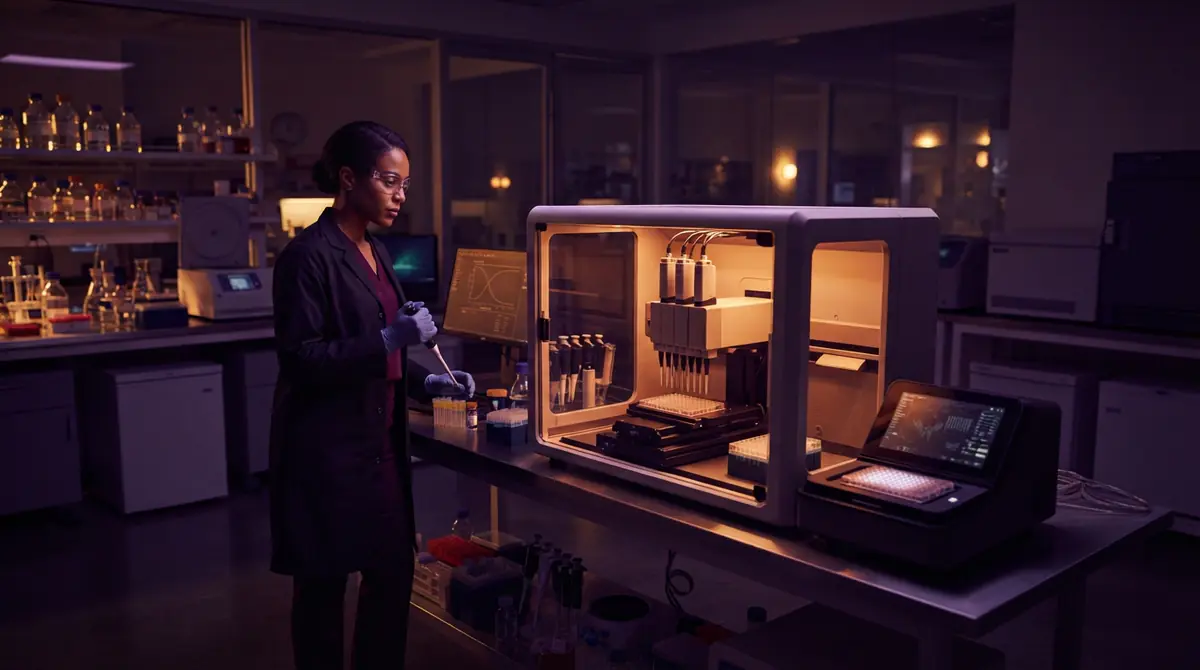
Embedding data into physical macromolecules carries significant risk because minor alterations to a sequence of 20 natural amino acids can destroy folding stability or eliminate binding activity. To verify that watermarking does not ruin protein efficacy, DeepMind conducted wet-lab validation alongside Adaptyv Bio on protein binders designed using AlphaProteo and a SynthID Bio-modified version of ProteinMPNN.
Researchers evaluated watermarked binders against three biological targets: VEGF-A, the SARS-CoV-2 spike protein receptor-binding domain (RBD), and PD-L1. In laboratory assays, watermarked binders matched non-watermarked counterparts across hit rates, natural sequence diversity, and binding affinity ($K_D$). According to Help Net Security, matching hit rates demonstrated that researchers did not lose functional binding candidates when embedding the watermark.
Detection of the sequence watermark operates statistically by computing average g-values across the length of the protein. The synthidbio repository on GitHub notes that baseline non-watermarked designs register expected g-values around 0.5, whereas watermarked sequences yield higher g-values based on context windows and key layers.
Strengthening Biosecurity Screening and Database Integrity
DeepMind frames SynthID Bio as an integral component of a layered "Swiss cheese" defense model for biosecurity. In synthesis screening, DNA providers can run detection scripts over submitted orders. If a sequence checks out with a recognized model signature, synthesis screeners can verify its origin and focus manual investigative resources on unverified or anomalous requests.
James Diggans, Vice President of Policy and Biosecurity at Twist Bioscience, noted in feedback cited by Unite.AI that watermarking provides a promising addition to the biosecurity toolbox that can streamline review pipelines as generative biology tools expand. Sarah Carter, a biosecurity policy expert and Principal at Science Policy Consulting, added that linking designs directly to model developers allows gene synthesis providers to verify provenance efficiently.
The watermark also offers utility for open biological repositories such as GenBank, UniProt, and the Protein Data Bank. When researchers upload synthetic or AI-predicted entries, automated watermark scanning can prevent mislabeled synthetic 3D structures from contaminating downstream datasets.

Open Release and Next Steps in Genomic Watermarking
DeepMind open-sourced the SynthID Bio code repository on GitHub and released the model weights to the research community alongside in vitro validation datasets, according to Google DeepMind. The repository provides drop-in Python modules for ProteinMPNN and standalone FASTA g-value calculation scripts, directing users to the AlphaFold 3 repository for structural weight download instructions.
Despite these developments, DeepMind acknowledged technical limitations. SynthID Bio's detection strength depends on sequence length, meaning short peptides provide fewer positions to hide signals. Watermarks can also be diluted if a watermarked sequence is fused to long natural proteins, and the method currently faces challenges against deliberate adversarial tampering. DeepMind highlighted the need to combine sequence watermarking with provenance standards similar to C2PA and central registries of biological designs.
Looking beyond individual proteins, DeepMind is working with the Hie lab at Stanford University and the Arc Institute to watermark full genomes. The team integrated SynthID Bio into Evo 2, an advanced genomic foundation model, to watermark synthetic bacteriophages. Early culture tests confirmed the watermarked phages remain fully functional, with a dedicated technical manuscript planned for release.
Frequently asked questions
What is SynthID Bio?
SynthID Bio is an open-source watermarking technology developed by Google DeepMind that embeds imperceptible yet highly detectable signatures into AI-designed protein sequences and 3D molecular structures to verify origin and provenance.
Does watermarking a protein affect its biological performance?
No. In wet-lab testing across targets like VEGF-A, PD-L1, and the SARS-CoV-2 spike protein RBD, watermarked binders matched unwatermarked designs in binding affinity, diversity, and hit rates.
How does SynthID Bio help DNA synthesis providers?
It gives synthesis providers an automated way to verify that unfamiliar DNA orders originated from a trusted AI model with safety controls, reducing the need for manual threat reviews.
Where are the SynthID Bio code and models available?
Google DeepMind open-sourced the SynthID Bio code repository on GitHub and released model weights to the research community, directing users to the AlphaFold 3 repository for structural model weight downloads.
Sources
- Introducing SynthID BioGoogle DeepMind · Sep 30, 2026 · Official
- google-deepmind/synthidbioGitHub · Sep 29, 2026 · Official
- SynthID Bio watermarks AI-designed proteinsblog.google · Sep 30, 2026 · Official
- Google figures out how to watermark AI-designed proteinsArs Technica · Sep 30, 2026
- Google’s SynthID Bio can watermark AI-designed protein binders without breaking themHelp Net Security · Oct 1, 2026
- DeepMind Embeds Verifiable Watermarks in AI-Designed ProteinsUnite.AI · Sep 30, 2026
- Google DeepMind Publishes SynthID Bio in Nature, Watermarks AI-Designed Proteins Without Impairing Function | AI Weeklyaiweekly.co · Sep 30, 2026
How this story was made: the newsroom picked it up from deepmind.google, GitHub and science.org, gathered the full text of the sources above, and drafted it with AI assistance. Every factual claim was then checked against those sources before publishing (34 claims checked). Illustrations marked as AI-generated are not photographs. Spotted an error? Tell us.
Published October 1, 2026 at 06:56 UTC