Deisseroth, Hegemann, and Nagel Win 2026 Nobel Prize in Medicine
The Nobel Assembly recognized three scientists for discovering light-gated ion channels and developing optogenetics to control neural circuits with light.

Key takeaways
- Karl Deisseroth, Peter Hegemann, and Georg Nagel share the 2026 Nobel Prize in Physiology or Medicine for discoveries concerning light-gated ion channels and optogenetics.
- The method originated from basic research on the light-sensing proteins of single-celled green algae, known as channelrhodopsins.
- Optogenetics enables researchers to establish causal links between specific neurons and behavior, while enabling clinical trials in vision restoration.
The Nobel Assembly at Karolinska Institutet awarded the 2026 Nobel Prize in Physiology or Medicine jointly to Karl Deisseroth, Peter Hegemann, and Georg Nagel on October 5, 2026. The three scientists received the award "for their discoveries concerning light-gated ion channels and optogenetics," as announced by the Nobel Assembly. The laureates will share an equal split of the 12 million Swedish kronor prize.
The development of optogenetics provides scientists with a molecular switch that uses pulses of light to activate or silence targeted nerve cells in living brains. By inserting genes for light-sensitive proteins into specific populations of neurons, researchers can observe directly how individual circuits govern feelings, memories, and behaviors.
From Pond Algae to Light-Gated Ion Channels
The foundation of optogenetics emerged from basic research into how single-celled green algae navigate toward light. In the early 1990s at the Max Planck Institute for Biochemistry in Martinsried, Germany, Peter Hegemann investigated the light response of Chlamydomonas reinhardtii, according to Chemistry World. Hegemann attached microelectrodes to the algal cells and detected rapid electrical signals in the organism's eyespot, identifying two genes tied to light-sensitive proteins.
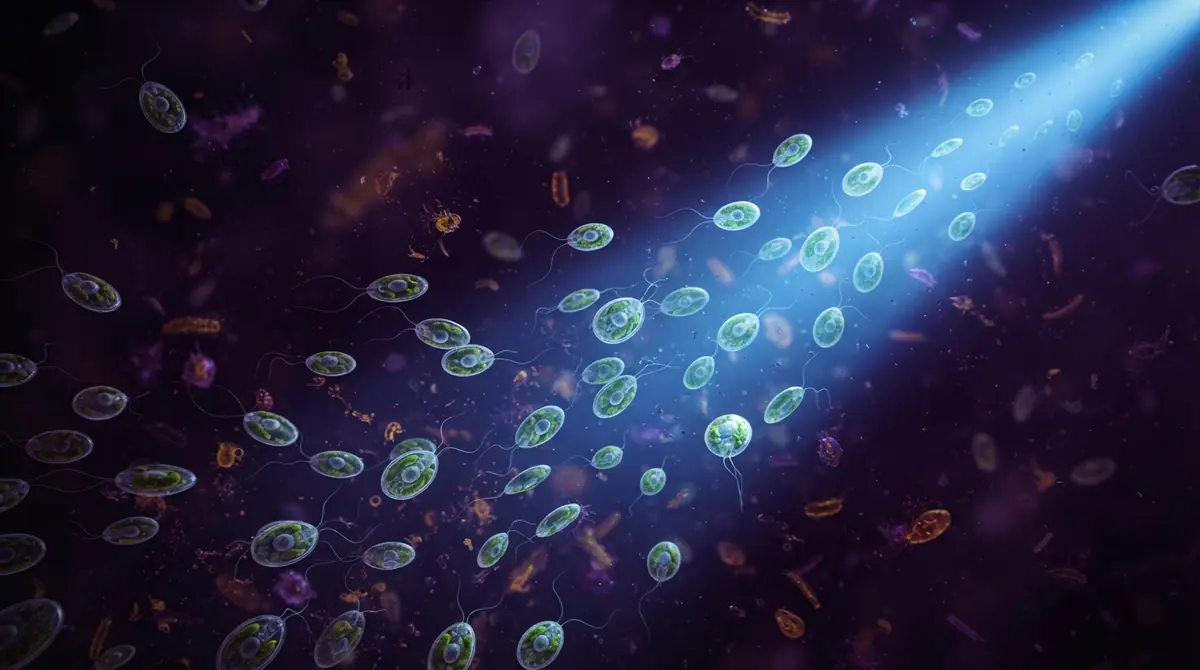
Working with Georg Nagel, then at the Max Planck Institute for Biophysics in Frankfurt, the pair expressed these genes in the egg cells of African clawed frogs (Xenopus laevis). As reported by Ars Technica, they discovered that one of the proteins—named channelrhodopsin—acted directly as a light-gated ion channel. When exposed to blue light, the channel opened to allow positively charged ions into the cell, creating an electrical current. In 2003, Nagel and Hegemann demonstrated that the genetic instructions for channelrhodopsins could be introduced into human and rodent kidney cells to make them light-sensitive.
Transforming Channelrhodopsin into a Neuroscience Tool
Karl Deisseroth, a professor of bioengineering and psychiatry at Stanford University and an investigator at the Howard Hughes Medical Institute, brought the algal proteins into neurobiology. In 2005, Deisseroth and his team showed that inserting the gene for channelrhodopsin-2 into cultured rat nerve cells allowed blue light to trigger action potentials, as noted by NobelPrize.org.
By 2007, Deisseroth's laboratory developed miniaturized light delivery systems using flexible optical fibers passed through the skulls of living mice. This allowed researchers to stimulate motor cortex neurons and trigger physical movements, such as whisker twitches, while the animals moved freely. Deisseroth and other groups expanded the molecular toolkit by finding variants of channelrhodopsins responsive to different light wavelengths, as well as chloride-conducting channels that selectively inhibit neuronal firing.
Mapping Neural Circuits and Clinical Applications
Before optogenetics, neuroscience relied largely on correlation studies or brain lesions. Anna Wedell, a genetics professor and Nobel committee member, explained to The Guardian that the laureates provided tools to establish cause-and-effect relationships across brain circuits. Researchers have since applied optogenetics to identify specific neural networks tied to fear memories, thirst, maternal care behaviors, and sleep-wake transitions.
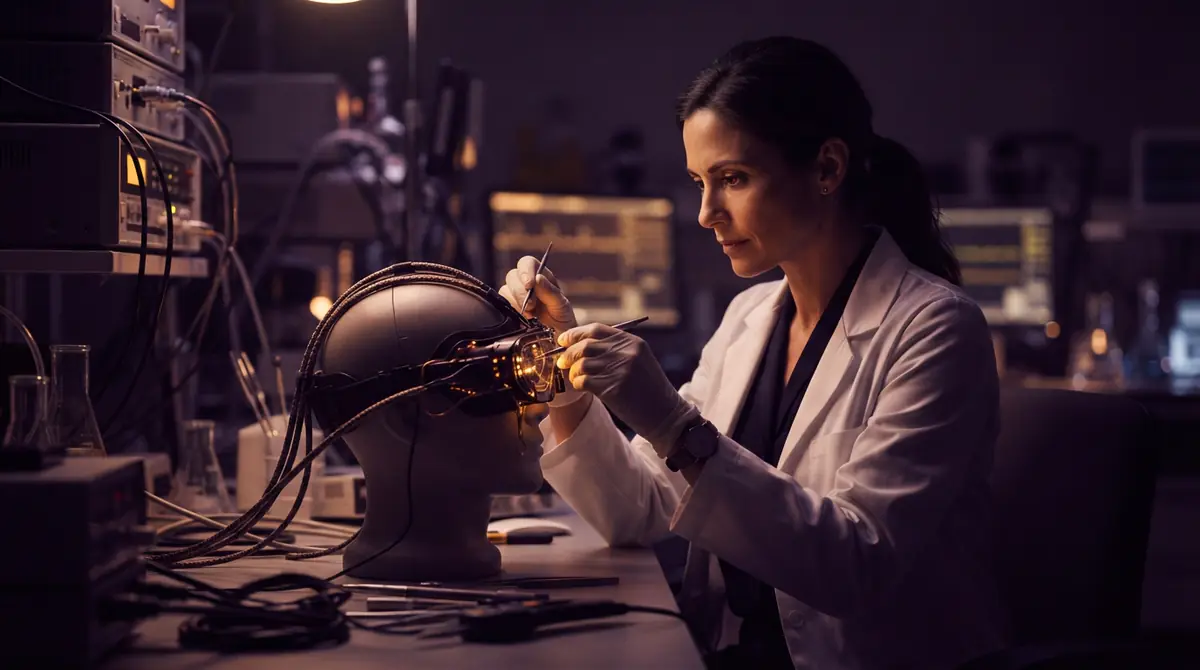
The technology is also driving early clinical interventions. In clinical trials for retinitis pigmentosa—a genetic condition causing photoreceptor loss in the retina—researchers used a harmless virus to deliver channelrhodopsin genes to surviving retinal ganglion cells. Patients wearing specialized goggles that project light pulses onto the retina achieved partial restoration of visual perception. Medical researchers are also exploring optogenetic stimulation as an alternative for auditory nerve activation in cochlear implants.
Frequently asked questions
Who won the 2026 Nobel Prize in Physiology or Medicine?
Karl Deisseroth of Stanford University, Peter Hegemann of Humboldt University of Berlin, and Georg Nagel of the University of Würzburg won the prize jointly.
What is optogenetics?
Optogenetics is a biological technique that uses light-sensitive ion channel proteins, originally discovered in algae, to control the electrical activity of specific nerve cells using light.
What practical applications does optogenetics have in medicine?
Optogenetics is being used in clinical trials to partially restore sight in patients with retinitis pigmentosa and is under investigation for improving cochlear implants and studying psychiatric and neurological conditions.
Sources
- Nobel prize in medicine 2026 awarded for research into mysteries of brainThe Guardian · Oct 5, 2026
- Controlling the brain with light earns a physiology NobelArs Technica · Oct 5, 2026
- Nobel Prize in Physiology or Medicine 2026NobelPrize.org
- Nobel Prize in Medicine awarded to scientists who pioneered work in optogeneticsCBC · Oct 5, 2026
- 2026 Nobel prize in medicine goes to researchers who discovered light-gated ion channel proteins and ...Chemistry World · Oct 5, 2026
How this story was made: the newsroom picked it up from nature.com, science.org and phys.org, gathered the full text of the sources above, and drafted it with AI assistance. Every factual claim was then checked against those sources before publishing (21 claims checked). Illustrations marked as AI-generated are not photographs. Spotted an error? Tell us.
Published October 6, 2026 at 00:06 UTC