Francis Halzen Wins 2026 Nobel Prize in Physics for IceCube Observatory
The University of Wisconsin–Madison physicist transformed a cubic kilometer of Antarctic ice into a cosmic particle detector, pioneering high-energy neutrino astronomy.
Key takeaways
- The Royal Swedish Academy of Sciences awarded the 2026 Nobel Prize in Physics to Francis Halzen for his leadership in creating the IceCube Neutrino Observatory.
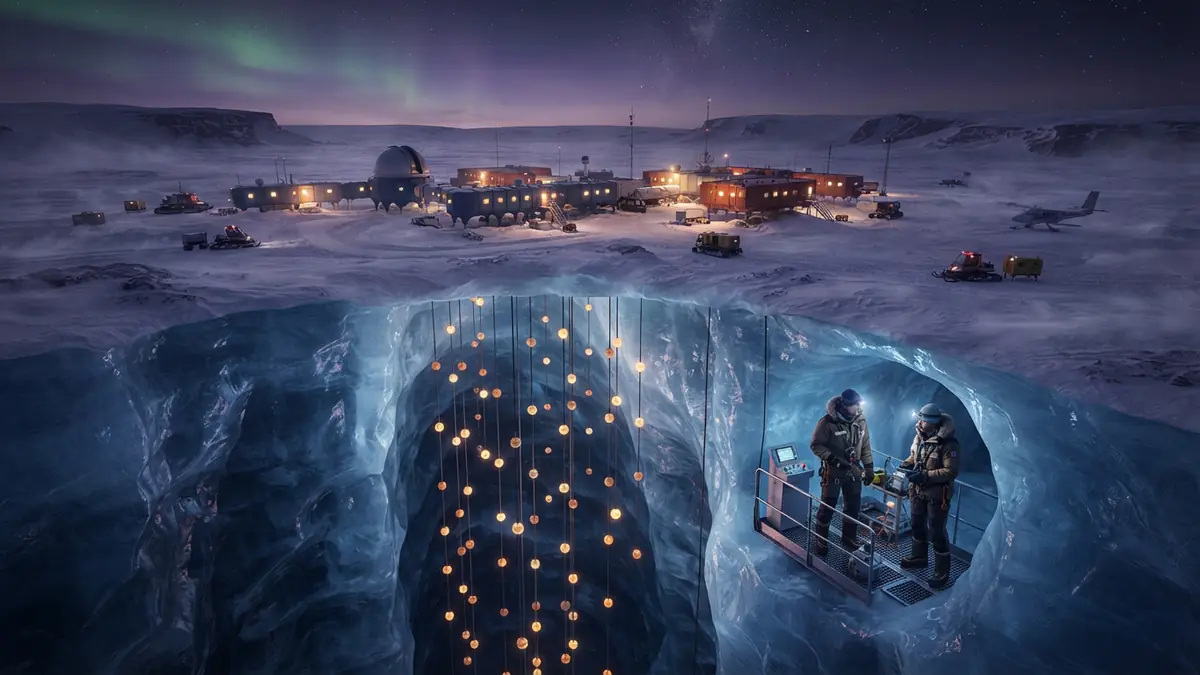
- IceCube instruments a cubic kilometer of Antarctic ice at the South Pole with thousands of optical sensors to detect rare collisions from cosmic neutrinos.
- Halzen will receive the full prize award of 12 million Swedish kronor (approximately $1.2 million).
- The observatory has mapped neutrino emissions from distant galaxies, supermassive black holes, and our own Milky Way, establishing the era of multimessenger astronomy.
The Royal Swedish Academy of Sciences has awarded the 2026 Nobel Prize in Physics to Belgian-born physicist Francis Halzen for his pioneering work on the IceCube Neutrino Observatory at the South Pole. Halzen, a professor of physics at the University of Wisconsin–Madison, was recognized for "decisive contributions to the IceCube Neutrino Observatory and the discovery of high-energy neutrinos of astrophysical origin," as announced on October 6, 2026, by the Nobel Committee.
Halzen led the decades-long development of the massive detector, which transformed a cubic kilometer of clear Antarctic glacial ice into a sensor array capable of capturing elusive cosmic "ghost particles." The prize includes a cash award of 12 million Swedish kronor (approximately $1.2 million or £900,000). Halzen learned of his award while traveling in Italy, expressing surprise that an ambitious project once doubted by conventional physics had succeeded so completely.

Turning Antarctic Glacial Ice into an Astronomical Observatory
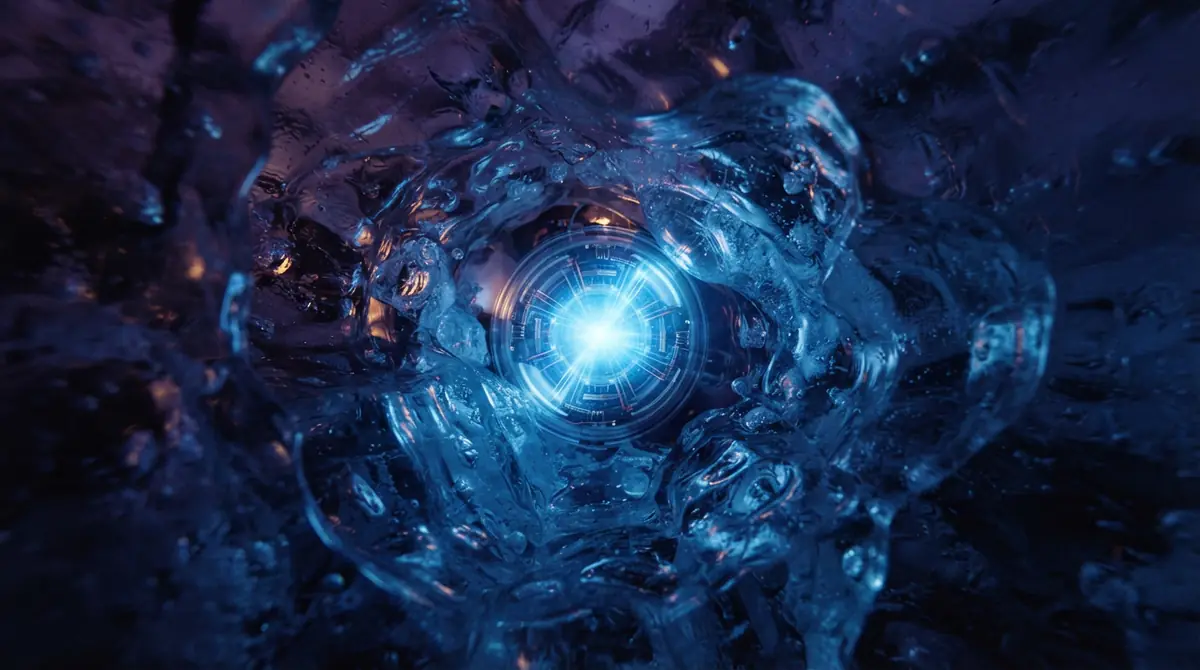
Halzen first proposed turning the Antarctic ice sheet into a particle detector in 1988. Neutrinos are fundamental subatomic particles with virtually no mass and zero electrical charge. Trillions pass through human bodies and planetary matter every second without interacting. However, on rare occasions, a high-energy neutrino strikes an atomic nucleus directly within clear ice, producing charged particles that emit a faint blue glow.
To capture these faint flashes, scientists and engineers embedded thousands of basketball-sized light detectors deep into the ice cap. Completed in 2011, the IceCube Neutrino Observatory spans an entire cubic kilometer of ice. The facility sits at the geographic South Pole, benefiting from a geologically stable site free from earthquake vibrations and isolated from sources of interference.
The detector faces downward to use the entire mass of the Earth as a filter against the constant background noise of cosmic rays, allowing sensors to register upward-traveling neutrinos that have traversed the planet from the northern hemisphere, according to reporting by The Guardian.
Unlocking High-Energy Neutrino Astronomy
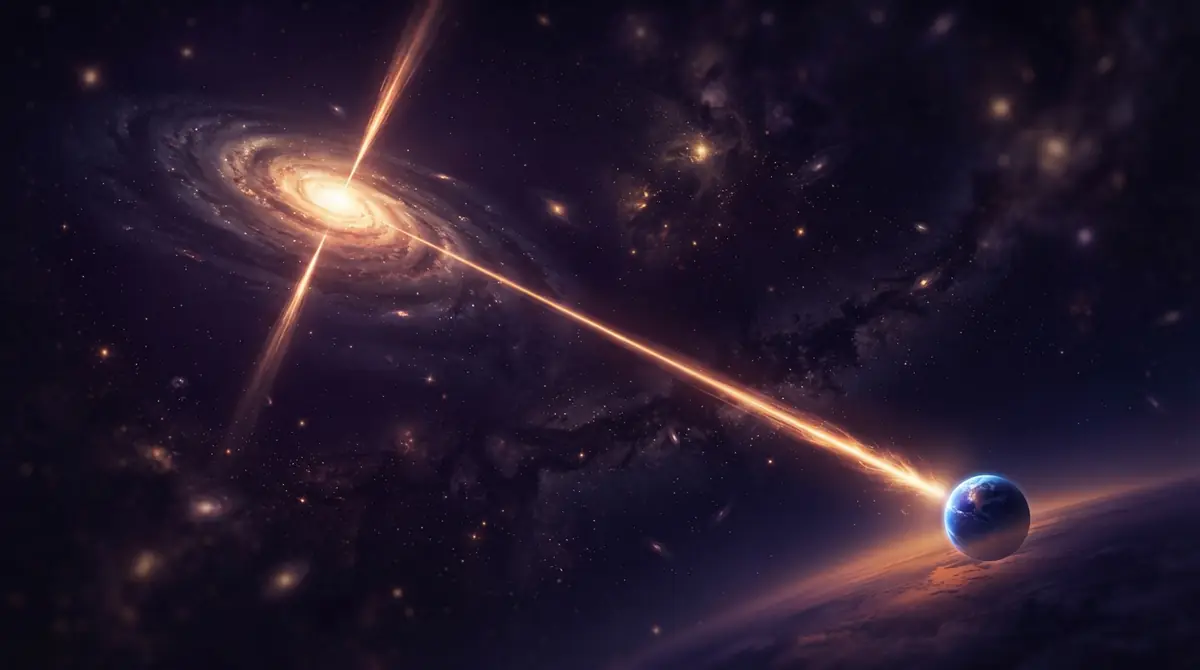
Until now, researchers have learned about the cosmos from light, other electromagnetic radiation, and gravitational waves. While cosmic rays carry high energy, they are charged particles whose paths cannot be traced directly back to their sources because magnetic fields bend their paths through space. Because neutrinos are electrically neutral, they travel in direct paths across billions of light-years without being deflected, going right through dense regions that light cannot easily penetrate.
In 2013, two years after full construction concluded, IceCube announced the first detection of high-energy extraterrestrial neutrinos originating outside the solar system. In September 2017, the observatory traced a high-energy neutrino directly back to a supermassive black hole in the direction of the constellation Orion, and The Guardian reported that IceCube scientists identified the first cosmic source of neutrinos 3.7 billion light-years away.
IceCube continued to expand its astronomical catalog, detecting high-energy emissions from an active galaxy 47 million light-years away in 2022 and producing the first neutrino map of the Milky Way galaxy in 2023. These detections demonstrated that all three of these sources produce cosmic rays, as detailed by UW–Madison News.
Global Impact and the Future of Cosmic Particle Detection
Halzen, born in Tienen, Belgium, in 1944, earned his doctorate from KU Leuven in 1969 before joining the University of Wisconsin–Madison faculty in 1972. He oversaw the predecessor experiment, AMANDA, before designing IceCube. Belgian Prime Minister Bart De Wever celebrated Halzen as Belgium's 11th Nobel laureate, as reported by PBS News, while UW–Madison News noted he is the university's sixth physicist and 23rd affiliate overall to receive a Nobel Prize.
Halzen emphasized that the achievement belongs to the global collaboration of engineers and researchers who worked in extreme polar conditions. "I hope it reflects on the really courageous people who joined me in the beginning of this project when no really respectable, conservative physicist would have joined me, but many talented people did," Halzen told reporters.
IceCube was recently successfully upgraded, marking the observatory's first significant expansion 15 years after its completion. Meanwhile, other experiments to understand neutrinos include the Deep Underground Neutrino Experiment (Dune) in the US and the Hyper-Kamiokande detector in Japan, as noted by The Guardian. Halzen confirmed he is already preparing a new research proposal, expressing confidence that neutrino astronomy will uncover unexpected cosmic phenomena over the next half-century.
Frequently asked questions
Why did Francis Halzen win the 2026 Nobel Prize in Physics?
Francis Halzen received the prize for his leadership in developing the IceCube Neutrino Observatory at the South Pole and discovering high-energy neutrinos originating from deep space.
How does the IceCube Neutrino Observatory detect neutrinos?
IceCube uses thousands of optical sensors embedded inside a cubic kilometer of clear Antarctic ice to record faint blue flashes of light produced when high-energy neutrinos collide with atomic nuclei.
What makes neutrinos unique for astronomical observations?
Because neutrinos have no electrical charge and almost no mass, they travel unimpeded through dense cosmic environments and across magnetic fields, pointing straight back to violent sources like supermassive black holes.
Sources
- Nobel prize in physics goes to Francis Halzen for south pole work on neutrinosThe Guardian · Oct 6, 2026
- 'Ghost particles' from space telescope wins 2026 Nobel Prize in PhysicsBBC News · Oct 6, 2026
- Neutrino physicist wins 2026 Nobel Physics PrizeArs Technica · Oct 6, 2026
- Nobel Prize in Physics 2026NobelPrize.org
- University of Wisconsin–Madison Professor Francis Halzen named 2026 Nobel laureate in physicsNews · Oct 6, 2026
- WATCH: Nobel Prize in physics awarded to Francis Halzen for demystifying neutrinosPBS News · Oct 5, 2026
How this story was made: the newsroom picked it up from nature.com, science.org and Google News, gathered the full text of the sources above, and drafted it with AI assistance. Every factual claim was then checked against those sources before publishing (44 claims checked). Illustrations marked as AI-generated are not photographs. Spotted an error? Tell us.
Published October 7, 2026 at 00:11 UTC