Nolla Health Launches First US AI Pilot for Initial Acne Prescriptions
Under an agreement with Utah regulators, Nolla Derm can independently evaluate facial scans and issue first-time topical acne prescriptions.
Key takeaways
- Nolla Health launched a pilot in Utah on October 5, 2026, which the company says is the first US program authorized for AI to issue initial prescriptions rather than renewals.
- The service costs $4.99 per month for eligible Utah adults with mild-to-moderate acne, processing facial scans and intake questions in 10 to 15 minutes.
- Physician oversight steps down in three stages based on safety milestones, beginning with mandatory pre-approval by two licensed doctors for the first 100 patients.
- The AI's scope is strictly confined to pre-approved topical therapies, with a 96% reported clinician agreement rate in real-world test cases.
Healthcare startup Nolla Health has launched a pilot program in Utah allowing its mobile application to evaluate facial scans, assess acne severity, and autonomously write initial prescriptions for patients. Announced on October 5, 2026, the service represents the first regulatory authorization in the United States permitting an artificial intelligence system to issue a first-time prescription rather than simply processing refills, according to Nolla Health's announcement.
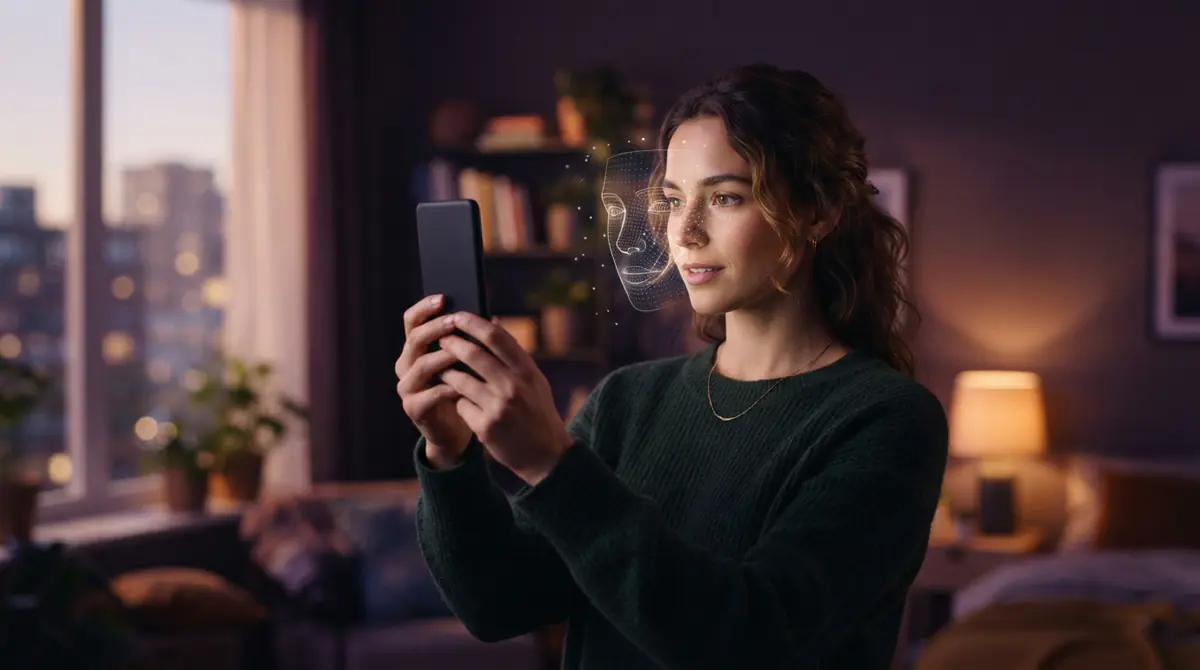
The program operates through the startup's Nolla Derm app and is restricted to Utah residents aged 18 and older suffering from mild-to-moderate acne. Patients complete an informed consent process, an intake questionnaire, and a five-angle facial scan, allowing the system to deliver a treatment plan and prescription in 10 to 15 minutes for a discounted pilot price of $4.99 per month, as reported by Unite.AI.
Phased Physician Oversight and Safety Guardrails
The pilot functions under a formal regulatory agreement between Nolla Health's operating entities and the Utah Department of Commerce, specifically the Office of Artificial Intelligence Policy and the Division of Professional Licensing, as reported by Unite.AI. Under the terms, the state provides regulatory mitigation shielding the company and participating physicians from enforcement actions related to telehealth or unlicensed practice rules for eligible adult acne care.
Physician oversight is designed to scale down across three distinct operational phases:
- Stage One (First 100 patients): Two Utah-licensed physicians must independently review and approve every AI-generated prescription before it is sent to the patient. This stage runs for at least four weeks.
- Stage Two (Up to 500 cumulative patients): The AI issues prescriptions directly, while physicians review every case retrospectively at least weekly over a minimum eight-week duration.
- Stage Three (From 750 cumulative patients): Physicians review a monthly sample of at least 10% of prescriptions, along with mandatory reviews for every escalation or reported side effect.
Advancing between stages requires written approval from state regulators, maintaining zero serious adverse events, and sustaining at least a 95% clinician agreement rate, according to Nolla Health.
Strict Scope and Clinical Boundaries
Nolla Health built the system with hard boundaries to eliminate clinical improvisation. The AI chooses exclusively among pre-approved topical regimens, including adapalene, tretinoin, azelaic acid, benzoyl peroxide, and clindamycin with benzoyl peroxide, as well as compounded formulations with niacinamide or topical spironolactone, according to Unite.AI.
Intake protocols automatically escalate patients to human medical professionals when complex factors arise. The system rejects or reroutes cases involving pregnancy, breastfeeding, immunosuppression, severe liver or kidney disease, or prior adverse drug reactions. Acne severity exceeding 3.5 on the five-point Investigator Global Assessment scale requires physician review, while a score of 4.0 routes the user directly to in-person care. In internal validation on a test set of 10,348 cases, the severity scoring model achieved an R-squared of 0.947, and clinicians agreed with the AI's recommendations in 96% of real-world trials, with discrepancies limited to single-step strength adjustments, according to Unite.AI.
Identity verification is conducted via Stripe Identity using a government photo ID and selfie, while geolocation confirms Utah residency. Prescriptions are transmitted under an overseeing physician's National Provider Identifier (NPI) and marked as AI-initiated. Patients can pick up generic medications at local pharmacies for $10 to $40 or opt for home-delivered compounded formulations at $49.99.
Addressing Dermatology Access Bottlenecks
The pilot aims to tackle substantial healthcare bottlenecks in Utah, where wait times for a dermatologist appointment average 61 days—nearly double the national median of 32.3 days—and 11 of the state's counties have no practicing dermatologist, according to Unite.AI. In-person specialist visits can cost between $150 and $300.
While Utah previously authorized AI platforms such as Doctronic to manage chronic prescription renewals, Nolla Health states it is the first to autonomously initiate new pharmaceutical therapies. According to Medical Economics, Nolla Health explained that offloading routine, low-acuity acne cases frees dermatologists to focus on complex, high-risk patients, including those at risk for skin cancer.
According to Inc., Nolla Health views acne as an initial test case, with future exploratory areas potentially including rosacea, the flu, and uncomplicated urinary tract infections. High-risk controlled substances such as opioids, stimulants, and benzodiazepines remain strictly excluded from autonomous prescribing models.
Frequently asked questions
Who is eligible to participate in the Nolla Derm AI prescription pilot?
The pilot is open to Utah residents aged 18 and older who have mild-to-moderate acne, verify their identity with a government-issued photo ID, and do not have exclusionary conditions such as pregnancy or severe underlying disease.
What medications can the AI prescribe?
The AI is restricted to a pre-approved list of topical acne treatments, including tretinoin, adapalene, azelaic acid, benzoyl peroxide, clindamycin with benzoyl peroxide, and specific compounded topical formulations. Oral medications and isotretinoin are excluded.
Can patients speak to a human doctor if needed?
Yes. Patients can message a licensed physician through the app at any time at no extra charge. Nolla Health specifies that human physicians, not AI, respond to patient support and clinical messages.
Sources
- This startup is issuing AI-generated acne prescriptionsThe Verge · Oct 5, 2026
- Nolla Health Launches the Nation's First AI-Powered Prescriptions, Starting in UtahNolla Health · Oct 5, 2026
- Nolla Derm AI Prescription: Now Piloting in UtahNolla Health
- From skin scan to prescription: AI acne prescribing launches in UtahMedical Economics · Oct 6, 2026
- Utah Approved the First Autonomous Prescription System. It Starts With Acne, but 3 Conditions Could Followinc.com · Oct 5, 2026
- Utah approves 1st AI pilot to issue initial prescriptionsbeckershospitalreview.com
- Nolla Health Launches AI-Issued Initial Acne Prescriptions in UtahUnite.AI · Oct 5, 2026
How this story was made: the newsroom picked it up from Techmeme, theverge.com and Reddit, gathered the full text of the sources above, and drafted it with AI assistance. Every factual claim was then checked against those sources before publishing (27 claims checked). Illustrations marked as AI-generated are not photographs. Spotted an error? Tell us.
Published October 6, 2026 at 01:41 UTC