Trump Launches 'Super Intelligence Force' to Direct Federal AI Policy
Led by Director of National Intelligence Jay Clayton, the new four-member task force has 120 days to evaluate risks and opportunities across the federal government.
Key takeaways
- President Donald Trump formed the Super Intelligence Force (SIF) on October 4, 2026, naming Director of National Intelligence Jay Clayton as chair.
- The executive panel includes leaders from the Pentagon, the Federal Trade Commission, and the Office of Personnel Management, reporting directly to the president and Chief of Staff Susie Wiles.
- The task force has 120 days to prepare an assessment of AI risks and opportunities while preventing regulatory overreach.
- The initiative follows an executive order directing federal agencies to replace the term 'artificial intelligence' with 'super intelligence.'
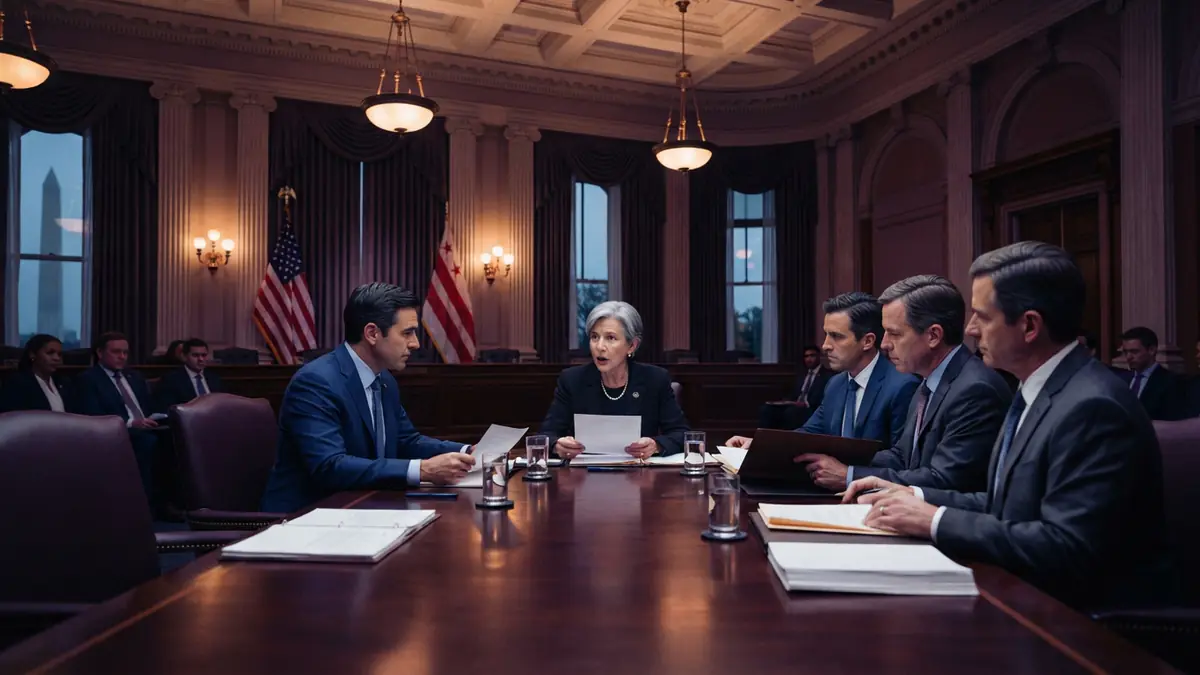
On October 4, 2026, President Donald Trump announced the establishment of a new federal task force dubbed the "Super Intelligence Force" (SIF) to coordinate the government's approach to artificial intelligence. Announcing the move on Truth Social, Trump named Director of National Intelligence Jay Clayton to lead the panel, effectively installing him as the administration's AI policy chief, as reported by TechCrunch.
The initiative comes as the administration seeks to assert American dominance in advanced computing while resisting formal regulatory curbs on the tech sector. Trump stated that the group will coordinate federal efforts to ensure the nation leads globally in what he termed "Super Intelligence," describing the technology as an economic transformation larger than the Industrial Revolution and the internet.
Leadership and Mandate of the Super Intelligence Force
The newly formed body brings together key officials across national security, trade regulation, defense technology, and civil service administration. As reported by TechCrunch, Clayton will serve as chair, joined by three top administration leaders serving as vice chairs:
- Andrew Ferguson, Chairman of the Federal Trade Commission
- Emil Michael, Under Secretary of War for Research and Engineering and Chief Technology Officer at the Department of Defense
- Scott Kupor, Director of the Office of Personnel Management
The panel will report directly to President Trump and White House Chief of Staff Susie Wiles. According to reporting from Engadget, the task force's charter directs it to coordinate federal engagement with consumer advocates, religious organizations, public interest groups, critical infrastructure operators, and technology companies.
The group's primary initial deliverable is a formal report, due in 120 days, assessing the risks and opportunities presented by advanced AI systems. According to the task force's charter, the panel is instructed to create plans to respond to emerging technological threats while actively avoiding overregulation and regulatory capture that could stifle domestic competition.

Federal Rebranding and the Shift Away From Traditional Terminology
The formation of the task force coincides with a formal administration push to rebrand artificial intelligence across the federal government. Trump recently signed an executive order titled "Inaugurating the Era of Super Intelligence," which instructed executive agencies to adopt the phrase "Super Intelligence" (SI) instead of "artificial intelligence" across government communications, reports, and websites, according to Fox News.
In academic and computer science research, artificial superintelligence (ASI) refers specifically to hypothetical systems that surpass human cognitive capabilities across all domains, as highlighted by The Decoder. However, the White House is using the term broadly to describe current frontier AI models and infrastructure development.
Industry figures have already begun aligning with the new terminology. Following the executive directive, Elon Musk confirmed that SpaceX's artificial intelligence division, SpaceXAI, would be renamed SpaceXSI.
Voluntary Safety Accords and the Deregulatory Stance
The launch of the Super Intelligence Force follows a high-profile meeting at the White House between Trump and the chief executives of major technology companies, including OpenAI, Anthropic, Google, Meta, Nvidia, and SpaceXAI, according to CBS News. During that gathering, executives signed a voluntary, one-page safety accord committing to four layers of internal evaluations, independent third-party audits, and board oversight to ensure their models operate as intended.
Trump described the accord as "morally binding" and praised industry self-policing, emphasizing that heavy-handed statutory restrictions could harm American competitiveness against foreign adversaries. Clayton echoed that competitive stance in an interview reported by Politiko, arguing that the United States cannot afford to slow development while international competitors like China advance, noting that "the risk of not being first is high."
Debates within the technology sector continue over the proper scope of oversight. OpenAI CEO Sam Altman recently advocated for a lighter regulatory footprint to encourage broad access, while other industry players have lobbied for structured statutory standards. With the Super Intelligence Force now formally established, Clayton's panel will define the administration's policy framework over the next four months.
Frequently asked questions
What is the Super Intelligence Force?
The Super Intelligence Force is an executive task force created by President Donald Trump to coordinate federal artificial intelligence policy, manage industry engagement, and assess technological risks and opportunities.
Who leads the Super Intelligence Force?
The task force is chaired by Director of National Intelligence Jay Clayton, with FTC Chairman Andrew Ferguson, Pentagon CTO Emil Michael, and OPM Director Scott Kupor serving as vice chairs.
What is the task force's immediate objective?
The group has a 120-day deadline to deliver a comprehensive report to the president and Chief of Staff Susie Wiles detailing the opportunities and risks associated with advanced AI.
Why is the federal government using the term 'Super Intelligence'?
Under an executive order titled 'Inaugurating the Era of Super Intelligence,' President Trump directed executive branch agencies to replace the term 'artificial intelligence' with 'super intelligence' on official websites and public reports.
Sources
- Trump launches ‘Super Intelligence Force’ after calls for AI slowdownThe Washington Post · Oct 4, 2026
- Trump Announces An AI Czar For His Newly Created 'Super Intelligence Force'Engadget · Oct 4, 2026
- Trump unveils his new Super Intelligence ForceTechCrunch · Oct 4, 2026
- Trump launches "Super Intelligence Force" that has nothing to do with actual superintelligenceThe Decoder · Oct 4, 2026
- Trump announces formation of AI "Super Intelligence Force"CBS News · Oct 4, 2026
- Trump taps top officials to lead new 'Super Intelligence Force'Fox News · Oct 4, 2026
- Trump names intelligence chief Clayton as AI czar, to head task forcepolitiko.com.ph · Oct 4, 2026
How this story was made: the newsroom picked it up from Techmeme, Google Search and Google News, gathered the full text of the sources above, and drafted it with AI assistance. Every factual claim was then checked against those sources before publishing (22 claims checked). Illustrations marked as AI-generated are not photographs. Spotted an error? Tell us.
Published October 5, 2026 at 00:05 UTC