DNA Typewriter Maps 1.28 Million Cells in Developing Mouse Embryo
By recording divisions directly onto genetic tape, researchers built the largest mammalian cell lineage tree to date across 13.5 days of embryonic development.
In short
- Researchers traced 1.28 million cells across 13.5 days in a developing mouse embryo using prime-editing-based DNA recording.
- The reconstructed family tree is the largest mammalian lineage map produced in a single experiment, tracking roughly 10% of the embryo's cells.
- The very first division split into lineages contributing 57% and 42% of cells, yet both branches generated identical proportions of tissue types.
- The data showed tissues commit on distinct timelines, with blood and retinal cells locking in early while outer skin layers commit much later.
- The lineage dataset and the interactive exploration browser NextCell have been made publicly available.
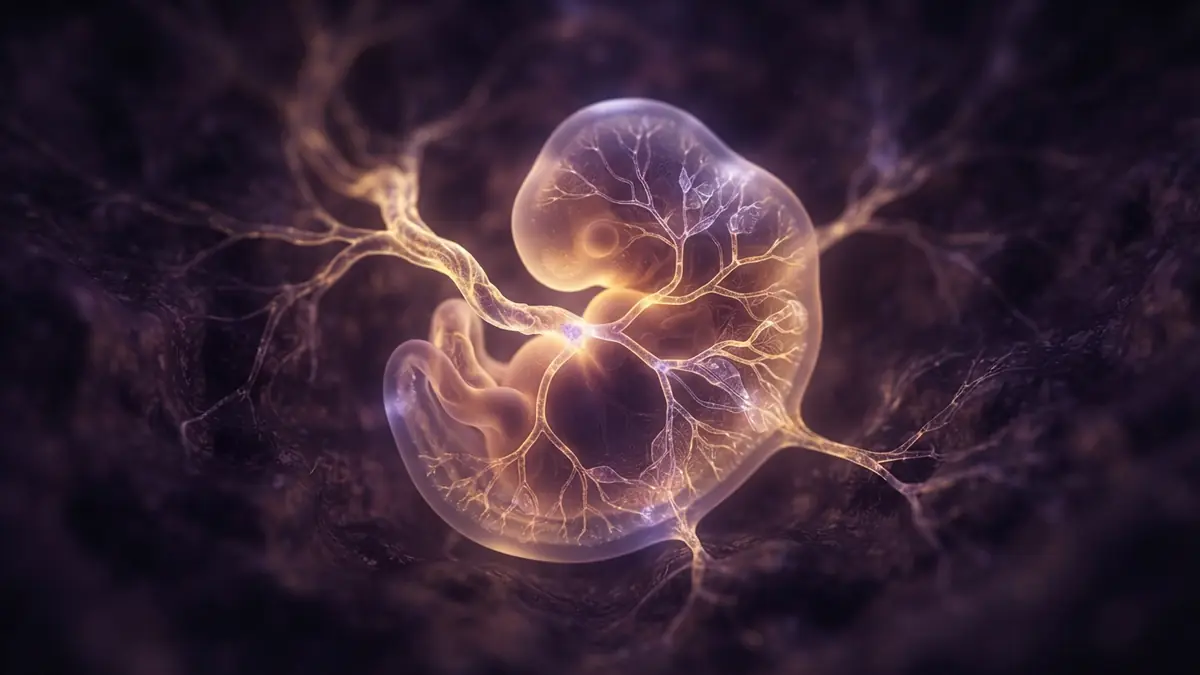
On October 8, 2026, researchers unveiled the largest mammalian cell lineage tree constructed to date, tracing how more than 1.28 million cells developed from a single fertilized egg in a mouse embryo. In a study published in Science, a multi-institutional team led by researchers at the University of Washington School of Medicine and Dartmouth College deployed an engineered recording technology called DNA Typewriter. By logging cellular divisions directly into the genome over 13.5 days of embryonic growth, the researchers tracked how founding cells multiplied and differentiated into tissues and developing organs, according to reporting from UW Medicine.
For decades, developmental biologists have sought to track the complete genealogical history of mammalian development, a milestone achieved in 1983 for the microscopic, transparent roundworm Caenorhabditis elegans. Unlike transparent worms, mammalian embryos develop internally within the mother, hiding cell divisions from continuous microscopic observation. Traditional genomic assays destroyed tissue to take a single temporal snapshot, while previous barcoding techniques severed DNA or left random scars that quickly exhausted recording capacity. The new approach provides an unbroken, chronological log written directly into the organism's living genetic material.
Recording Cell History With a Genetic Ticker Tape
The breakthrough centers on the DNA Typewriter system, an editing architecture invented by Dr. Jay Shendure of UW Medicine and Dr. Junhong Choi of Memorial Sloan Kettering Cancer Center. Rather than cutting through double-stranded DNA with conventional CRISPR nucleases, the tool uses prime editing, which cuts only one strand to insert short DNA symbols without destroying the surrounding genomic sequence, as detailed by BigGo Finance.
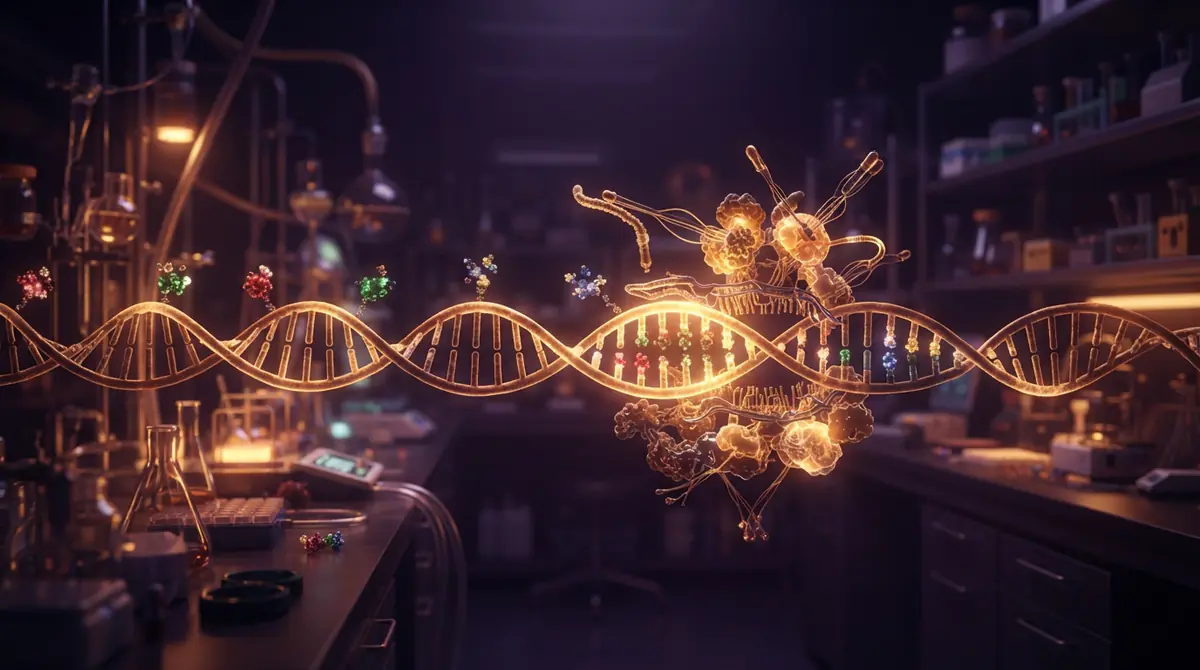
The researchers inserted a redesigned synthetic DNA tape into the fertilized mouse egg. Each time a cell divides, the prime-editing machinery writes a new nucleotide symbol into the designated active site on the tape. Writing that symbol seals the site and activates the subsequent position to the right, functioning like a physical typewriter striking characters in strict linear sequence. Because the inserted characters are copied into every daughter cell and cannot overwrite previous positions, the accumulated sequence provides an indelible record of each cell's ancestry, according to the Allen Institute.
Co-first author Haedong Kim, a postdoctoral researcher at UW Medicine, the Seattle Hub for Synthetic Biology, and the Howard Hughes Medical Institute, noted that writing the record was only part of the engineering challenge. The team deliberately redesigned the tape so researchers could read the accumulated marks back out of single cells alongside their transcriptional activity via high-throughput sequencing.
Tracing 1.28 Million Cells in Embryo No. 3
To test the recording system across a complex mammalian gestation, the team injected the DNA Typewriter machinery into 100 fertilized mouse eggs. Ten eggs developed into viable embryos, as reported by EduFabTech. The researchers focused their full-scale reconstruction on Embryo No. 3, which exhibited the clearest, most active recording history.
The embryo developed in utero for 13.5 days—roughly two-thirds of the standard 19-to-21-day mouse gestation period—advancing deep into organogenesis, the window when organs and specialized tissues take form. The researchers measured genetic stamps across 1.58 million individual cell nuclei, successfully reconstructing a time-calibrated lineage tree encompassing roughly 1.28 million cells. According to BIOENGINEER.ORG, this represents about 10 percent of all cells in the 13.5-day-old mouse embryo, making it the densest and largest mammalian lineage tree ever constructed.

The reconstructed tree immediately yielded biological insights into how founding cells divide work during early embryogenesis. The DNA Typewriter recorded distinct, permanent marks during the very first cleavage event, when the single fertilized egg split into two cells. This early marking allowed the researchers to trace almost every profiled cell back to one of the two founding daughters.
Although the two branches expanded unevenly—one daughter lineage produced about 57 percent of the sampled cells and the other accounted for about 42 percent—both branches gave rise to the entire spectrum of cell types in nearly equal proportions. The finding suggests that early cell fate decisions follow developmental programs that operate independently of the raw number of descendants generated by a founding cell.
Unsynchronized Schedules for Tissue Commitment
By comparing typewritten tags with single-cell gene expression measurements, the researchers mapped out the exact developmental windows during which cells permanently lock into specific biological identities, according to reporting by Tech Explorist.
The data revealed that cell fates do not lock in simultaneously across an embryo. Instead, different cell types settle into specialized roles on distinct schedules. Blood cells and retinal cells committed to their developmental fates relatively early during the 13.5-day period. In contrast, cells that form the outermost layer of the skin remained flexible, committing to their lineage noticeably later in organogenesis. Sibling cells in the lineage tree also shared cell-type identities far more frequently than predicted by random chance, indicating that lineage history strongly influences final cell specialization.

The study was supported by the Seattle Hub for Synthetic Biology—a partnership uniting the Allen Institute, Biohub, and UW Medicine—alongside Dartmouth College and the Howard Hughes Medical Institute. Parallel work by HHMI investigator Jonathan Weissman at the Whitehead Institute has pursued similar lineage goals using an alternative prime-editing tool called PEtracer, reflecting a broader scientific push toward mammalian fate mapping detailed by the Howard Hughes Medical Institute.
Implications for Medicine and Virtual Embryos
The creation of reference lineage maps provides researchers with a baseline to study what occurs when development veers off course. By pinpointing the timing and cellular ancestry of healthy tissue differentiation, scientists can better identify the origins of congenital malformations, neurodevelopmental disorders, and genetic diseases. The underlying technology also carries direct utility for oncology, where tracking the expansion and migration of cellular descendants can clarify how tumors emerge, spread to distant organs, and survive medical treatments.
To enable external analysis, the research team made the entire cell lineage dataset publicly available and launched an interactive data browser called NextCell, enabling researchers worldwide to examine the cellular family tree. According to reporting from the Howard Hughes Medical Institute and Jonathan Weissman, such lineage data will be used to train AI models of embryogenesis, with the ultimate goal of building a "virtual embryo" that can predict development outcomes.
Questions people ask
What is the DNA Typewriter technology?
The DNA Typewriter is a biological recording tool invented by Jay Shendure and Junhong Choi. It uses prime editing to sequentially append short DNA tags to a synthetic genetic sequence inside a cell each time it divides, creating an ordered chronological log of cell lineage directly within the genome.
How many cells were mapped in the mouse embryo study?
The researchers measured genetic stamps in 1.58 million individual cell nuclei and reconstructed a lineage tree containing roughly 1.28 million cells from a single mouse embryo allowed to develop for 13.5 days.
Did both cells from the first division contribute equally to the mouse?
No. One daughter cell produced approximately 57 percent of the profiled cells, while the other generated roughly 42 percent. However, both cells contributed the same proportions of diverse tissue and organ cell types.
Where can scientists access the mouse lineage dataset?
The research team made the lineage tree publicly accessible alongside an interactive browser called NextCell, which allows researchers to explore the cellular family tree.
Sources
- DNA Typewriter records cells’ history in early mouse embryo - UW Medicine | NewsroomUW Medicine | Newsroom
- From a single cell to 1.2 million: scientists successfully create the largest cellular "family tree” for a mammalalleninstitute.org, Oct 7, 2026
- Mapping How a Single Cell Becomes an Entire Mouse | HHMIhhmi.org
- Every cell has a past. This 'DNA Typewriter' could help reveal ittechexplorist.com, Oct 12, 2026
- Largest Ever Mammal Cell Family Tree Traces 1.2 Million Cells to a SingleBIOENGINEER.ORG, Oct 9, 2026
- DNA Typewriter Reconstructs a Mouse Embryo's Nearly Complete Cell Lineage Tree in Science StudyEduFabTech, Oct 9, 2026
- DNA Typewriter Maps Lineage of 1.28 Million Cells in Mouse EmbryoBigGo Finance, Oct 8, 2026
How this story was made: the newsroom picked it up from phys.org and Reddit, gathered the full text of the sources above, and drafted it with AI assistance. Every factual claim was then checked against those sources before publishing (18 claims checked). Illustrations marked as AI-generated are not photographs. Spotted an error? Tell us.
Published October 13, 2026 at 01:17 UTC