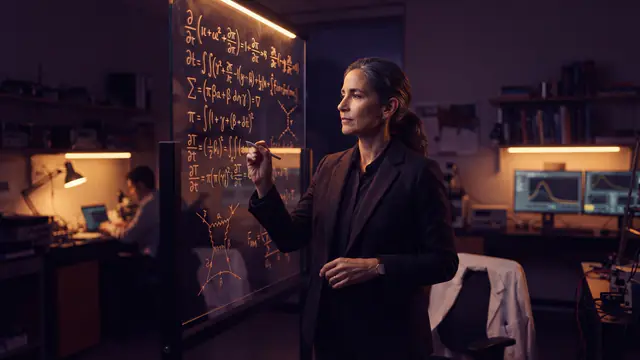
Vienna Scientists Build First Self-Stabilizing Nuclear Clock
By locking a laser directly to energy transitions inside thorium nuclei, researchers at TU Wien created an autonomous nuclear timekeeper that operated continuously for more than 24 hours.
In short
- Researchers at TU Wien have created the world's first self-stabilizing nuclear clock, maintaining continuous operation without intervention for more than 24 hours.
- The device relies on laser excitation of thorium-229 nuclei embedded in a calcium fluoride crystal, using absorption drops to autonomously correct laser drift.
- The prototype achieved a relative precision of roughly 10 to the power of minus 15, representing an error of approximately one second over 30 million years.
- A parallel team at Tsinghua University in Beijing also built an operational thorium-229 clock, with both studies published in Nature on October 7, 2026.
- While early prototypes remain less accurate than the best optical atomic clocks, nuclear clocks could eventually surpass them due to the compact, disturbance-resistant nature of atomic nuclei.
Physicists at the Vienna University of Technology (TU Wien) have demonstrated the world's first self-stabilizing nuclear clock, marking a major milestone in high-performance metrology. Detailed in the journal Nature on October 7, 2026, the prototype operates autonomously by locking laser light directly to transitions within atomic nuclei, running steadily for more than 24 hours without external intervention, according to TU Wien.
The achievement follows decades of theoretical work. While conventional atomic clocks track oscillations produced when electrons jump between energy levels in outer atomic shells, nuclear clocks measure state changes inside the nucleus itself. Because atomic nuclei are more than 10,000 times smaller than whole atoms, they remain far less susceptible to stray electromagnetic fields and environmental disturbances. Physicists anticipate this immunity could eventually allow nuclear timekeeping to surpass traditional atomic standards.
How the Self-Stabilizing Nuclear Clock Works
Nuclear clocks depend almost exclusively on thorium-229. In virtually all other atomic nuclei, jumping between nuclear energy states requires massive amounts of energy that cannot be manipulated with optical lasers. Thorium-229 is a rare exception: two of its nuclear states are separated by an unusually narrow energy gap, making it possible to trigger transitions with laser light.
In April 2024, a collaboration led by Professor Thorsten Schumm at TU Wien's Institute of Atomic and Subatomic Physics and Professor Ekkehard Peik at PTB Braunschweig first demonstrated laser excitation of thorium nuclei. By autumn 2024, the researchers coupled that excitation apparatus to an optical atomic clock to show timekeeping was viable. However, that setup relied on an existing atomic clock to maintain its stability, as reported by ScienceDaily.
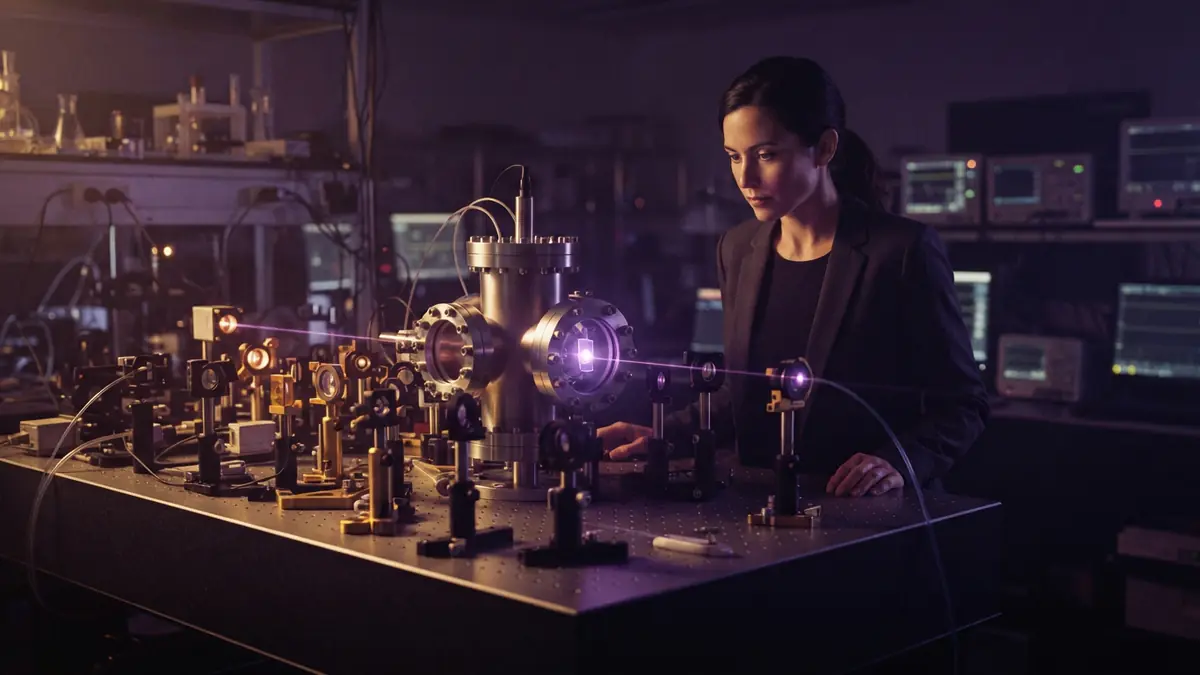
The new system removes that crutch. At the core of the Vienna clock is a solid-state calcium fluoride crystal embedded with thorium atoms, fabricated at TU Wien. A laser continuously irradiates the crystal, using its optical oscillations as the regular ticking rhythm of the clock. Environmental fluctuations like temperature changes naturally cause laser frequencies to drift, but the thorium nuclei act as an autonomous governor.
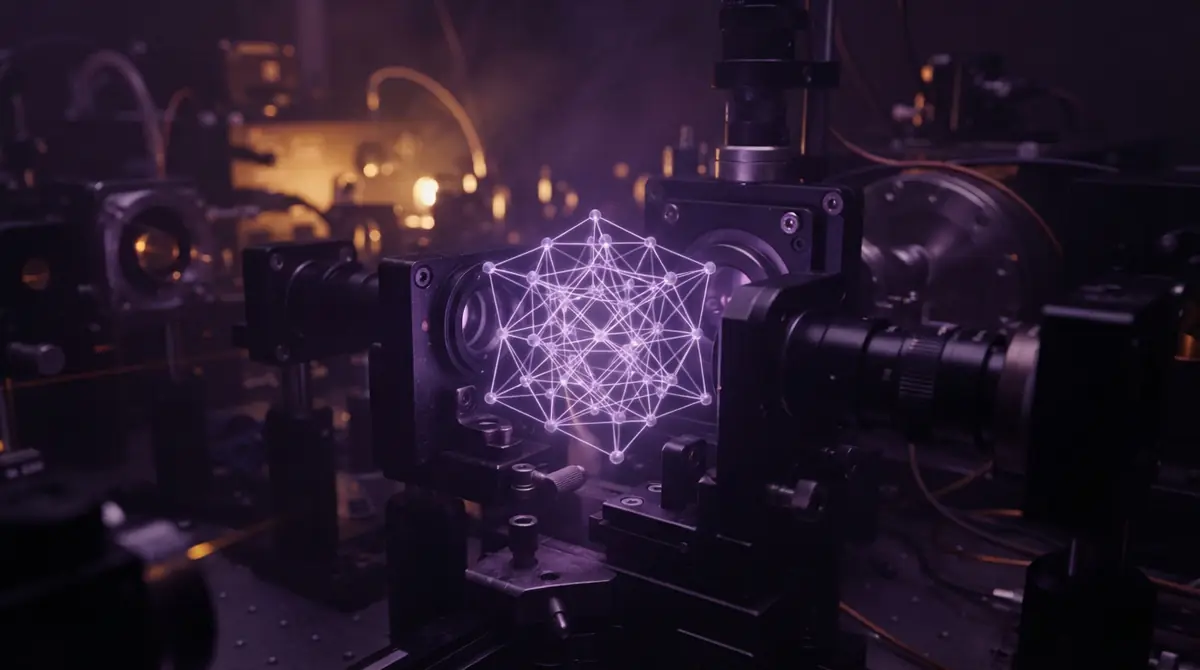
Thorium nuclei absorb laser light only when the frequency matches their transition gap precisely. When the laser begins to drift, absorption falls off noticeably. The apparatus detects this drop and automatically adjusts the laser frequency back to resonance. This continuous feedback loop ensures the clock regulates itself without needing an external atomic clock reference.

Benchmarks and the Beijing Comparison
During a 24-hour evaluation, the Vienna nuclear clock reached a relative precision of roughly 10 to the power of minus 15. As noted by The Times of India, that translates to a drift of roughly one second over 30 million years.
While substantial for a first prototype, the device does not yet surpass world-record timekeepers. Conventional cesium standards, which define the official second, drift by roughly one second every 300 million years, according to Popular Science. The world's top optical atomic clocks can run for billions of years while gaining or losing only a single second.
The Vienna team is not alone in the race. In the same issue of Nature, a research team led by Shiqian Ding at Tsinghua University in Beijing reported creating an operating thorium-229 nuclear clock as well. According to Brecorder, both teams built their prototypes around thorium-229 trapped in calcium fluoride crystals but used differing technical approaches.
Testing indicated the Beijing clock was about six times as stable as the Vienna clock. However, the Vienna system represents the first design that stabilizes itself independently. Schumm highlighted the complementary strengths of the two efforts, noting that Vienna's crystal features higher thorium concentration and superior optical properties, while Tsinghua deployed a more powerful laser. Combining these strengths could yield a significantly improved apparatus.
Practical Applications Beyond Timekeeping
Building clocks with atomic nuclei offers benefits well beyond tracking seconds. In tests attempting to detect dark matter, the Vienna clock did not register candidate signals, but Schumm noted it matched the performance of premier atomic clocks in precision physics trials.
Schumm pointed to several direct applications once nuclear systems mature. Because nuclear transitions are shielded inside the nucleus, operational devices could eventually be constructed to be less bulky and less delicate than optical atomic clocks. Potential fields of use include satellite navigation networks, synchronization of telecommunications and fiber-optic data transfer, surveying, and metrology.
Researchers at TU Wien plan to refine the platform by integrating stronger lasers and developing higher-grade thorium crystals to narrow the performance gap with optical atomic standards.
Questions people ask
What makes a nuclear clock different from a standard atomic clock?
A standard atomic clock measures time based on the oscillations of electrons jumping between energy levels in an atom's outer shell. A nuclear clock measures transitions of protons and neutrons inside the nucleus itself, which is tens of thousands of times smaller and far less sensitive to environmental disturbances.
Why is thorium-229 used in nuclear clocks?
Most atomic nuclei require extreme amounts of energy to change states, far beyond what lasers can deliver. Thorium-229 has two nuclear energy states separated by an exceptionally narrow energy gap, making it a rare exception whose nucleus can be excited with laser light, unlike most other atomic nuclei.
Is the new nuclear clock more accurate than current atomic clocks?
Not yet. The Vienna prototype achieved a precision of roughly one second of error every 30 million years. Current cesium clocks drift by about one second every 300 million years, and the best optical atomic clocks lose or gain only one second over billions of years. However, physicists predict future nuclear clocks could surpass optical atomic clocks as lasers and crystals improve.
Sources
- Scientists build a nuclear clock that could make atomic clocks obsoleteScienceDaily
- The First Stand-Alone Nuclear Clock is Ticking in ViennaTU Wien, Oct 8, 2026
- The world’s first nuclear clocks start tickingPopular Science, Oct 7, 2026
- Scientists in Vienna and Beijing create world's first nuclear clocksbrecorder.com, Oct 7, 2026
- For decades, scientists used Atomic clocks but world’s first stand-alone nuclear clock may change we measure almost everythingThe Times Of India, Oct 9, 2026
How this story was made: the newsroom picked it up from sciencedaily.com, gathered the full text of the sources above, and drafted it with AI assistance. Every factual claim was then checked against those sources before publishing (20 claims checked). Illustrations marked as AI-generated are not photographs. Spotted an error? Tell us.
Published October 12, 2026 at 00:45 UTC