Tenstorrent Closes $1.5B Series E at $6.2B Valuation
The Jim Keller-led chip company rejected acquisition interest to expand production of its RISC-V Galaxy servers and IP licensing business.
In short
- Tenstorrent raised $1.5 billion in Series E funding at a $6.2 billion post-money valuation, more than doubling its late-2024 valuation.
- The round was co-led by Trace Capital and Innovation X, with backing from Fidelity, T. Rowe Price, ARK Invest, SanDisk, and others.
- CEO Jim Keller confirmed the startup rejected buyout talks from Intel and Qualcomm in May 2026 to stay independent and scale Galaxy servers.
- Capital will finance volume manufacturing of Galaxy Blackhole servers, global hiring, and development of RISC-V CPU and Tensix AI core IP.
AI hardware startup Tenstorrent announced on October 19, 2026, that it has closed a $1.5 billion Series E funding round at a $6.2 billion post-money valuation. The fresh capital more than doubles the company's previous valuation from late 2024, when it raised funds at a post-money valuation between $2.6 billion and $2.7 billion. Trace Capital and Innovation X co-led the financing, with participation from institutional and strategic investors including Fidelity Management & Research Company, T. Rowe Price, ARK Invest, Morgan Stanley, SanDisk, Cadence Ventures, Eclipse, Tether Investments, and XTX Markets, according to Tenstorrent's official release.
Led by chief executive officer Jim Keller—known for his past work designing Apple's A4 and A5 processors, AMD's Zen architecture, and Tesla's Full Self-Driving chip—Tenstorrent plans to use the proceeds to expand global commercial deployments of its Galaxy servers. The company designs hardware and software tailored for AI inference, serving open-weight large language models and video generation systems across developer workstations, enterprise racks, and sovereign computing initiatives.
Rejecting Acquisition Talks to Scale Independence
The funding follows acquisition interest earlier in the year. In May 2026, Tenstorrent held takeover discussions with Intel and Qualcomm at valuations reaching up to $5 billion, as reported by Bloomberg via TechCrunch. Keller told Bloomberg that the company opted to remain independent and pursue new funding after demonstrating that its Galaxy servers could successfully run open-weight models from DeepSeek.
According to The Next Web, Keller viewed that milestone as a turning point, noting that Tenstorrent can compete aggressively on price while servicing customer order sizes that larger incumbents might overlook. The company, which now employs 1,150 people across offices in Santa Clara, Austin, Toronto, Belgrade, Tokyo, and Bangalore, chose to finance its own expansion rather than merge into an established semiconductor giant.

Hardware Systems and IP Licensing Strategy
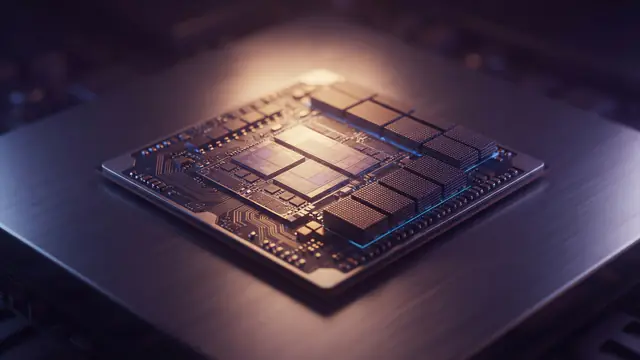
Tenstorrent pursues a dual business model that combines fully assembled systems with silicon intellectual property licensing. On the system side, the company manufactures products ranging from single add-in cards and developer workstations to complete Galaxy racks and networked superclusters. These systems rely on standard Ethernet and Tenstorrent's proprietary Tensix AI cores, paired with an open-source software stack designed to let enterprises deploy AI models on-premises without proprietary software locks.
Alongside system hardware, Tenstorrent licenses its TT-Ascalon RISC-V CPU cores and Tensix AI accelerators to third-party chip designers. Customers building their own custom silicon using Tenstorrent IP include consumer electronics and semiconductor manufacturers Samsung and LG, as detailed in reporting by TechTarget. This strategy enables the startup to monetize its architecture through both direct server deployments and external semiconductor integration.
"We built one architecture and sell it at every size," Keller said in a company statement. "The future of compute is open, scalable, and owned by the people building on it."
Commercial Deployments and Performance Benchmarks
Tenstorrent has secured several enterprise and sovereign infrastructure customers for its hardware. Trading firm Virtu Financial has installed Galaxy servers on-premises to support operational and trading AI agents. Equinix provides access to Galaxy hardware through its Distributed AI Hub, while voice startup Smallest.ai runs its Lightning V2 speech generation model on Galaxy Blackhole systems for on-premises enterprise voice applications. In Japan, ai& has deployed more than 120 Galaxy systems as part of its sovereign AI infrastructure, according to Tenstorrent, as reported by TechTarget.
In video generation, Protagonist managing partner George Bousis stated in Tenstorrent's funding release that the company's video generation benchmarks exceeded investor expectations. In third-party evaluations, live provider benchmarks from Artificial Analysis for the LTX-2.3 Fast video model showed Tenstorrent generating a six-second, 1080p video clip in roughly 9 to 12 seconds, outpacing three other tracked providers in those specific tests, though benchmark results fluctuate across test configurations.
Market Execution and the Path Ahead
Tenstorrent faces entrenched competition from dominant AI chipmakers Nvidia, AMD, and Broadcom, as well as emerging silicon startups such as Etched. Rather than competing head-to-head across the entire model training ecosystem, Tenstorrent focuses primarily on inference, where enterprise buyers prioritize predictable operating costs, open software control, and latency.
Industry analysts emphasize that commercial execution remains the primary challenge. Stephen Sopko, semiconductor practice lead at HyperFrame Research, told TechTarget that the $6.2 billion post-money valuation reflects investor trust in Keller's engineering background, but noted that execution risk persists as the startup ramps production. "Building a few hundred servers is one thing; predictable multi-thousand unit ramps are another," Sopko said. With $1.5 billion in fresh capital, Tenstorrent must now prove that its volume manufacturing, open software tooling, and customer support can satisfy multi-thousand-unit enterprise rollouts.
Questions people ask
How much funding did Tenstorrent raise and what is its valuation?
Tenstorrent raised $1.5 billion in a Series E funding round, valuing the semiconductor startup at $6.2 billion post-money. This is more than double its $2.6 billion to $2.7 billion valuation from late 2024.
Who led Tenstorrent's Series E investment round?
The round was co-led by Trace Capital and Innovation X, with participation from Fidelity Management & Research Company, T. Rowe Price, ARK Invest, Morgan Stanley, SanDisk, Cadence Ventures, Eclipse, Tether Investments, and XTX Markets.
What products does Tenstorrent manufacture and license?
Tenstorrent builds Galaxy server racks, superclusters, workstations, and add-in cards powered by its Tensix AI cores. It also licenses its TT-Ascalon RISC-V CPU and Tensix AI core designs to external chipmakers, including Samsung and LG.
Why did Tenstorrent raise capital instead of accepting a buyout?
Tenstorrent held acquisition discussions with Intel and Qualcomm in May 2026 at valuations up to $5 billion, but CEO Jim Keller decided to remain independent after demonstrating that Galaxy servers could successfully run DeepSeek open-weight models.
Sources
- Tenstorrent raises $1.5B at a $6.2B valuation to scale its Galaxy serversTNW | Investors-funding, Oct 19, 2026
- Tenstorrent hits $6.2B valuation to scale open-weight AI chipsTechCrunch, Oct 19, 2026
- Tenstorrent Announces a $1.5B Series E at a $6.2B valuationtenstorrent.com, Oct 19, 2026
- Tenstorrent raises $1.5B to challenge Nvidia in AI servers and chip IPTechTarget, Oct 19, 2026
How this story was made: the newsroom picked it up from Techmeme, techcrunch.com and Google News, gathered the full text of the sources above, and drafted it with AI assistance. Every factual claim was then checked against those sources before publishing (22 claims checked). Illustrations marked as AI-generated are not photographs. Spotted an error? Tell us.
Published October 20, 2026 at 00:39 UTC