Nvidia Reportedly Halts RTX 5090 Production to Prioritize AI Chips
Hardware leaks indicate Nvidia is ending allocations of GB202 silicon for GeForce RTX 5090 gaming cards to feed high-margin RTX Pro enterprise hardware.

Key takeaways
- Hardware leakers report Nvidia is ceasing GB202 chip supply for GeForce RTX 5090 cards to supply professional RTX Pro models exclusively.
- The RTX Pro 6000 uses the same GB202 silicon family but sells for roughly $16,000, yielding approximately eight times the revenue of a $1,999 RTX 5090.
- Consumer RTX 5090 inventory has disappeared from major US retailers, driving third-party marketplace prices between $6,500 and $9,500.
- Leaked factory notices suggest Nvidia will introduce an RTX 5080 24GB model while discontinuing the original 16GB variant.
- Nvidia and board partners like ASUS, MSI, and Gigabyte have not publicly confirmed an end-of-life date or quantified production cuts.
Nvidia has reportedly moved to halt GeForce RTX 5090 production, choosing to divert its flagship GB202 silicon exclusively to high-margin workstation and artificial intelligence accelerators. The unconfirmed shift, which surfaced through factory notices and hardware leakers on October 10, 2026, threatens to squeeze consumer graphics inventory as enterprise demand for compute silicon continues to overwhelm global supply lines.
According to reports published by Tom's Hardware, leaker @hongxing2020 cited an internal factory communication stating that Nvidia will no longer manufacture any RTX 5090 models, including the regional "D" variants tailored for the Chinese market. Hardware insider @Zed__Wang, also known as MEGAsizeGPU, corroborated the claim, stating that all future supplies of the GB202 processor will be reserved exclusively for Nvidia's professional RTX Pro lineup.
The Factory Leaks Pointing to Halted RTX 5090 Production
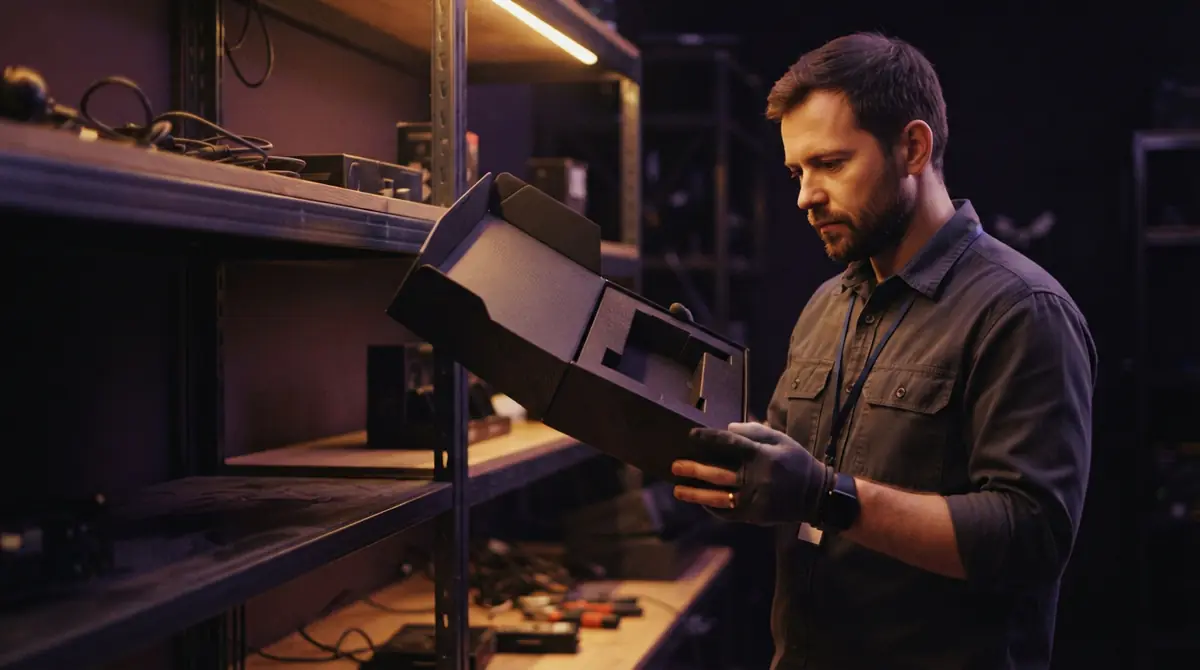
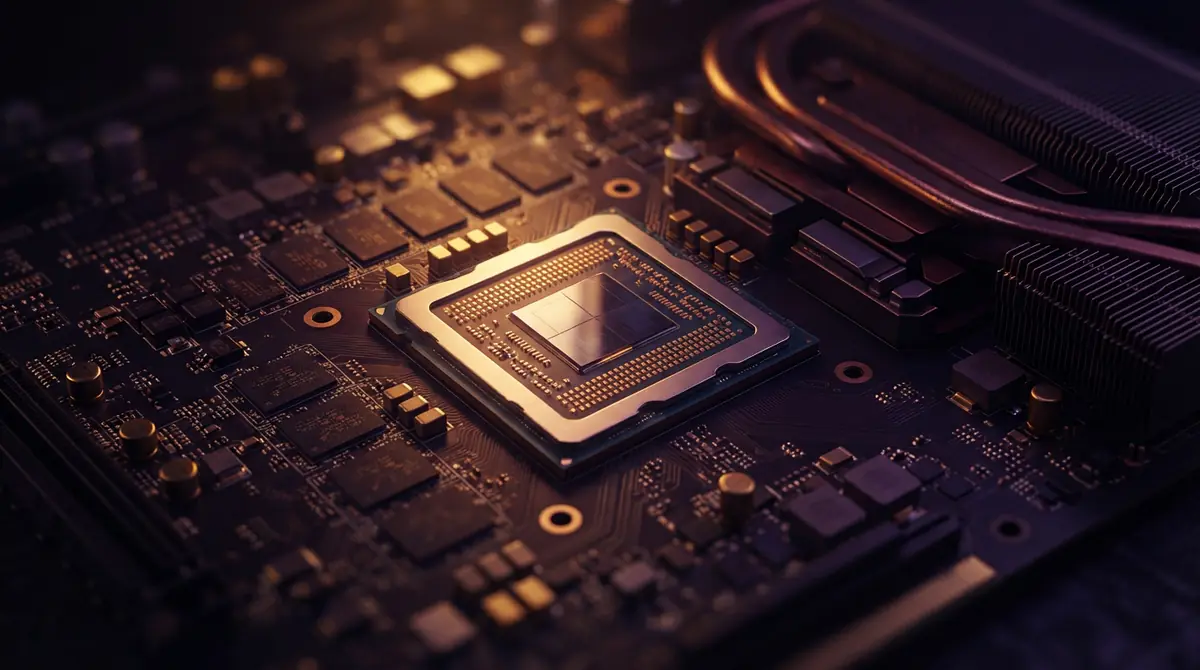
The reported supply shift centers entirely on the GB202 graphics processor, the premier silicon die in Nvidia's Blackwell architecture. As detailed by HotHardware, the processor powers both the consumer-grade GeForce RTX 5090 with 21,760 CUDA cores and enterprise hardware such as the RTX Pro 6000, which features 24,064 CUDA cores. Diverting the physical silicon away from retail add-in-board (AIB) manufacturers effectively brings gaming production to a standstill at the component level.
Despite the specific claims from manufacturing channels, the situation remains unverified by official corporate channels. As noted by Tech Insider, Nvidia had not issued any public end-of-life statement for the RTX 5090 as of October 11, 2026. Furthermore, major AIB partners including ASUS, MSI, and Gigabyte have not confirmed any halt in GPU shipments, and the leaked memos provide no concrete unit figures or cut percentages. Outlets tracking the claims describe the development as an unverified allocation rumor layered on top of an already severe retail shortage.
Blackwell Die Economics and Enterprise Margins
The economic logic driving the alleged shift comes down to wafer revenue and memory costs. According to data compiled by Tech Insider, the consumer GeForce RTX 5090 carries an official launch MSRP of $1,999 and includes 32GB of GDDR7 memory. In contrast, the professional RTX Pro 6000 packages the same GB202 silicon family alongside 96GB of memory and lists for approximately $16,000, generating roughly eight times the revenue per die for Nvidia.
Component pressures have worsened those margins on consumer cards. A TrendForce analysis cited by PC Games Hardware estimates that the 32GB of GDDR7 memory on an RTX 5090 costs Nvidia roughly $320 at current pricing of $20 per memory integrated circuit, accounting for about 16% of the card's entire launch price. With global memory crunches pushing GDDR6 spot pricing to $11.84 per gigabyte in September 2026 and driving down third-quarter 2026 worldwide PC shipments by 20.1%, enterprise hardware provides far greater margin protection.
Technical specifications compiled by Wccftech reveal that the GB202 chip also supports a wider enterprise family, including the 84GB RTX Pro 5500 and the 48GB-to-72GB RTX Pro 5000. For Nvidia, assigning every functional GB202 wafer coming out of TSMC foundries to workstations maximizes gross revenue during an acute silicon deficit.

Vanishing Retail Stock and Escalating Marketplace Markups
Even before rumors of a production shutdown emerged, consumer availability for the RTX 5090 had collapsed. A retail inventory check reported by HotHardware found that Best Buy's stock of both partner models and Nvidia Founders Edition cards was almost entirely exhausted, with the few third-party units listed on the site starting at $8,044.99 and rising beyond $9,000.
First-party inventory has similarly disappeared from major US retailers, including Amazon, Newegg, and B&H, according to Tech Insider. On secondary marketplaces, asking prices have reached between $6,500 and $9,500, representing markups of up to 375% over MSRP. On October 7, 2026, the Capital and Compute hardware price tracker recorded an RTX 5090 marketplace price floor of $7,199.99, an increase of 260.2% above list price.
This pricing pressure is partly driven by local artificial intelligence deployment. Ground News reported that small-scale AI server builders have been acquiring retail RTX 5090 cards in bulk because the GPU offers superior price-to-performance for local inference workloads compared to dedicated enterprise processors. In regions where enterprise hardware faces strict trade controls, buyers have reportedly retrofitted thousands of smuggled RTX 5090 units with custom cooling systems and modified circuit boards for server rack deployment.
Rumored RTX 5080 24GB Replacement and Market Outlook
If the flagship GB202 card exits consumer retail channels, leaked factory documentation suggests Nvidia plans to reposition its product tiering. Reports from Wccftech indicate that an RTX 5080 24GB model will serve as the new high-end GeForce gaming flagship, while the existing 16GB variant will be phased out.
The rumored 24GB card is expected to utilize the smaller GB203 die rather than GB202, incorporating higher-density 3GB GDDR7 memory modules across a 256-bit memory bus to hit 1,024 GB/s of bandwidth with a 415W total board power rating. Analysts anticipate this variant could retail between $1,999 and $2,999, though Nvidia has published no official release date or specifications.
Competitors are currently unable to fill the high-end vacuum left by potential RTX 5090 shortages. AMD's current RDNA lineup remains focused on the mid-range and upper-mid-range market sectors, while Intel's Arc architecture targets handheld systems and mid-range desktop markets. Hardware advisers cited by Tech Insider recommend that users seeking local AI inference hardware consider previous-generation RTX 4090 cards in the $2,300 to $2,800 range rather than paying inflated marketplace prices north of $7,000.
Frequently asked questions
Has Nvidia officially confirmed the end of RTX 5090 production?
No. As of October 11, 2026, Nvidia has not issued an official statement or end-of-life notice, and board partners like ASUS and MSI have not publicly commented.
Why would Nvidia redirect GB202 chips to professional graphics cards?
The RTX Pro 6000 uses the same GB202 silicon family but lists at approximately $16,000, compared to the $1,999 MSRP of the gaming RTX 5090, generating far higher margins per wafer.
What will replace the RTX 5090 in Nvidia's gaming lineup?
Leaked factory notices indicate Nvidia plans to make a rumored RTX 5080 24GB model its top consumer gaming card while discontinuing the 16GB variant.
How much does an RTX 5090 cost on secondary retail markets?
With standard retail stock sold out, third-party marketplace asking prices have ranged between $6,500 and $9,500, over 260% above the card's original $1,999 launch price.
Sources
- Nvidia reportedly halts GeForce RTX 5090 production in favor of AI data center and professional GPUs — impending supply drought expected to drive up prices, RTX 5080 24GB rumored as new gaming flagsh…Tom's Hardware · Oct 10, 2026
- Nvidia Reportedly Ends RTX 5090 Output, Feeds RTX Pro [2026]tech-insider.org · Oct 11, 2026
- NVIDIA May Scrap RTX 5090 Production To Feed Surging AI DemandHotHardware · Oct 10, 2026
- NVIDIA Reportedly Axes RTX 5090 Production, Diverting GB202 Chips To PRO Cards As Gamers Get An RTX 5080 24 GBWccftech · Oct 10, 2026
How this story was made: the newsroom picked it up from tomshardware.com, Google News and Reddit, gathered the full text of the sources above, and drafted it with AI assistance. Every factual claim was then checked against those sources before publishing (34 claims checked). Illustrations marked as AI-generated are not photographs. Spotted an error? Tell us.
Published October 11, 2026 at 01:39 UTC