Amazon Explores $8B Special Purpose Vehicle for Nvidia AI Chips
Amazon is in talks with outside investors to shift $8 billion of Nvidia Grace Blackwell chips into an off-balance-sheet vehicle as capital spending accelerates.

Key takeaways
- Amazon is discussing an $8 billion special purpose vehicle (SPV) to transfer ownership of thousands of Nvidia Grace Blackwell AI chips.
- Under the proposed structure, outside investors would fund the SPV, and Amazon would lease the chips back while retaining zero equity in the vehicle.
- The vehicle may issue debt and sell up to a 10% equity stake, targeting institutional investors like pension funds and insurers.
- Amazon raised its 2026 capital expenditure target to $220 billion amid persistent cloud compute shortages projected into 2027 and 2028.
Amazon is in preliminary discussions to transfer approximately $8 billion worth of advanced Nvidia artificial intelligence chips to outside investors using a special purpose vehicle, according to reporting by the Financial Times cited by Benzinga. The move would allow the cloud giant to maintain access to high-demand computing hardware while adopting an asset-light model for its balance sheet.
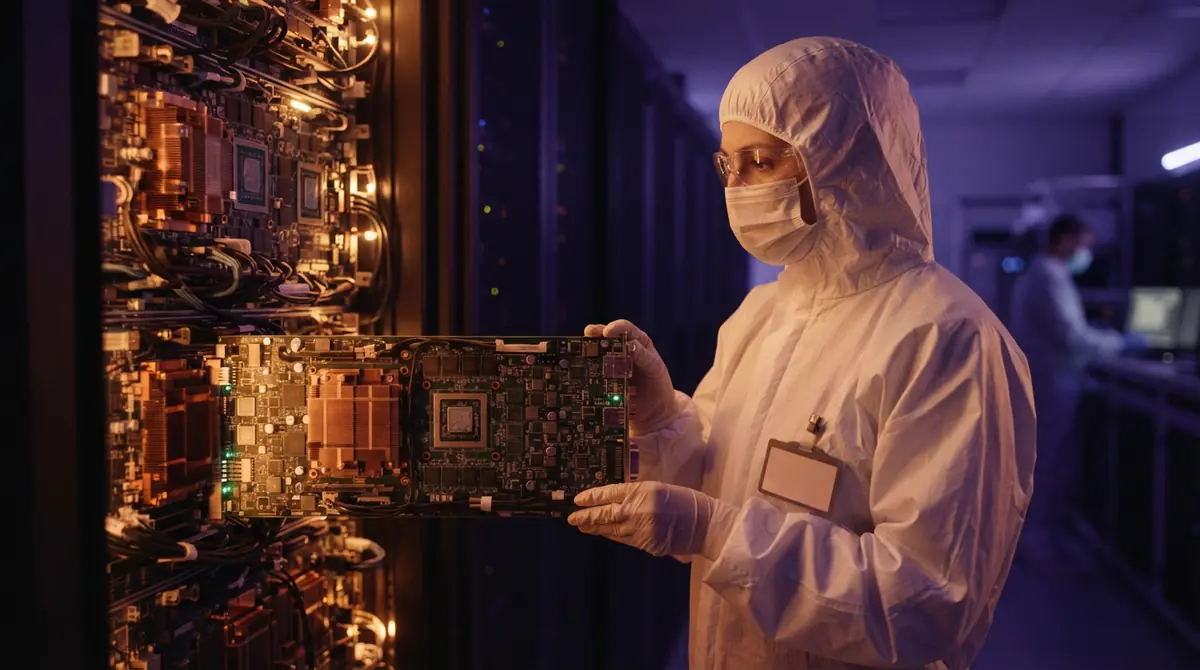
Under the proposed framework, an independent special purpose vehicle (SPV) would take ownership of thousands of Nvidia Grace Blackwell chips deployed across more than a dozen Amazon Web Services data centers in five U.S. states, including Virginia and Nevada. Amazon would subsequently lease the processors back from the entity to serve cloud computing workloads.

Structure of the Proposed Special Purpose Vehicle
According to reports cited by Techzine, the financing vehicle would raise capital directly from external investors by issuing debt securities and offering up to a 10% equity stake in the entity. Amazon would retain no ownership interest in the SPV itself.
The arrangement aims to secure an investment-grade credit rating for the vehicle, backed by Amazon's current double-A credit profile. That credit quality is intended to open participation to institutional investors, such as pension funds and insurance companies.
Discussions around the $8 billion transaction remain preliminary and subject to change, while Amazon and Nvidia have not issued formal comments regarding the negotiations.
Rising AI Capital Expenditure and Market Demand
The financing proposal arrives as hyperscale cloud providers confront massive capital commitments to secure advanced compute. During Amazon's second-quarter earnings call in July, CEO Andy Jassy announced that the company raised its 2026 capital expenditure budget by $20 billion to $220 billion, pointing to surging memory component costs and high demand for AWS infrastructure, as reported by Benzinga.
Jassy noted during the earnings report that Amazon expects it will remain unable to satisfy all customer demand throughout 2026 and likely into 2027, with strong demand already visible into 2028. Jassy also indicated that Amazon has already accessed debt markets and maintains multiple financing avenues to fund infrastructure expansion.
Industry projections underline the broader scale of AI buildouts. Bloomberg Intelligence estimates cited by Techzine indicate that cumulative capital investments across hyperscale operators could reach $9 trillion by 2031, while debt securities issuance tied directly to AI infrastructure could expand to $500 billion by 2027.

Depreciation and Investor Risks in Hardware Deals
While specialized cloud providers such as CoreWeave have previously secured financing against graphics processing units, Amazon's exploratory plan stands out due to its multi-billion-dollar scale and its focus on Nvidia's flagship Grace Blackwell architecture.
Financing AI hardware carries specific risks for institutional investors due to rapid depreciation. According to Bloomberg data reported by Techzine, advanced data center chips face an estimated replacement cycle of roughly five years. As newer semiconductor architectures enter production, the residual economic value of prior-generation hardware declines, tying investor returns directly to the release cadence of subsequent chip generations.
Despite heavy spending pressures, market analysts at KeyBanc Capital Markets observed that sustained capital outlays could weigh on Amazon's near-term profit margins while strengthening AWS's competitive position and earnings growth through 2030, Benzinga reported.
Frequently asked questions
What is Amazon's proposed $8 billion Nvidia chip deal?
Amazon is exploring the creation of a special purpose vehicle (SPV) that would acquire approximately $8 billion in Nvidia Grace Blackwell chips deployed across Amazon data centers, which Amazon would then lease back.
Will Amazon own an equity stake in the financing entity?
No. Under the proposed structure, Amazon would retain zero ownership interest in the SPV, while outside investors could acquire up to a 10% equity stake.
Why are institutional investors being targeted for AI chip financing?
Supported by Amazon's double-A credit profile, the structure aims to achieve an investment-grade rating, making debt securities issued by the entity attractive to pension funds and insurance companies.
What risks are associated with financing AI chips?
AI processors face rapid depreciation and typical data center replacement cycles of approximately five years, exposing investors to residual value risks as new GPU generations are released.
Sources
- Amazon Eyes $8 Billion Nvidia Chip Sale to Investors as AI Infrastructure Costs Surge: Reportbenzinga.com · Oct 2, 2026
- Amazon plans to secure external financing for $8 billion in AI chipstechzine.eu · Oct 2, 2026
How this story was made: the newsroom picked it up from Techmeme, Google News and Hacker News, gathered the full text of the sources above, and drafted it with AI assistance. Every factual claim was then checked against those sources before publishing (17 claims checked). Illustrations marked as AI-generated are not photographs. Spotted an error? Tell us.
Published October 3, 2026 at 01:37 UTC