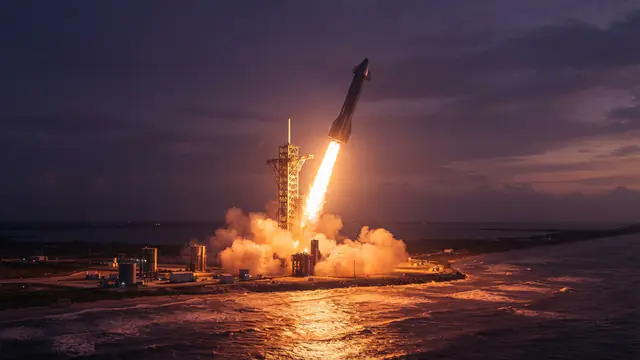
SpaceX Buys Nationwide 800 MHz Spectrum in $8B Push for Starlink Mobile
The deal gives Starlink Mobile scarce low-band frequencies to reach devices inside buildings, rattling major U.S. wireless carriers.

Key takeaways
- SpaceX signed a definitive agreement to purchase 100% of Grain Management's nationwide 800 MHz spectrum portfolio.
- The Wall Street Journal reported the all-cash transaction is valued at approximately $8 billion.
- The 14 MHz low-band allocation is intended to give Starlink Mobile in-building signal penetration alongside its space-based network.
- Following the announcement, shares of T-Mobile, AT&T, and Verizon fell sharply, while cell tower equities climbed.
SpaceX has struck a definitive deal to acquire a nationwide low-band spectrum portfolio, positioning the company to compete directly with legacy cellular operators. Digital infrastructure investment firm Grain Management announced on October 8, 2026, that it entered into an agreement to sell 100% of its nationwide 800 MHz spectrum assets to SpaceX. The acquisition is subject to Federal Communications Commission (FCC) approval and customary closing conditions.
The transaction covers 14 megahertz of paired 800 MHz frequencies, according to reporting by Fierce Network. While the companies did not publicly disclose financial terms, The Wall Street Journal reported that SpaceX will pay about $8 billion in cash. On social media platform X, SpaceX CEO Elon Musk called the purchase "the last critical piece of the spectrum puzzle needed for SpaceX to provide complete phone coverage in America."
Low-Band Frequencies for Ground and Space Integration
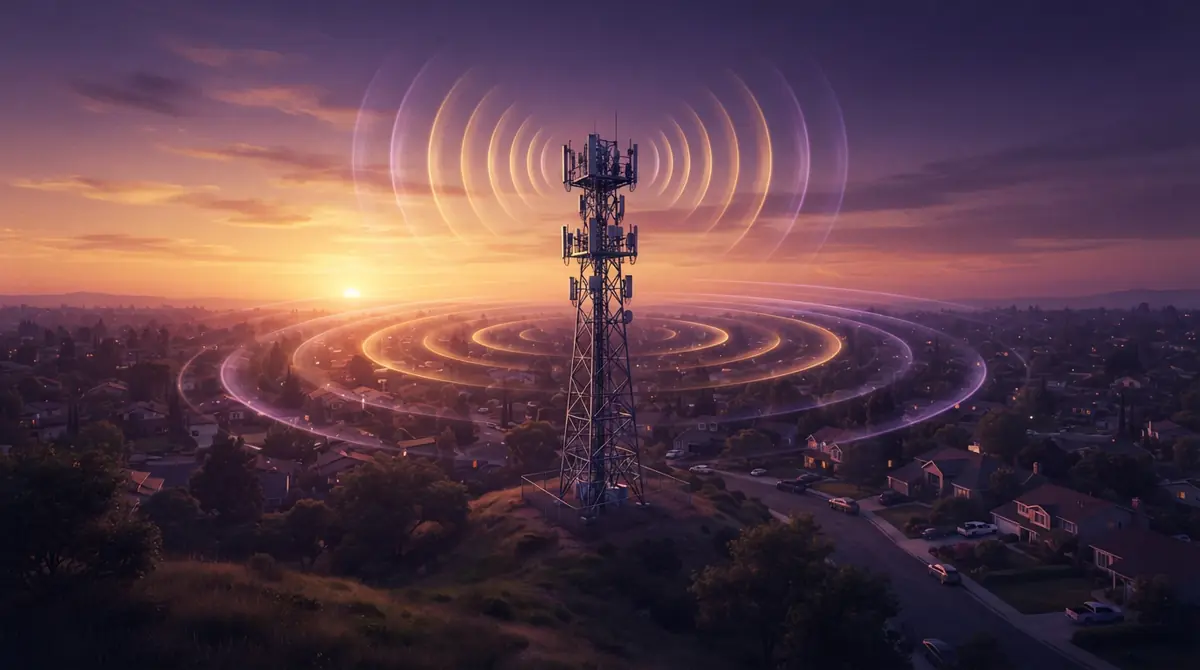
The low-band 800 MHz spectrum allows signals to penetrate through walls and buildings. SpaceX stated in a press release that Starlink Mobile will deploy a "flexible architecture combining our satellite-to-mobile constellation in space with an advanced terrestrial deployment that can seamlessly connect devices everywhere."
SpaceX added that most existing mobile devices already support the 800 MHz band. The newly acquired band will sit beneath the global 2 GHz spectrum SpaceX is buying from EchoStar. While the 2 GHz spectrum provides high-bandwidth data transmission, the 800 MHz frequencies provide the foundational ground-level coverage layer.
The transaction follows the FCC's recent approval of SpaceX's Gen2 satellite constellation application. That regulatory green light permits SpaceX to launch 15,000 satellites optimized for the 2 GHz spectrum. SpaceX stated that its V2 satellites will deliver more than 100 times the bandwidth of its existing direct-to-device generation, serving unmodified consumer phones globally.
Market Impact Across Wireless Carriers and Tower Operators
News of SpaceX's spectrum purchase triggered an immediate sell-off across established U.S. cellular carriers on October 9, 2026. Shares of T-Mobile dropped 10% to $154.10, AT&T fell more than 6% to $22.90, and Verizon fell 5.5% to $43.13. SpaceX shares gained roughly 1% to reach $162.75.

Conversely, shares in cell tower operators rose significantly following the news. Crown Castle gained 12% to trade at $77.30, American Tower rose 7% to $178.61, and SBA Communications climbed 6% to $180.53. SpaceX has indicated plans to focus on femtocells and terrestrial installations to complement its orbital network.
TD Cowen analyst Gregory Williams noted in an October 8 investor memo that the transaction represents an unambiguous challenge for incumbent carriers, highlighting SpaceX's explicit references to "an advanced terrestrial deployment" and ambitions "to become a major mobile carrier."
The Spectrum Path: From Nextel and T-Mobile to Grain
The 800 MHz licenses involved in the agreement date back decades to Nextel Communications. The assets were later earmarked for Dish Network to acquire as a condition of the T-Mobile and Sprint merger, but Dish never finalized the purchase due to financing constraints.
Grain Management purchased the portfolio from T-Mobile in August 2026, exchanging cash and its own 600 MHz holdings under an FCC order approved in July 2026. That order established a conditional pathway for direct-to-device deployments. Grain founder and CEO David Grain said the sale to SpaceX directs scarce low-band frequencies toward supporting federal connectivity goals and accelerating the convergence of terrestrial and satellite networks.
New Street Research analyst David Barden estimated the reported $8 billion valuation translates to approximately $1.73 per megahertz per population unit (MHz/POP). That figure sits above Grain's previously speculated internal target of $6 billion, or $1.30 per MHz/POP.
Analytical Skepticism and the MVNO Question
Industry analysts have raised questions regarding how quickly SpaceX can deliver on its nationwide service ambitions. Barden noted that the Big Three wireless carriers still control vastly larger spectrum reserves than the 14 MHz slice SpaceX is acquiring. Furthermore, the 800 MHz frequencies are not currently compatible with SpaceX's V1 or V2 direct-to-device satellites, which are built around the 2 GHz band acquired from EchoStar.
Analysts also debate whether SpaceX intends to spend an estimated $80 billion over multiple years to construct its own nationwide terrestrial cell network, or if it will use the spectrum as leverage to negotiate a mobile virtual network operator (MVNO) agreement with an established carrier. AT&T, T-Mobile, and Verizon recently formalized a joint venture intended to pool spectrum resources and resist partnering with SpaceX.
LightShed Partners analysts Walter Piecyk and Joe Galone questioned the durability of that defensive alliance in an October 9 analysis. They noted that the carrier joint venture had not identified specific spectrum assets committed to the pool, and warned that coordinated efforts to block a rival could attract antitrust scrutiny. The first carrier to break ranks and ink an MVNO wholesale agreement with SpaceX could secure immediate wholesale revenue while influencing the entrant's commercial trajectory.
Frequently asked questions
What spectrum did SpaceX agree to acquire?
SpaceX agreed to acquire 100% of Grain Management's nationwide 800 MHz spectrum portfolio, which comprises 14 MHz of paired low-band frequencies.
How much is SpaceX reportedly paying for the 800 MHz spectrum?
According to The Wall Street Journal, SpaceX will pay approximately $8 billion in cash for the portfolio, though neither company officially disclosed the purchase price.
Why is the 800 MHz band important for Starlink Mobile?
Low-band 800 MHz signals penetrate walls and indoor structures more effectively than higher satellite bands, helping SpaceX address mobile dead zones while supporting most unmodified consumer phones.
What regulatory hurdles remain before the transaction closes?
The acquisition requires formal approval from the Federal Communications Commission (FCC) and remains subject to customary closing conditions.
Sources
- Grain Management Announces Definitive Agreement to Sell Nationwide 800 MHz Spectrum Portfolio to SpaceXGrain Management · Oct 8, 2026
- SpaceX’s 800 MHz spectrum grab threatens Big 3 mobile carriers even moreFierce Network · Oct 9, 2026
How this story was made: the newsroom picked it up from Techmeme and Reddit, gathered the full text of the sources above, and drafted it with AI assistance. Every factual claim was then checked against those sources before publishing (26 claims checked). Illustrations marked as AI-generated are not photographs. Spotted an error? Tell us.
Published October 10, 2026 at 00:40 UTC