Leaked Video Shows Chinese Factories Stripping RTX 5090 GPUs for AI
Industrial assembly lines are stripping consumer Blackwell GPUs and rebuilding them with dual-slot blowers for dense server racks.
In short
- Video footage published on October 23, 2026, reveals Chinese facilities dismantling brand-new GeForce RTX 5090 graphics cards on industrial assembly lines.
- Technicians desolder the Blackwell GB202 GPU die and 32GB of GDDR7 VRAM, transplanting them onto replacement PCBs equipped with 2-slot turbine blower coolers.
- The modifications allow consumer-grade hardware to fit tightly packed 4U data center servers, bypassing standard 3-to-4-slot consumer cooling designs.
- Standalone custom GeForce RTX 5090 cards now start at $8,500, with specialized models reaching $10,000.
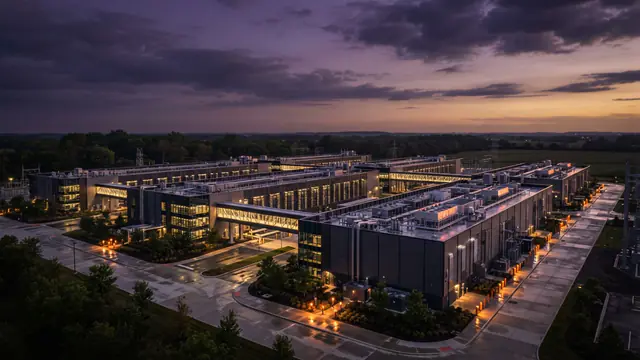
Video footage shared on social media by HKEPC has exposed industrial conversion workshops in China dismantling brand-new Nvidia GeForce RTX 5090 graphics cards to harvest their silicon for artificial intelligence infrastructure. According to reporting from Tom's Hardware and VideoCardz, technicians are stripping consumer cooling assemblies, desoldering processor dies and memory chips, and transplanting them onto custom circuit boards designed for enterprise server racks.
The GeForce RTX 5090 is not officially available in China due to United States export controls. Despite those trade restrictions, grey-market supply pipelines continue to funnel retail hardware into conversion facilities, where an estimated thousands of cards per day are being converted into compact compute modules for AI data centers.
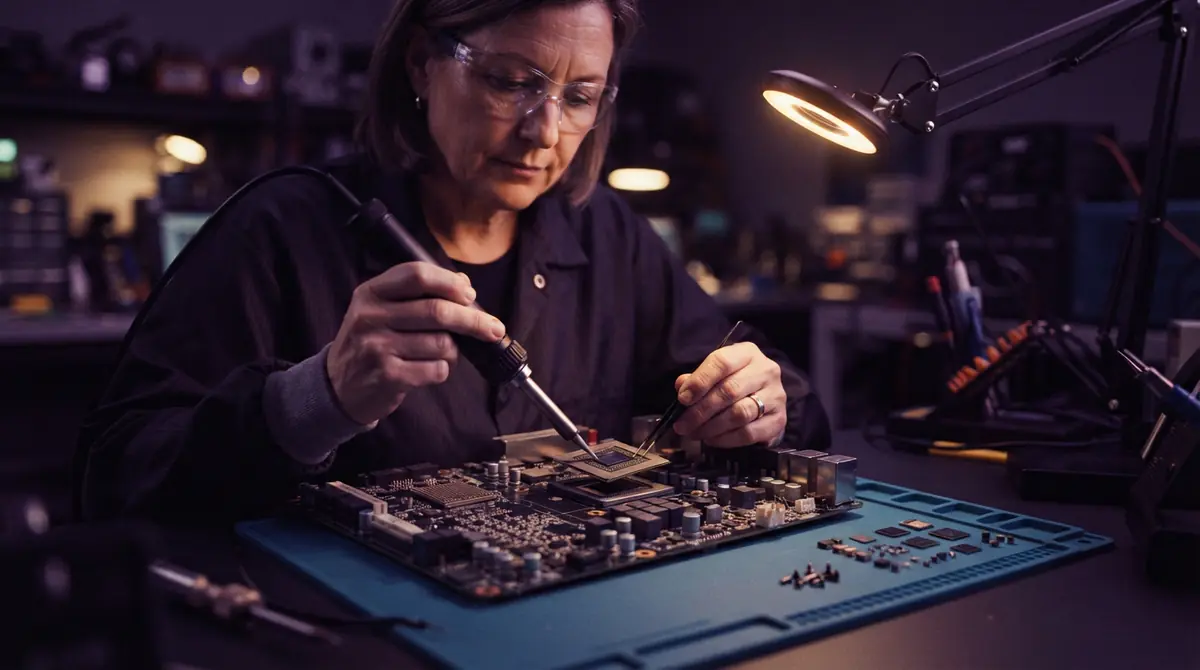
Inside the RTX 5090 Conversion Assembly Lines
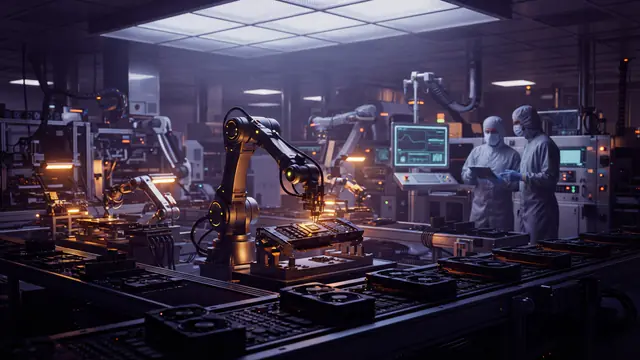
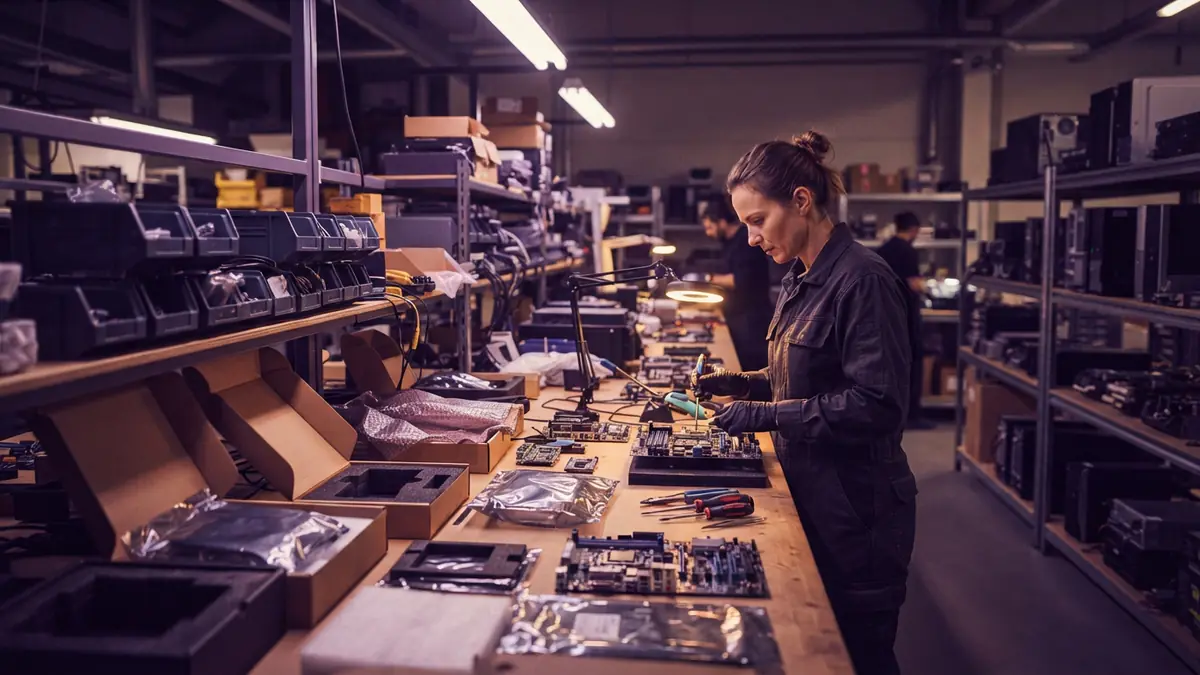
The footage obtained and circulated on October 23, 2026, illustrates that these operations resemble structured manufacturing plants rather than makeshift modification shops. Rows of workstations show workers unboxing retail cards from major board partners—including Asus, Gigabyte, and PNY—as well as Nvidia's own Founders Edition units. High-end retail models, such as the Asus ROG Astral RTX 5090, were visible on assembly shelves awaiting teardown, as reported by Wccftech.
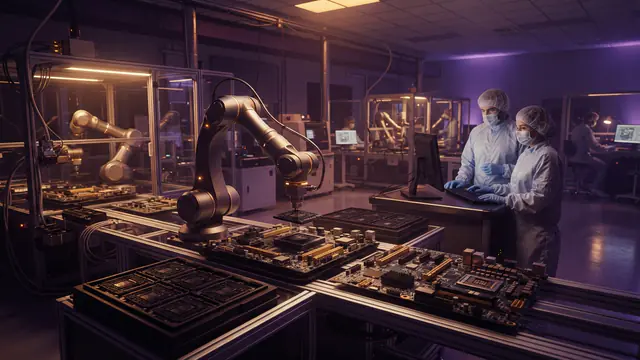
Technicians immediately remove the stock consumer heatsinks and multi-fan assemblies to isolate the printed circuit board (PCB). Workers desolder Nvidia's flagship GB202 processor die along with the 32GB of GDDR7 memory chips. These components are subsequently transferred and soldered onto brand-new replacement PCBs.
While previous GPU generations saw modified hardware expanded with higher memory configurations, VideoCardz reported that no working examples of 64GB or 96GB RTX 5090 variants have been verified. The modified hardware shown in the factory videos maintains the stock 32GB GDDR7 configuration.
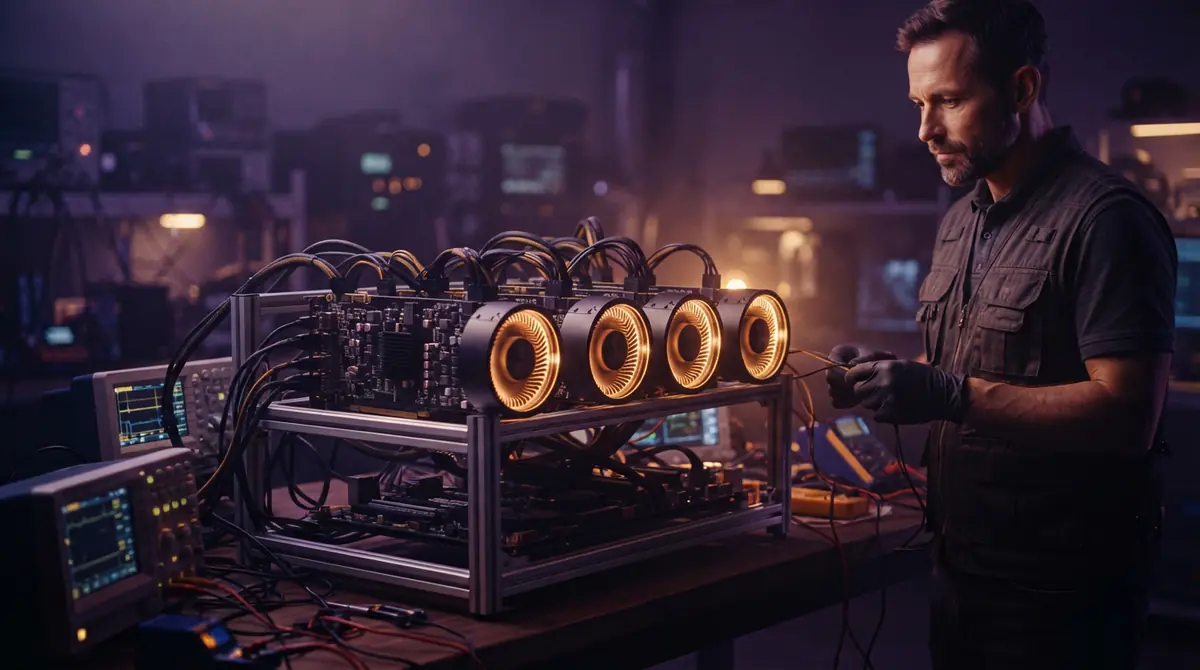
Why Server Racks Require Rebuilt Silicon
The driving factor behind this teardown process is physical space and thermal management inside standard data center racks. Consumer-grade RTX 5090 graphics cards feature massive three-fan cooling configurations spanning three to four expansion slots. These coolers exhaust heated air sideways into the interior of a chassis, making them incompatible with high-density 4U server racks where multiple GPUs operate adjacent to one another.
To overcome this, the converted boards are equipped with dual-slot copper-base turbine blower coolers. Turbine blowers exhaust air directly out the rear of the chassis, improving cooling efficiency and spatial compatibility.
Once assembled, the modified cards move to an open-air quality-control section. As detailed by Tom's Hardware, rows of interconnected test benches run simultaneous compute and graphics stability stress tests across dozens of converted boards. Units that pass testing are packaged and shipped directly to clients likely to be AI labs or data centers.

Market Impact, Pricing, and Supply Scramble
The mass diversion of flagship graphics cards has accelerated shortages in the global consumer market. According to Tom's Hardware, standalone custom GeForce RTX 5090 cards now start at $8,500 at retail, while grey-market transactions reach nearly $10,000 per card. Prebuilt gaming desktop PCs have emerged as an unusual workaround for end users, often selling for less than a standalone GPU while retaining factory warranties.
The reports also highlight conflicting accounts regarding Nvidia's manufacturing status. Tom's Hardware reported that Nvidia has halted RTX 5090 production to prioritize enterprise Blackwell silicon, such as the RTX Pro 6000 Blackwell. However, both Wccftech and Notebookcheck pointed out that Nvidia recently denied rumors that the RTX 5090 had been discontinued.
Unlike during the cryptocurrency boom when NVIDIA introduced Lite Hash Rate (LHR) models to restrict mining performance, restricting AI performance is deemed unlikely because AI performance is central to GeForce marketing, as reported by VideoCardz.
Questions people ask
Why are RTX 5090 graphics cards being dismantled for AI servers?
Retail RTX 5090 cards use 3-to-4-slot coolers that exhaust air sideways, making them too thick and thermally inefficient for dense multi-GPU server racks. Conversion facilities remove the components and build 2-slot cards with rear-exhausting turbine blowers suitable for 4U server chassis.
Do these converted cards feature memory upgrades?
No. Despite rumors and unverified supplier claims regarding 64GB or 96GB models, reports confirm that all documented converted cards retain their original 32GB GDDR7 memory configuration.
How has this affected retail RTX 5090 availability and pricing?
The diversion of inventory to grey-market conversion facilities has driven standalone custom RTX 5090 retail prices to start at $8,500, with grey-market sales reaching nearly $10,000, prompting some buyers to purchase prebuilt desktops to secure the hardware.
Sources
- Leaked video exposes how industrial-scale Chinese factories are dismantling RTX 5090s by the thousands to fuel AI servers — GPU die and memory desoldered and transplanted to blower designs; custom ca…tomshardware.com, Oct 24, 2026
- Here's where the last RTX 5090 cards are going: Massive AI conversion factory exposed in China, Founders Edition includedvideocardz.com, Oct 23, 2026
- The RTX 5090 Isn’t Gone, It’s In Chinese Labs, Where Technicians Rip Off Its Die And 32GB VRAM For AI ServersWccftech, Oct 23, 2026
- Chinese labs turn “discontinued” GeForce RTX 5090 cards into AI acceleratorsNotebookcheck, Oct 23, 2026
How this story was made: the newsroom picked it up from tomshardware.com and Reddit, gathered the full text of the sources above, and drafted it with AI assistance. Every factual claim was then checked against those sources before publishing (20 claims checked). Illustrations marked as AI-generated are not photographs. Spotted an error? Tell us.
Published October 25, 2026 at 01:41 UTC