inDrive, Pony.ai, and NVIDIA Team Up for Robotaxi Trials in Kazakhstan
A three-way partnership will bring Level 4 autonomous vehicle trials to Astana, testing driverless navigation in one of the world's coldest capitals.
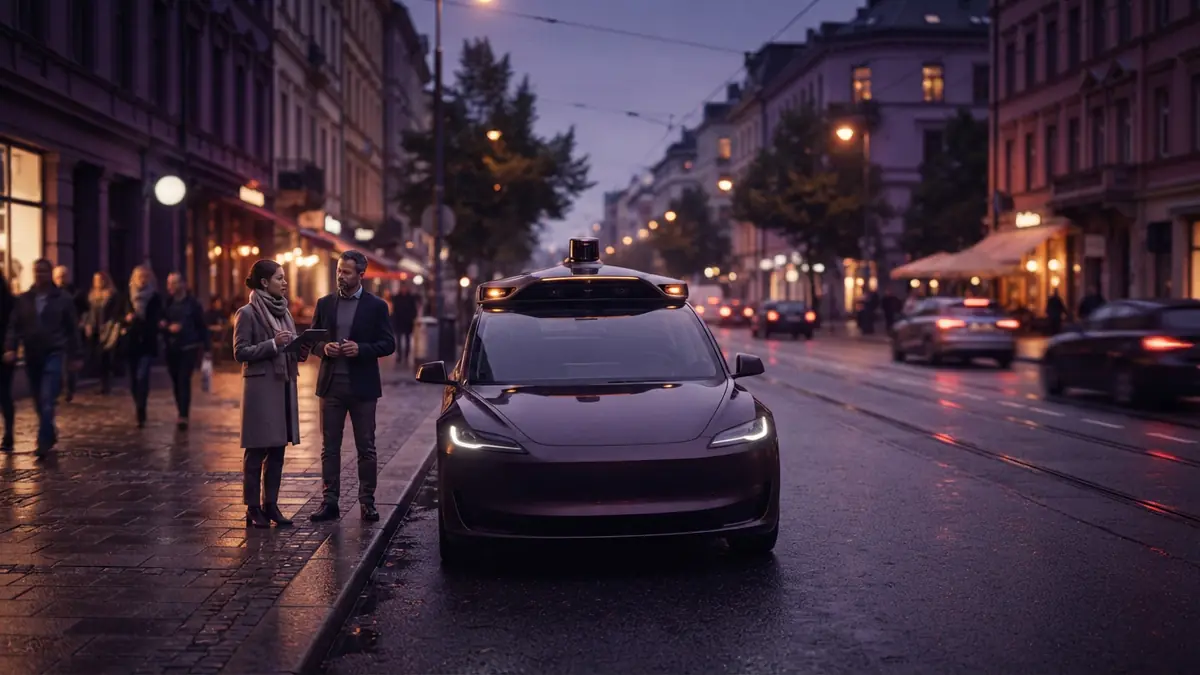
In short
- inDrive, Pony.ai, and NVIDIA signed an MOU to assess and deploy Level 4 robotaxi services in Astana, Kazakhstan.
- Road testing is scheduled to begin in the first half of 2027, starting with safety operators before moving toward fully driverless rides.
- The pilot utilizes Pony.ai's Gen-7 autonomous vehicles integrated with the NVIDIA Hyperion compute platform and Halos safety architecture.
- Astana's severe winter conditions of snow and ice serve as an operational proving ground for autonomous driving in extreme weather.
Global ride-hailing platform inDrive, autonomous driving developer Pony.ai, and chipmaker NVIDIA announced on October 23, 2026, that they have signed a memorandum of understanding to test autonomous robotaxis in Kazakhstan. The pilot will make the Central Asian nation the first test market for the trio's autonomous ride-hailing collaboration, targeting initial road operations in the capital city of Astana.
According to an official announcement published on the Pony AI Inc. Investor Relations portal, the three companies will evaluate the technical, operational, regulatory, and commercial viability of deploying Level 4-ready autonomous passenger rides through the inDrive application. The initiative represents an asset-light expansion model for inDrive, which aims to enter autonomous mobility without manufacturing proprietary hardware or training foundation driving stacks.
The Hardware and Compute Architecture Behind the Fleet
Under the partnership framework, Pony.ai will supply its seventh-generation (Gen-7) robotaxis, which feature multi-sensor fusion, system-level redundancy, and fail-operational capabilities designed for Level 4 autonomy. Level 4 systems can operate without human driver intervention within predefined operating design domains. inDrive will manage consumer fleet dispatch and operations through its mobile ride-hailing platform.
NVIDIA is providing the computing foundation for the project. As detailed in the inDrive Blog, the robotaxis will be built on the NVIDIA Hyperion reference sensor and compute platform, alongside the Alpamayo Stack and the NVIDIA Halos safety system.
"Bringing autonomous mobility to more communities requires AI built for the complexity of real-world driving, with safety at its foundation," said Rishi Dhall, vice president of automotive at NVIDIA, noting that the combination of Hyperion and Halos creates an operational path to scalable robotaxis.

Phased Testing in Astana's Harsh Winter Conditions
Testing is scheduled to begin in Astana during the first half of 2027, according to statements given by inDrive Chief Technology Officer Yuri Misnik to TechCrunch. Misnik confirmed the rollout will progress through distinct stages, beginning with closed testing alongside an onboard safety operator, progressing to supervised passenger rides, and ultimately targeting fully driverless commercial operation subject to regulatory permits.
Astana presents a deliberate physical stress test for autonomous perception and path planning. With a population of roughly 1.7 million, it ranks as the second-coldest capital in the world, facing months of snow and ice that pose challenges for autonomous driving systems.
"Astana is also the second-coldest capital in the world, with long winters, snow and ice," noted inDrive founder and CEO Arsen Tomsky in coverage reported by the Economic Times. "Launching here will provide an important opportunity to evaluate autonomous driving technology in challenging winter conditions. Success in Astana could offer valuable insights for expanding autonomous mobility to other locations facing similar challenges."

Regulatory Alignment and Emerging Market Strategy
The agreement coincided with an official visit to Astana by NVIDIA founder and CEO Jensen Huang on October 23, 2026, where he met with Kazakhstan President Kassym-Jomart Tokayev and attended events highlighting the country's national compute push, as outlined on the NVIDIA Blog. Kazakhstan designated 2026 as its "Year of Digitalization and Artificial Intelligence," creating its first dedicated legal framework for autonomous vehicle testing on select public roadways.
Speaking to Zag Daily, Misnik pointed out that developer attention in autonomous driving has historically ignored emerging regions. "Most autonomous driving so far has been built for a handful of cities with similar, favourable conditions. Emerging markets are home to billions of people and much of the world's future urban growth will happen there yet the AV industry has largely overlooked them until now," Misnik said.
inDrive operates across more than 1,200 cities in 47 countries, primarily relying on a peer-to-peer fare negotiation model. Moving into autonomous fleets allows the business to assess how driverless vehicles will interface with traditional drivers over time. The company previously signed an agreement in late 2025 with Saudi autonomous firm AI Driver to explore vehicle pilots powered by WeRide in Riyadh, and the companies had targeted a pilot in the first half of 2026, though it remains unclear whether testing has begun.
For Pony.ai, the Astana project extends its footprint outside China. The company, which operates commercial driverless robotaxis in Chinese metropolitan hubs, set a goal to expand its operational footprint to over 3,500 robotaxis across more than 20 global cities by the end of 2026, up from 1,975 vehicles recorded at the end of June 2026. Following the Astana trial, the consortium plans to review potential expansions to other urban centers across Kazakhstan and adjacent international markets.
Questions people ask
When will robotaxis begin testing in Kazakhstan?
Testing is scheduled to begin in the first half of 2027 in the capital city of Astana, initially utilizing safety operators before attempting driverless operations.
What hardware and software platforms will the vehicles use?
The service will deploy Pony.ai's Gen-7 Level 4 robotaxis, utilizing the NVIDIA Hyperion reference sensor and compute platform, the Alpamayo Stack, and the NVIDIA Halos safety architecture.
Why was Astana chosen for autonomous vehicle testing?
Astana was chosen because Kazakhstan enacted a clear regulatory framework for autonomous transport, and the city's severe winter climate allows engineers to test driving algorithms under heavy snow and icy conditions.
Sources
- Kazakhstan Expands Compute for Its AI FutureNVIDIA Blog, Oct 23, 2026, official source
- Uber rival inDrive eyes 2027 robotaxi tests in Central Asia with Pony AI and NvidiaTechCrunch, Oct 23, 2026
- inDrive taps Pony.ai and Nvidia to test robotaxis in one of the world's coldest capitalsEconomic Times, Oct 24, 2026
- PONY AI Inc. and inDrive Announce Collaboration to Explore Autonomous Mobility in Kazakhstan Built on NVIDIA Hyperion | Pony AI Inc.Pony AI Inc., Oct 22, 2026
- inDrive and Pony.ai Announce Collaboration to Explore Autonomous Mobility in Kazakhstan Built on NVIDIA Hyperion | inDrive Blogblog.indrive.com
- InDrive and Pony AI pledge robotaxis for Kazakhstan next yearzagdaily.com, Oct 23, 2026
- inDrive, Pony.ai and NVIDIA sign MOU to bring Gen-7 robotaxis to Astana, KazakhstanEVwire, Oct 23, 2026
How this story was made: the newsroom picked it up from techcrunch.com, Google News and Google Search, gathered the full text of the sources above, and drafted it with AI assistance. Every factual claim was then checked against those sources before publishing (27 claims checked). Illustrations marked as AI-generated are not photographs. Spotted an error? Tell us.
Published October 25, 2026 at 01:20 UTC