Amazon Carbon Emissions Average Net 1.17 Billion Tons Annually
A 15-year atmospheric study published in Nature finds wildfires and deforestation turned the world's largest rainforest into an active carbon source.

In short
- Between 2010 and 2024, the Amazon rainforest released an average net surplus of 1.17 billion metric tons of CO2 per year into the atmosphere.
- Wildfires released approximately 1.47 billion metric tons of CO2 annually, far exceeding the forest's yearly absorption capacity of roughly 300 million metric tons.
- Data collected over 46 years shows regional precipitation fell by 20% and temperatures rose by 1.81°C during the peak dry season from August to October.
- In drought-heavy years, annual net emissions peaked at 1.8 billion metric tons of CO2, pushing parts of the biome toward a self-reinforcing degradation loop.
The Amazon rainforest released an average of 1.17 billion metric tons more carbon dioxide into the atmosphere than it absorbed each year between 2010 and 2024, according to a 15-year study published in Nature. The findings demonstrate that recurring wildfires and ongoing deforestation have overwhelmed the ecosystem's ability to act as a buffer against rising atmospheric carbon, transforming parts of the planet's largest tropical forest into an active contributor to global greenhouse gas levels.
Conducted by scientists at Brazil's National Institute for Space Research (INPE) and funded by the São Paulo Research Foundation (FAPESP), the study assessed atmospheric carbon samples taken across the entire basin. According to Agência FAPESP, the forest's living vegetation absorbed roughly 300 million metric tons of CO2 per year over the period. However, that sequestration was completely eclipsed by wildfires, which emitted an estimated 1.47 billion metric tons of CO2 annually.
Decade-Long Flights Track Amazon Carbon Emissions
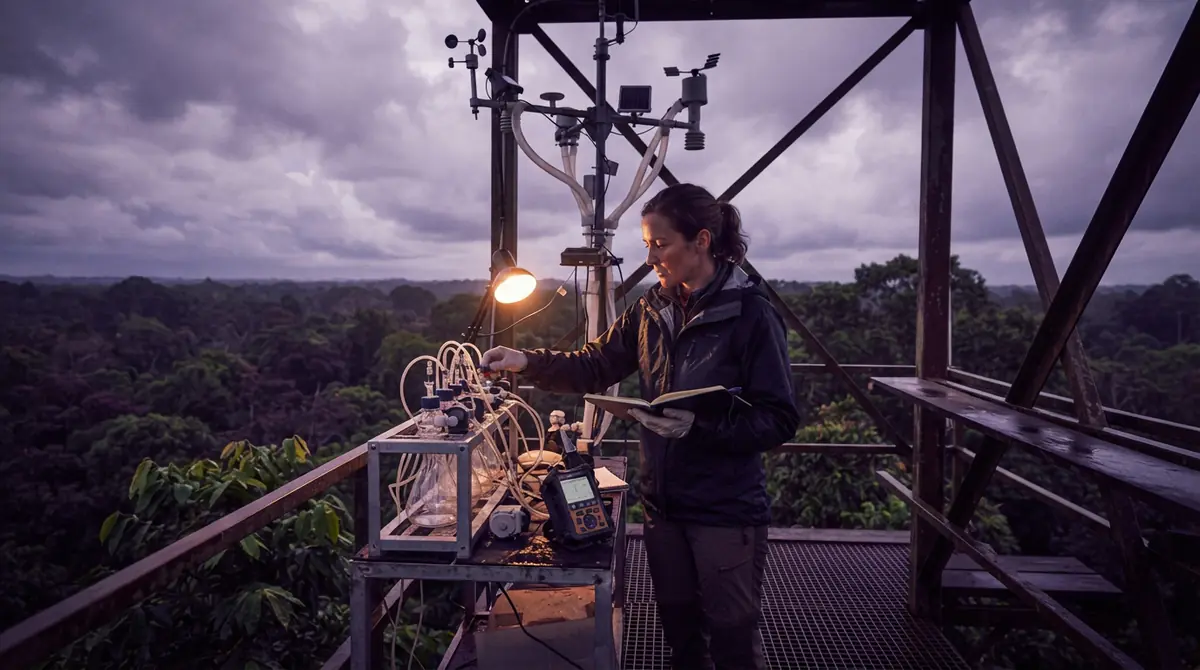
To capture atmospheric concentrations above the forest canopy, researchers conducted regular sampling flights in small aircraft from 2010 to 2024 across four regions: the northwest, northeast, southwest, and southeast. The team, led by INPE climate scientist Luciana Vanni Gatti, measured levels of carbon dioxide and carbon monoxide to calculate the forest's total carbon balance. Their analysis compared total emissions against net biome exchange, which tracks the natural absorption and respiration of living vegetation.
The aerial data revealed that when emissions from fires were set aside, the living forest's net biome exchange was close to neutral across the 15-year span. This neutrality means the forest absorbed almost the exact amount of carbon that it emitted through natural decomposition and respiration. Because the standing ecosystem absorbed virtually no excess CO2 beyond its own baseline cycle, nearly all the gross emissions produced by human-set fires and agricultural clearing accumulated directly in the atmosphere, as reported by Meteored UK.
How Climate Extremes and Deforestation Drive the Imbalance
The researchers grouped the 15 years into three distinct operational scenarios. The first group encompassed wetter years with lower human intervention (2011–2014, 2017, and 2018). The second group covered 2019 through 2022, a period marked by low climatic stress but rapid expansion of human activity, during which deforestation rates rose by 97% and wildfires increased by 25%. Under this second scenario, net emissions surged to an average of 1.58 billion metric tons of CO2 per year.
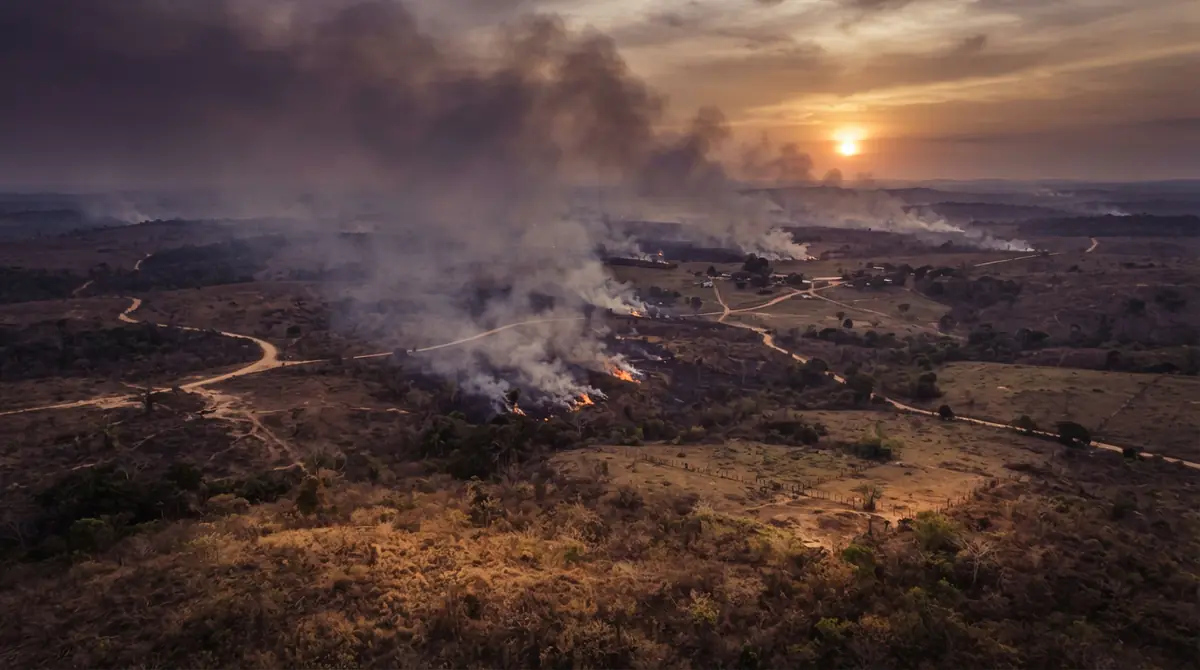
The third group comprised hot, dry years affected by El Niño and warming in the Tropical North Atlantic (2010, 2015, 2016, 2023, and 2024). During these years, wildfire frequency jumped 92% compared to the wet baseline, driving average net emissions to 1.8 billion metric tons of CO2 annually. Gatti noted that without the mitigating impact of three consecutive La Niña events between 2020 and 2023, which allowed the forest to offset 75% of dry-season emissions during rainy months, the figures in the second group would have been even higher.
Long-term climate data spanning 46 years included in the study indicates that these compounding pressures are altering regional weather patterns. Annual rainfall dropped by 8% across the biome and by 20% during the peak dry months of August through October. Over the same four-decade period, average annual temperatures climbed 1.13°C, with peak dry-season temperatures increasing by 1.81°C, according to reporting by Xinhua.
Regional Disparities and Tipping Point Risks
The impact across the biome is uneven, according to the study's Supplementary Information. In the northeastern Amazon, where 38% of forest cover has been cleared for cattle ranching, soybean cultivation, logging, and mining, total carbon emissions reached the highest levels in the study at an average flux of 0.47 grams of carbon per square meter per day.
In the southeastern Amazon, where 33.5% of the land is deforested, dry-season peak temperatures climbed 2.19°C over the past 46 years while dry-season precipitation dropped by 37%. Following the extreme 2015–2016 El Niño, the southeastern sector has never returned to acting as a carbon sink. During the 2024 drought, burned area in that sector expanded by 245% relative to the wet baseline, prompting the authors to call for an immediate ban on deforestation and biomass burning alongside active restoration programs.
By contrast, the southwestern Amazon long remained closer to a carbon-neutral baseline due to consistent rainfall. However, the region faced new pressures after 2019 from agribusiness initiatives spanning Rondônia, Amazonas, and Acre. In 2024, extreme drought and a 289% increase in biomass burning over baseline years consumed 77,682 square kilometers of forest by fire, marking the most severe dry spell in the region's historical record.
Research Outlook and Measurement Methods
The degradation described in the study creates a regional feedback cycle: lost forest cover reduces local rainfall and raises ambient temperatures, which in turn dries out remaining vegetation and makes future fire spread faster. In the first ten months of 2026, INPE recorded more than 41,200 fire hotspots in the Brazilian Amazon, nearing the 43,130 fires detected during all of 2025 and generating heavy smoke that disrupted schools and public health facilities in Manaus.
To understand whether the weakening carbon sink is primarily caused by reduced photosynthetic uptake or accelerated organic decay, INPE researchers began analyzing atmospheric traces of carbonyl sulfide in 2022. The compound acts as a molecular proxy for photosynthesis, helping researchers isolate vegetative productivity from soil and wood respiration. Study co-author Camilla Lima Cunha emphasized that continued atmospheric monitoring remains vital for guiding public conservation policy and evaluating whether anti-deforestation measures can halt further degradation before reaching an ecological tipping point.
Questions people ask
Why is the Amazon rainforest emitting more CO2 than it absorbs?
While the forest absorbs roughly 300 million metric tons of CO2 annually through photosynthesis, wildfires emit around 1.47 billion metric tons per year. Because living vegetation is roughly carbon-neutral after factoring in natural decomposition, it cannot absorb the surplus emissions created by fires and deforestation.
How were the atmospheric carbon emissions measured?
Scientists from Brazil's National Institute for Space Research (INPE) conducted sampling flights with small aircraft over a 15-year period (2010 to 2024) across four quadrants of the Amazon, measuring vertical profiles of carbon dioxide and carbon monoxide.
Which regions of the Amazon are suffering the greatest carbon loss?
The northeast and southeast regions showed the highest net carbon emissions. The southeast has lost 33.5% of its forest cover and has remained a continuous carbon source since the 2015–2016 El Niño event.
Sources
- Amazon carbon emissions driven by human actions amplified by droughtsmedia.springernature.com
- Wildfires cause Amazon to emit 1.17 billion more metric tons of carbon than it absorbsAgência Fapesp
- Amazon emits 1.17 billion more tons of carbon per year, study in Nature findsMeteored UK, Oct 24, 2026
- Brazilian Amazon emits more carbon than it absorbs, study showsenglish.news.cn
How this story was made: the newsroom picked it up from Reddit, gathered the full text of the sources above, and drafted it with AI assistance. Every factual claim was then checked against those sources before publishing (24 claims checked). Illustrations marked as AI-generated are not photographs. Spotted an error? Tell us.
Published October 25, 2026 at 04:38 UTC