Kevin Weil Launches Warp Sciences With $215M for AI Drug Chemistry
Led by former OpenAI and Meta leaders, Warp Sciences aims to onshore pharmaceutical lead optimization with robotics and sensor-equipped chemists.

In short
- Warp Sciences emerged from stealth with $215 million in funding led by Lightspeed Venture Partners at an $865 million post-money valuation.
- Founded by former OpenAI science head Kevin Weil alongside Solomon Reisberg, Manohar Paluri, and DJ Patil, the startup operates as a U.S.-based chemistry contract research organization.
- The company will not develop its own drugs; instead, it automates lead optimization analog synthesis for pharmaceutical clients.
- Chemists wearing cameras and pressure-sensing gloves will generate experimental physical data to train in-house AI models and guide robotic arms.
- The launch addresses supply-chain shifts and IP concerns highlighted by the December 2025 BIOSECURE Act and historical reliance on Chinese CROs.
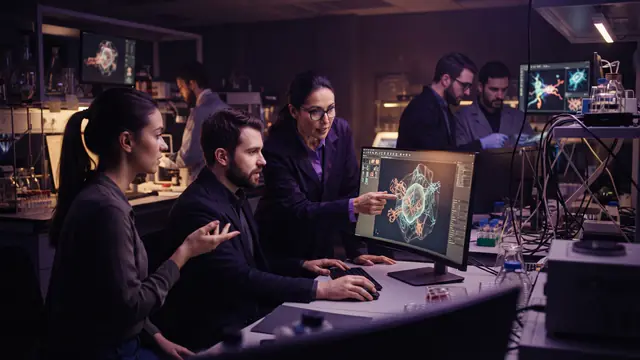
Kevin Weil, who previously served as Chief Product Officer and Vice President of Science at OpenAI, has emerged from stealth to launch Warp Sciences with $215 million in funding. The San Francisco-based startup is building an automated chemistry laboratory in the United States to accelerate drug discovery using artificial intelligence and robotics. The investment round, led by Lightspeed Venture Partners, values the company at $865 million post-money, according to reporting by Bloomberg.
Warp Sciences arrives as Western pharmaceutical developers seek to diversify chemical synthesis away from overseas contractors while addressing limitations in purely algorithmic drug design. Weil, who left OpenAI in April 2026, co-founded the venture alongside former Meta Superintelligence Labs executive Manohar Paluri, former White House Chief Data Scientist DJ Patil, and former Terremoto Biosciences medicinal chemistry leader Solomon Reisberg.
Automated Lead Optimization and the CRO Model
Unlike many biotechnology startups that build internal pipelines of proprietary medications, Warp Sciences operates strictly as an infrastructure provider. As reported by Pulse 2.0, the company functions as a contract research organization (CRO) dedicated to customer-led discovery programs, leaving molecule selection, clinical direction, and drug ownership entirely in the hands of client pharmaceutical and biotechnology firms.
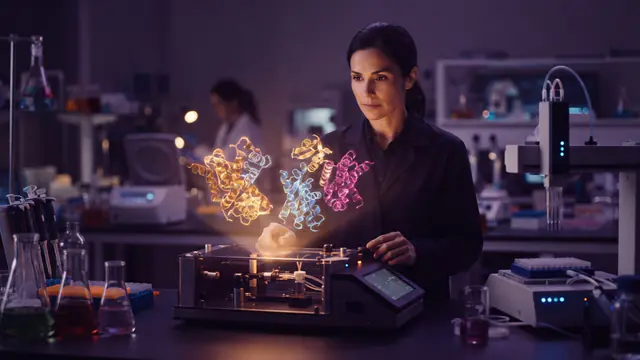
The startup's initial service offering focuses on lead optimization analog synthesis. When drug hunters identify a biologically active molecule, medicinal chemists must synthesize hundreds or thousands of structural variations, or analogs, to optimize potency, enhance selectivity, and minimize adverse side effects. This step has traditionally required intense manual benchwork.
According to Warp Sciences, the company plans to provide these lead optimization services without the price premiums historically charged by boutique domestic CROs. By standardizing physical synthesis workflows, client research teams can evaluate candidates faster while retaining complete ownership of program intellectual property.
Sensor-Equipped Chemists and Laboratory Robotics
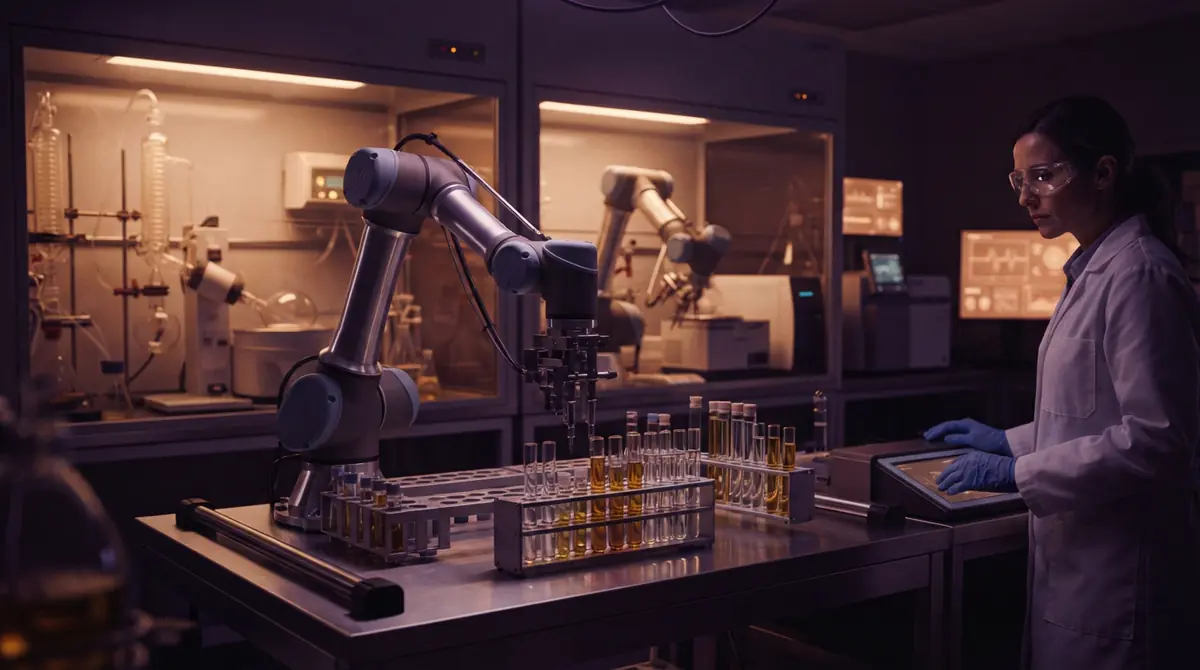
Warp Sciences is approaching laboratory automation by directly pairing human scientific expertise with physical data collection. The company's team of approximately 20 employees has already acquired robotic arms and artificial intelligence compute hardware to equip its facility, as detailed by The Next Web.
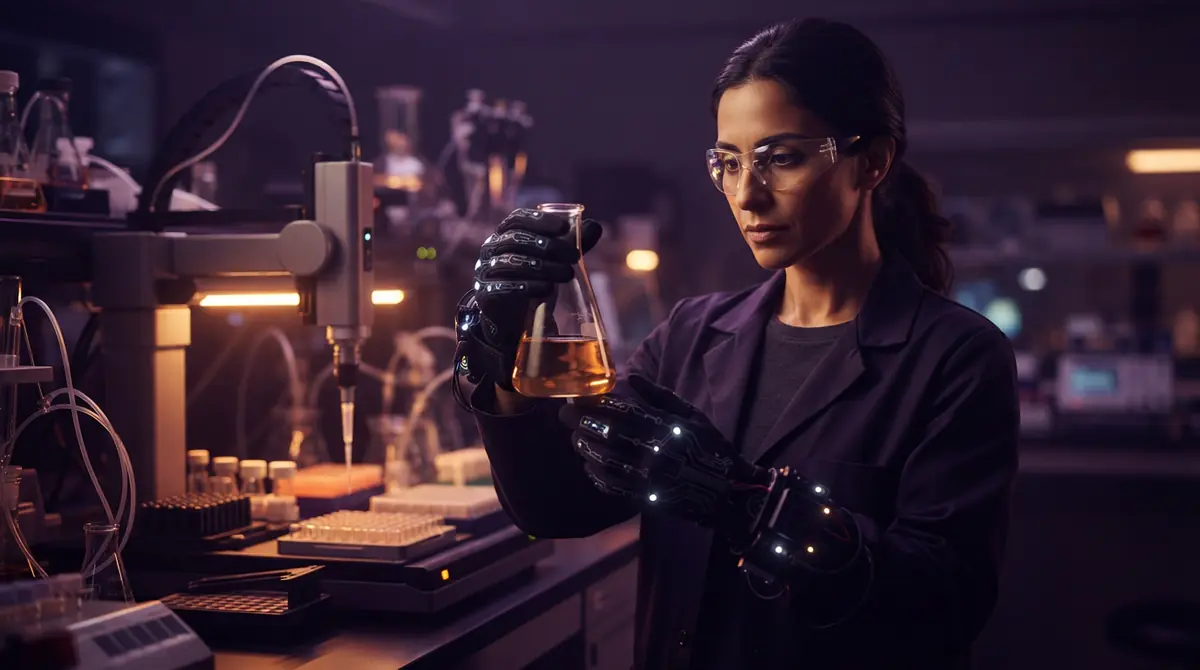
Rather than attempting full end-to-end automation immediately, experienced chemists will conduct initial experiments while wearing cameras and pressure-sensing gloves. Cameras and pressure-sensing gloves collect experimental physical data in real time to train AI models. The resulting multimodal data will train proprietary AI models and teach robotic systems to execute repetitive wet-lab procedures.
"AI has dramatically accelerated software engineering and mathematics, but it has yet to make the same impact in the physical sciences," Weil stated in the company's launch release. "Chemistry and biology move forward when you make something, test it and learn from the result. If we want to build more capable AI for science, we need to generate real-world data at scale."
To build this closed feedback loop, Warp Sciences recruited roboticists from Genesis, Skild AI, and 1X, alongside scientific personnel from Genentech and Lawrence Livermore National Laboratory. As automated arms conduct experiments, the resulting assay data feeds back into the company's software models, progressively refining subsequent synthesis protocols.
Responding to Supply Chain Pressures and the BIOSECURE Act
The launch directly addresses growing geopolitical friction in pharmaceutical manufacturing. A 2024 survey conducted by the Biotechnology Innovation Organization found that 74 percent of responding biotechnology firms contracted with Chinese entities for preclinical or clinical research services, according to Reuters data cited by Warp Sciences.
For decades, Western biopharma companies relied heavily on Chinese CROs, notably WuXi AppTec, due to cost advantages and high synthesis throughput. However, regulatory scrutiny has increased significantly. In June 2026, the U.S. Department of Defense placed WuXi AppTec on a list of firms alleged to have ties to the Chinese military, a designation temporarily suspended by a federal court in August 2026, as reported by BigGo Finance.
Policy pressures crystallized further in December 2025, when the federal BIOSECURE Act was signed into law, establishing restrictions on federal procurement and funding involving designated biotechnology companies of concern. As highlighted by HyperAI, biopharma developers cite supply-chain resilience, while Weil's comments to Bloomberg and the Business Wire release cite data security and intellectual property exposure as incentives to return chemical synthesis to domestic facilities.
"I've worked with overseas chemistry partners that delivered speed and value, but I still worried about protecting the intellectual property behind our programs," said Solomon Reisberg, co-founder and Chief Scientific Officer, in the Business Wire release. Warp Sciences aims to match international turnaround speeds while keeping proprietary compounds and biological screening data within U.S. borders.
Investors and the Broader AI Chemistry Push
Alongside lead investor Lightspeed, Warp Sciences secured capital from institutional venture firms including Premji Invest, Mayfield, IVP, Lux Capital, Conviction, Menlo Ventures, 01 Advisors, Standard, Lowercarbon Capital, Gigascale Capital, Angular Ventures, Scribble Ventures, Uncork Capital, Innovation Endeavors, Matter VP, Zero Shot Fund, SignalFire, and Moxxie Ventures.
The financing also drew an extensive slate of individual angel investors across the technology sector. Backers include OpenAI Chief Financial Officer Sarah Friar and Chief Research Officer Mark Chen; Anthropic Labs co-lead Mike Krieger; Coinbase CEO Brian Armstrong; LinkedIn co-founder Reid Hoffman; Databricks co-founder Ion Stoica; Figma CEO Dylan Field; former Tesla robotics vice president Milan Kovac; and Palantir Chief Technology Officer Shyam Sankar.
Warp Sciences enters an increasingly capitalized field. In July 2026, OpenAI-backed Chai Discovery raised $400 million, while OpenAI acquired AI agent developer Orchestra Bio. Weil's venture reflects a distinct shift toward coupling generative modeling directly with physical wet-lab robotics, testing whether automated domestic facilities can compete with traditional overseas chemistry suppliers on both cost and throughput.
Questions people ask
What is Warp Sciences?
Warp Sciences is a San Francisco-based contract research organization founded in 2026 by former OpenAI, Meta, and government technology leaders to automate pharmaceutical chemistry experiments using robotics and artificial intelligence.
Does Warp Sciences discover its own therapeutic drugs?
No. The company does not hold a proprietary drug development pipeline. It provides chemistry infrastructure and analog synthesis services exclusively to partner biotechnology and pharmaceutical companies.
How does Warp Sciences train its lab automation models?
Human chemists wear sensor-equipped gloves with pressure monitors and cameras while performing chemical experiments. The collected movement, pressure, and experimental outcome data are used to train in-house AI models and guide robotic arms.
Why is Warp Sciences focusing on domestic laboratory infrastructure?
The startup aims to provide a secure domestic alternative to overseas contractors such as WuXi AppTec, mitigating geopolitical supply-chain risks and addressing federal compliance mandates established by the BIOSECURE Act of 2025.
Sources
- Ex-OpenAI science head Kevin Weil launches Warp Sciences with $215MTNW | Artificial-intelligence, Oct 22, 2026
- Warp Sciences Emerges From Stealth With $215 Million to Build U.S. Chemistry Services for Drug Researchbusinesswire.com, Oct 22, 2026
- Warp Sciences Emerges From Stealth With $215 Million In Funding To Build AI-Powered Drug Discovery Chemistry LabsPulse 2.0, Oct 22, 2026
- HyperAIHyperAI
- Kevin Weil Leaves OpenAI, Raises approximately $212 Million to Automate Drug Discovery Experiments in Challenge to China RelianceBigGo Finance, Oct 23, 2026
How this story was made: the newsroom picked it up from Google News, Techmeme and Google Search, gathered the full text of the sources above, and drafted it with AI assistance. Every factual claim was then checked against those sources before publishing (33 claims checked). Illustrations marked as AI-generated are not photographs. Spotted an error? Tell us.
Published October 24, 2026 at 02:42 UTC