5-HT2AR–β-Arrestin Signaling Drives Lasting Psychedelic Benefits
A structure-guided study in Nature Neuroscience maps the receptor kinetics separating long-term behavioral benefits from hallucinogenic episodes.

In short
- Downstream β-arrestin signaling at the 5-HT2A receptor drives the prolonged antidepressant-like effects of psychedelics in preclinical models.
- Slow dissociation kinetics allow repeated low doses of LSD to accumulate receptor occupancy without inducing intense Gαq-mediated calcium spikes.
- The study describes a long-lasting antidepressant-like effect of the biased agonist IHCH-8134 alongside a hallucinogenic-like behavioral characterization of the compound.
- Behavioral tests in mice and cynomolgus macaques provide preclinical proof of principle for developing nonhallucinogenic neuropsychiatric treatments.
On October 23, 2026, researchers published structural and behavioral findings in Nature Neuroscience identifying 5-HT2AR–β-arrestin signaling as the primary driver behind the sustained antidepressant-like actions of psychedelics. Led by scientists including L. He, J. Cheng, and S. Wang, the structure-guided study shows that the molecular mechanisms responsible for long-lasting mood improvements can be dissociated from the signaling pathways that produce acute hallucinogenic effects.
The findings offer a structural roadmap for neuropsychiatric drug discovery, isolating the signaling cascade that maintains therapeutic outcomes while avoiding the behavioral disruption typical of high-dose psychedelic administration.
Uncoupling Therapeutic Action from Hallucinogenic Disruption
Classic psychedelics such as psilocybin and lysergic acid diethylamide (LSD) engage the serotonin 2A receptor (5-HT2AR) to prompt both profound subjective experiences and durable mood changes. As reported by Scienmag, the research team used structure-guided drug design to isolate the signaling pathways activated during an acute psychedelic episode from those driving enduring behavioral benefits in animal models.
Traditional high-dose psychedelic activation triggers a strong Gαq-mediated signaling pathway that causes robust intracellular calcium releases, an event closely tied to acute hallucinogenic behavior. By contrast, the authors demonstrated that sustained engagement of the intracellular β-arrestin pathway delivers prolonged antidepressant-like behavioral benefits without requiring this intense Gαq-mediated calcium surge.
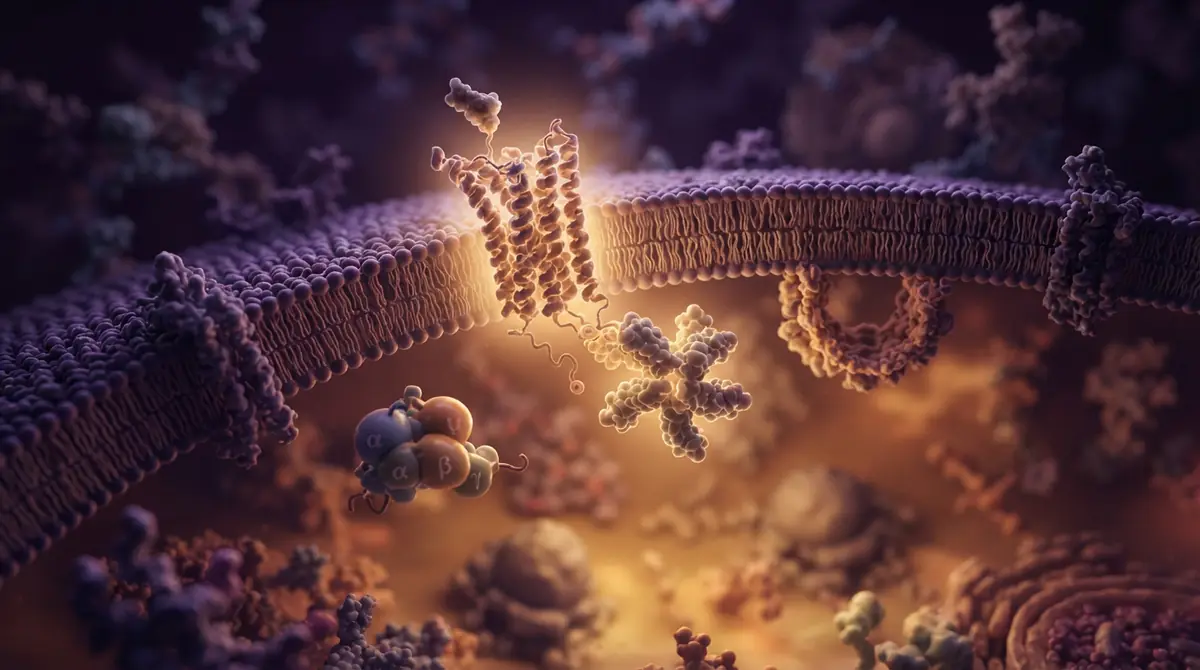
How 5-HT2AR–β-Arrestin Signaling Decouples Mood from Hallucination
The central mechanism uncovered in the study revolves around receptor kinetics. LSD exhibits slow dissociation from the 5-HT2AR binding pocket. The researchers established that this slow dissociation permits progressive accumulation of receptor occupancy across successive low-dose exposures.
Over repeated low-dose administrations, overall receptor occupancy gradually builds to levels comparable to a single acute high dose, as detailed in Nature Neuroscience. Crucially, this accumulation occurs without generating the elevated peak drug concentrations that accompany acute dosing. This separation keeps β-arrestin signaling active while restricting the high Gαq activation associated with hallucinogenic behavioral disruption.
Preclinical regimens confirmed the model. Repeated low doses of LSD produced sustained antidepressant-like behavioral responses in mice. Similarly, repeated low-dose psilocybin pretreatment followed by a high-dose challenge maintained antidepressant-like effects while attenuating hallucinogenic-like behavioral disruptions.
Biased Agonists and Structural Resolving
To directly test whether β-arrestin pathway activation alone could replicate these outcomes, the team characterized IHCH-8134, a synthetic 5-HT2AR–β-arrestin-biased agonist. Scienmag reports a hallucinogenic-like behavioral characterization of IHCH-8134 alongside its long-lasting antidepressant-like effects.
The study also deposited high-resolution structural datasets to clarify the physical configurations of 5-HT2AR in distinct states. The crystal structure of 5-HT2AR bound to pimavanserin was deposited in the Protein Data Bank under accession code 9WZO. Additionally, cryo-electron microscopy (cryo-EM) density maps and corresponding atomic coordinates for the IHCH-8152-bound 5-HT2AR–Gq complex were deposited in the Electron Microscopy Data Bank under EMD-68650 and in the PDB under accession code 22TA, as reported in Nature Neuroscience.

Preclinical Evidence Across Species
The researchers assessed behavioral responses across multiple animal models to confirm that the therapeutic and psychedelic components were successfully uncoupled. In addition to testing standard depressive-like and hallucinogenic behavioral assays in mice, the investigators evaluated the regimens in cynomolgus macaques.
In both mice and nonhuman primates, the repeated low-dose regimens produced no detectable psychedelic-associated behavioral disruption, as noted by Scienmag. The data link long-term therapeutic durability to a distinct downstream signaling mechanism rather than to the acute behavioral intensity of the experience.
The authors emphasize that these results represent preclinical proof of principle. While the signaling logic demonstrates how nonhallucinogenic psychedelic therapies might be rationally engineered, translating these kinetics and biased compounds to human psychiatric treatment remains subject to future clinical investigations.
Questions people ask
What is the primary role of 5-HT2AR–β-arrestin signaling in this study?
Preclinical findings indicate that β-arrestin signaling downstream of the 5-HT2A receptor is the primary pathway driving prolonged antidepressant-like behavioral benefits, independent of the Gαq pathway that triggers acute hallucinogenic effects.
How does repeated low dosing avoid acute hallucinogenic effects?
Because compounds like LSD dissociate slowly from 5-HT2AR, repeated low doses allow receptor occupancy to accumulate toward therapeutic levels without generating the high peak drug concentrations that trigger robust Gαq-mediated calcium spikes.
What is IHCH-8134?
IHCH-8134 is a 5-HT2AR–β-arrestin-biased agonist; the study describes its long-lasting antidepressant-like effect alongside a hallucinogenic-like behavioral characterization of the compound.
Have these findings been tested in human clinical trials?
No. The experiments provide preclinical proof of principle evaluated in mice and cynomolgus macaques; clinical translation to human patients requires future investigation.
Sources
- Sustained antidepressant-like effects of psychedelics through 5-HT2AR–β-arrestin signalingNature, Oct 23, 2026, official source
- Slow receptor kinetics let low-dose psychedelics sustainScienmag, Oct 23, 2026
How this story was made: the newsroom picked it up from Reddit, gathered the full text of the sources above, and drafted it with AI assistance. Every factual claim was then checked against those sources before publishing (36 claims checked). Illustrations marked as AI-generated are not photographs. Spotted an error? Tell us.
Published October 26, 2026 at 00:44 UTC