US and UK Navies Fire Mk 48 Heavy Torpedo from Excalibur Drone Sub
A joint trial under AUKUS Pillar 2 proves that robotic submersibles can carry and deploy full-sized heavyweight strike weapons.
Key takeaways
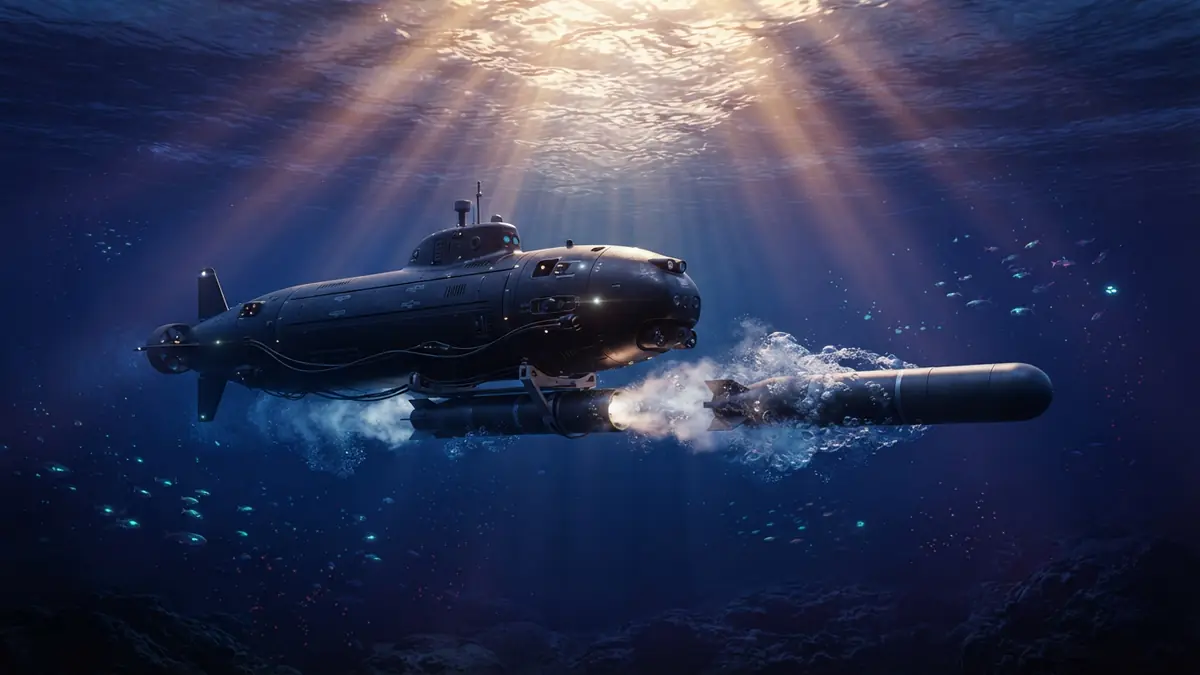
- The Royal Navy's 12-meter uncrewed submarine XV Excalibur launched a 3,700-pound U.S. Mk 48 exercise torpedo off the coast of Scotland on September 13, 2026.
- The demonstration was completed under Project Broadsword and Trial Iron in less than seven months from approval to execution.
- Conducted under AUKUS Pillar 2, the test validated software, electrical, and mechanical interoperability across allied autonomous underwater platforms.
- The U.S. Navy will continue follow-on testing under Project CUTLASS using the Anduril Dive-XL platform.
The U.S. Navy and the British Royal Navy have successfully conducted a proof-of-concept launch of an exercise U.S. Mk 48 heavyweight torpedo from the allied robotic submarine XV Excalibur. The joint test took place on September 13, 2026, at the British Underwater Test & Evaluation Centre (BUTEC) in Scotland, marking a major technical milestone for uncrewed undersea strike capabilities.
According to an official announcement from the United States Navy, the trial demonstrated mechanical, electrical, and software integration between an American kinetic payload and an allied autonomous underwater vehicle. The exercise was carried out under Project Broadsword and Trial Iron as part of the trilateral AUKUS defense agreement.
"This successful test marks a historic first for allied undersea warfare," said Chief of Naval Operations Adm. Daryl Caudle in remarks reported by Tom's Hardware. "Proving that we can seamlessly launch a U.S. heavyweight torpedo from a Royal Navy autonomous underwater vehicle validates our shared vision for true interchangeability."
Project Broadsword Delivers Rapid Weapon Integration
Project Broadsword was approved in February 2026 by the Department of the Navy Rapid Capabilities Office (DONRCO) and executed in under seven months. The project was co-managed alongside the Navy's Direct Reporting Portfolio Manager for Robotic and Autonomous Systems (DRPM RAS), in collaboration with OPNAV N97, the Royal Navy, the Defense Innovation Unit (DIU), Naval Undersea Warfare Center (NUWC) Keyport, and commercial industry partners.
Navy Vice Adm. Seiko Okano, director of the DONRCO, noted that the rapid timeline highlights an open-architecture development model. "We are not waiting 10 years for a single bespoke platform; we are pioneering a modular, software-defined, open-systems approach that integrates allied hardware with commercial innovation to rapidly scale distributed lethality," Okano stated in the Navy's release.
Under AUKUS Pillar 2, which focuses on advanced technology development and interoperability across the United States, the United Kingdom, and Australia, the initiative seeks to field uncrewed undersea vehicle (UUV) systems that can share weapon architectures and payloads.

Pairing Cold War Ordnance with Modern Robotics
The September 13 test brought together two contrasting generations of naval engineering. The XV Excalibur is an extra-large uncrewed underwater vehicle (XLUUV) developed by British firm MSubs under Project Cetus and unveiled in May 2025. Measuring 12 meters (40 feet) in length with a displacement of 19 tonnes, Excalibur is the Royal Navy's first uncrewed submarine.
By contrast, the Mk 48 heavyweight torpedo entered initial service in 1972, originally engineered to counter deep-diving, high-speed submarines. As detailed by New Atlas, the standard Mk 48 measures 19 feet in length, has a 21-inch (533 mm) diameter, weighs approximately 1.7 tonnes (3,700 pounds), and carries a 645-pound (292 kg) PBXN-103 high-explosive warhead. It is capable of reaching speeds up to 55 knots (102 km/h) with an operational range of 32 nautical miles (60 km) at operating depths down to 800 meters (2,600 feet).
Because the XV Excalibur's internal payload bay is not designed to house full-length 533 mm torpedoes, engineers developed an external solution. According to reporting from Defense News, the exercise torpedo was mounted beneath the submersible's hull in a specialized cradle before being successfully fired during the Scottish trials.
Strategic Implications and Project CUTLASS
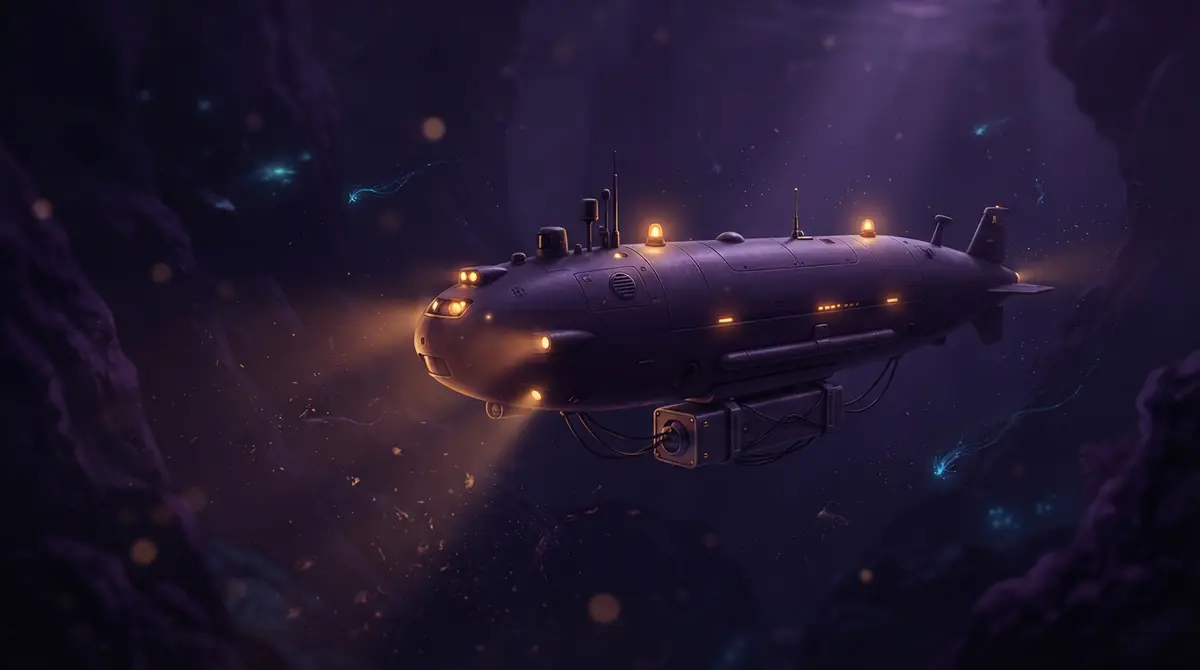
According to the U.S. Navy, converting commercial and allied uncrewed undersea hulls into high-end strike assets drastically alters the cost-exchange ratio in contested maritime environments. By adapting uncrewed hulls to deploy standard fleet ordnance, navies can expand strike distribution without risking crewed submarine assets in contested waters.
As reported by Ukrainian defense publication Defense Express, military researchers are observing these modular integration experiments closely, noting that armed robotic submersibles provide concepts for conducting covert anti-ship operations against heavily defended naval ports.
The U.S. Navy has confirmed that Project Broadsword represents the first stage of an expanding trial series. The Department of the Navy and international partners are moving directly into follow-on acceleration under Project CUTLASS. That next phase will use the Anduril Dive-XL platform to test advanced payload data integration, command-and-control frameworks, and tactical mission deployment profiles.
Frequently asked questions
What weapon was launched from the uncrewed submarine?
An exercise version of the U.S. Navy's standard Mk 48 heavyweight torpedo, a 3,700-pound weapon measuring 19 feet long and 21 inches in diameter.
Which autonomous vessel performed the launch?
The launch was conducted by the Royal Navy's XV Excalibur, a 12-meter-long, 19-tonne extra-large uncrewed underwater vehicle (XLUUV) built by MSubs.
How long did Project Broadsword take to develop?
Project Broadsword was approved in February 2026 by the Department of the Navy Rapid Capabilities Office and completed its live-fire test in less than seven months.
What is the next phase following the Excalibur test?
The allied navies are transitioning to Project CUTLASS, which will utilize the Anduril Dive-XL platform to evaluate command architectures, payload integration, and tactical employment scenarios.
Sources
- U.S. and UK navies successfully launch 3,700-pound submarine-sinking torpedo from robotic drone sub in historic first — Project Broadsword proves weapon interchangeability in just seven monthsTom's Hardware · Sep 27, 2026
- U.S. Navy and Royal Navy Successfully Test Fire Torpedo from Unmanned Undersea VehicleUnited States Navy
- Excalibur Underwater Drone Can Launch Mk 48 Torpedoes, Offering Potential Way to Finish Off russia's Black Sea Fleet | Defense Expressen.defence-ua.com
- US and UK achieve historic first with drone submarine torpedo launchNew Atlas · Sep 24, 2026
- Royal Navy successfully launches US Mk 48 torpedo from uncrewed submersibleDefense News · Sep 22, 2026
How this story was made: the newsroom picked it up from tomshardware.com, gathered the full text of the sources above, and drafted it with AI assistance. Every factual claim was then checked against those sources before publishing (14 claims checked). Illustrations marked as AI-generated are not photographs. Spotted an error? Tell us.
Published September 28, 2026 at 01:39 UTC