Fedorov Launches 'Army of Robots' Defense Tech Initiative
Former Ukrainian Defense Minister Mykhailo Fedorov has introduced the private 'Army of Robots' initiative to advance humanoid robotics, logistics, and autonomous combat.
Key takeaways
- Former Ukrainian Defense Minister Mykhailo Fedorov launched the private-sector 'Army of Robots' ecosystem at IT Arena 2026 in Lviv on September 26, 2026.
- The initiative sets ambitious targets, aiming for the first enemy combatant killed by a humanoid robot within six months and an infantry-free assault within twelve months.
- Backed by private funding—including investment from Palantir CEO Alex Karp—the project seeks engineers and defense firms to build autonomous combat systems, low-cost interceptors, and demining platforms.
- While unmanned ground vehicles are already used for logistics and remote turrets, full battlefield robotization faces technical constraints including battery life, human maintenance needs, and drone vulnerability.
Former Ukrainian Defense Minister Mykhailo Fedorov has announced the launch of the Army of Robots defense tech initiative, a private-sector push designed to accelerate the deployment of autonomous systems and ground robotics across frontline operations. Fedorov unveiled the project on September 26, 2026, during the IT Arena 2026 conference in Lviv and across social media platforms, framing it as the next operational leap following Ukraine's widespread drone adoption. The initiative seeks to shift the burden of hazardous combat operations away from human infantry and onto robotic platforms.
According to Fedorov, who was dismissed as defense minister by President Volodymyr Zelensky in July 2026, the transition toward ground robotics is essential to protect personnel. Drones currently account for more than 95 percent of target engagements in the conflict, Fedorov stated at IT Arena, supported by a domestic manufacturing base of over 700 drone makers, as reported by The Decoder. With combat data from those operations already becoming an export product to partners like the United Kingdom, Fedorov is seeking to replicate that scale on land.
Inside the Army of Robots Defense Tech Initiative
Rather than operating as a standalone manufacturer, the Army of Robots is structured as an operational and financial ecosystem. "The Army of Robots isn't one company. It's an ecosystem," Fedorov explained in remarks covered by NV. "We're going to invest in defense-tech companies, launch our own technology projects, build R&D capacity, test solutions together with the military, and scale up as fast as possible whatever actually works on the battlefield."
The organizational model mirrors the "Army of Drones" program Fedorov launched in 2022 while serving as Minister of Digital Transformation. Operating from the private sector, Fedorov plans to deploy venture financing and engineering resources to rapidly test prototypes with frontline military units. In early September 2026, Fedorov announced intentions to establish his own defense-technology firm, supported by Palantir CEO Alex Karp as a key investor, according to Ukrainska Pravda. A venture fund is also being established in Kyiv to back participating hardware and software startups.
The project has formally opened recruitment, actively searching for a Chief Technology Officer, engineering leads, and commercial partners across Ukraine and Western allied nations to build out its technical architecture.
Combat Timelines, Capabilities, and Technical Goals
Fedorov outlined an aggressive development schedule during his presentation in Lviv. The program's initial milestones aim for a humanoid robot to kill an enemy soldier within six months of launch, followed by the execution of an assault operation involving zero human infantry within twelve months, as reported by The Kyiv Independent. The 12-month goal also includes coordinating autonomous ground systems and unmanned aerial vehicles that communicate directly through algorithms.
In its early operational phases, the program plans to assign humanoid systems relatively basic mechanical tasks to reduce frontline exposure for infantrymen. As Fedorov detailed via Ukrainska Pravda:
"There will be humanoid robots that will perform simple tasks: reloading a machine gun, replacing a battery or installing a sensor. These are things a robot can be taught quickly and carry out after a rapid deployment to the battlefield."
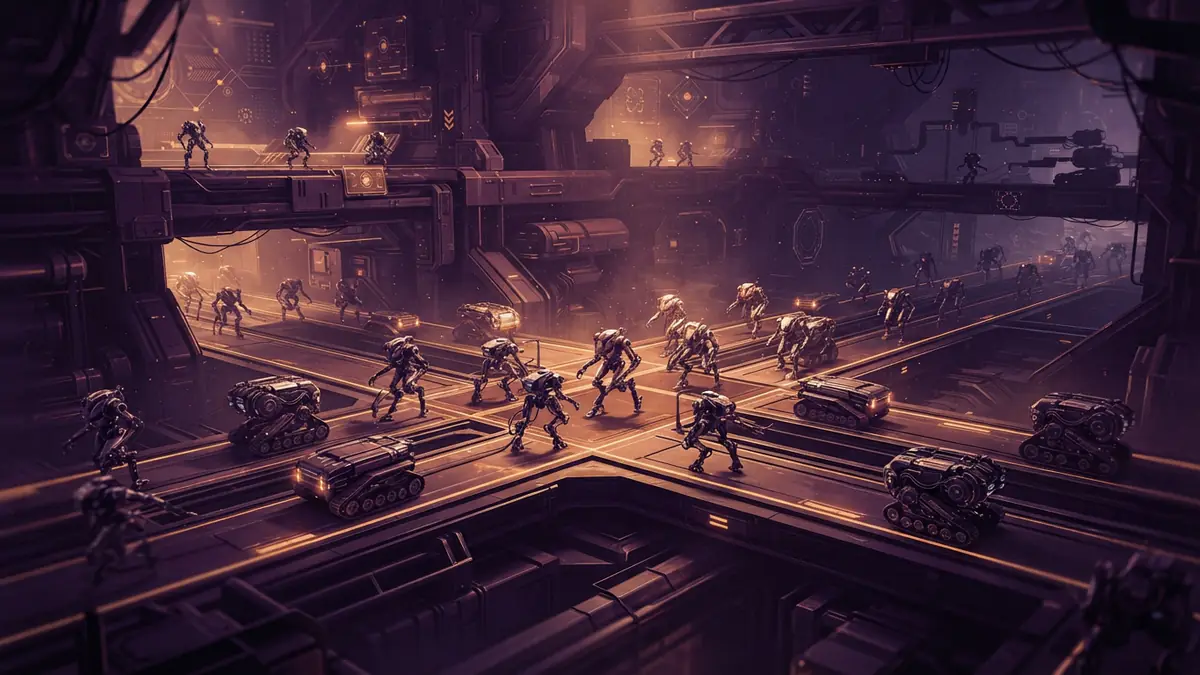
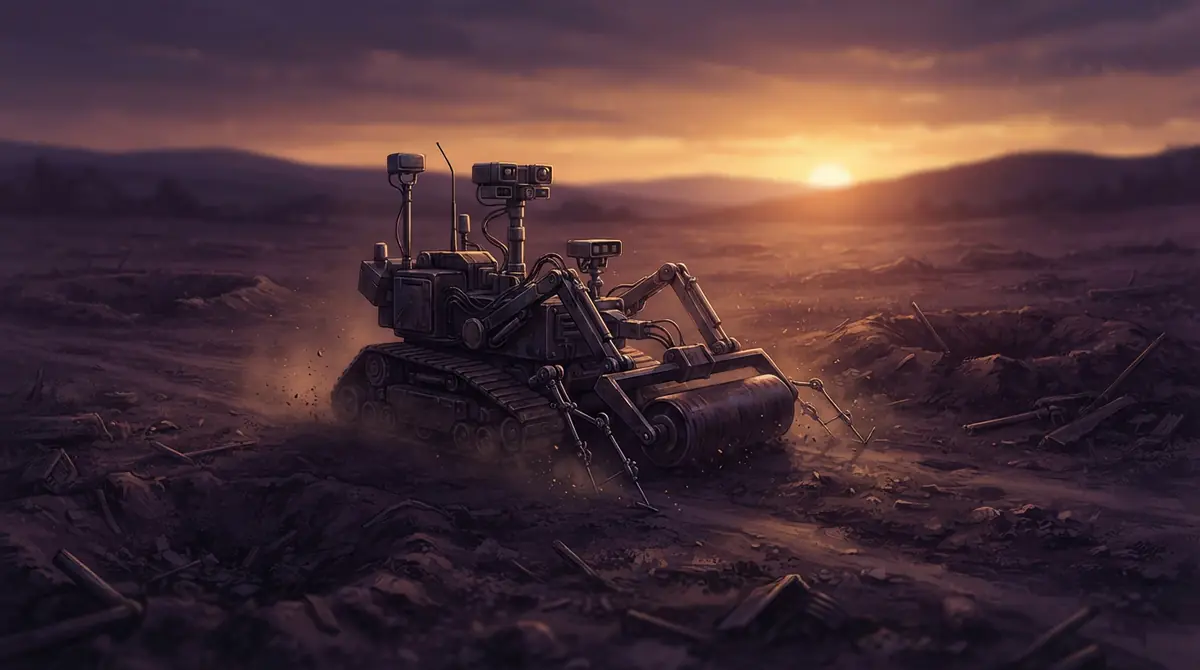
Beyond humanoid concepts, the wider project encompasses low-cost interceptor missiles, artificial intelligence-driven strike platforms, and specialized engineering systems. The overarching concept of operations relies on a sensor-first workflow: battlefield sensors detect an enemy presence, autonomous platforms enter the engagement zone, and remote units conduct reconnaissance, mine-laying, mine clearance, ammunition delivery, and casualty evacuation.
Battlefield Reality Versus Robotic Ambition
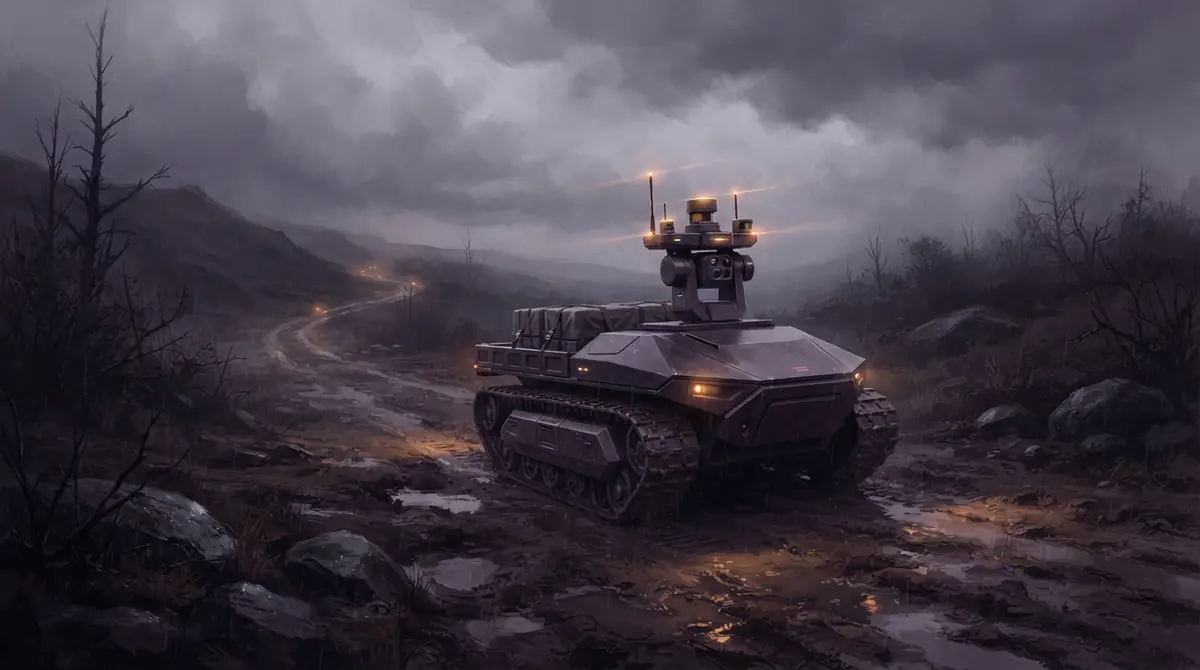
Ukraine has progressively tested and deployed ground robotics over the course of the war, though existing hardware differs significantly from the speculative designs featured in Fedorov's promotional materials. As noted by Euromaidan Press, frontline units have fielded remote-controlled machine gun turrets and ground platforms since 2024. These platforms pair stabilized weapons with thermal optics and are operated remotely by soldiers positioned hundreds of meters away in bunkers or trenches.
However, existing unmanned ground vehicles (UGVs)—such as the Rys Pro platforms operated by assault units—remain fundamentally teleoperated rather than fully autonomous. Most rely on manual piloting over Starlink satellite connections. Military analysts and frontline reports emphasize several engineering and operational bottlenecks that continue to limit ground robotics:
- Logistical Maintenance: Ground robotic systems have limited battery endurance and ammunition capacity, requiring human teams to manually reload, recharge, and service them close to danger zones.
- Vulnerability to Loitering Munitions: While smaller than manned armor, UGVs are easily detected and frequently targeted by enemy first-person view (FPV) strike drones.
- Territorial Control: Military doctrine maintains that ground cannot be considered secured until human troops occupy the physical positions.
- Technological Readiness: The humanoid, quadrupedal, and spherical robotic designs showcased in Fedorov's launch videos are not yet battle-tested, with humanoid units currently far less mature than aerial strike drones.
The Strategic Race Against Technological Parity
A primary catalyst for the private initiative is the speed at which opposing forces adapt. Fedorov emphasized that Russia has proven adept at rapidly copying, modifying, and mass-producing battlefield technologies first introduced by Ukraine. Sustaining a tactical edge requires establishing continuous technological development cycles ahead of adversary replication.
Addressing attendees at IT Arena, Fedorov stated that countering Russian industrial mobilization will require Western private capital, advanced software engineering, and fast-tracked battlefield experimentation. While the ethical and legal questions surrounding autonomous lethal weapons continue to be debated in international discussions at the United Nations, private initiatives like the Army of Robots reflect an accelerating shift toward deploying robotic systems directly into contested combat environments.
Frequently asked questions
What is the Army of Robots initiative?
The Army of Robots is a private-sector defense technology ecosystem launched by former Ukrainian Defense Minister Mykhailo Fedorov. It aims to invest in, develop, test, and scale ground robotic systems, humanoid platforms, and AI-enabled strike weapons for frontline combat.
Who is funding the Army of Robots project?
The project is funded through private investment, including backing from Palantir CEO Alex Karp, alongside a dedicated defense-tech venture capital fund being established in Kyiv.
What specific timelines did Mykhailo Fedorov announce for the project?
Fedorov set the goal of having a humanoid robot kill an enemy combatant within six months of launch, and executing an assault operation without human infantry involvement within twelve months.
Are humanoid robots currently fighting on the frontline in Ukraine?
No. While Ukrainian forces currently field teleoperated ground robotic complexes and remote weapon stations for logistics, evacuation, and defense, autonomous humanoid combat robots remain in the conceptual and development stages.
Sources
- Former Ukrainian Defense Minister Fedorov pitches a private-sector robot armyThe Decoder · Sep 26, 2026
- Army of Robots — Fedorov Announces Launch of Project to Scale Up Robotic Systems on Frontlineenglish.nv.ua · Sep 26, 2026
- Ex-defense minister Fedorov announces new 'Army of Robots' initiative in latest move since leaving officeThe Kyiv Independent · Sep 26, 2026
- Ukraine's ex-defence minister Fedorov unveils new Army of Robots projectUkrainska Pravda · Sep 26, 2026
- War's next tech leap: Former Ukraine's defense minister behind “Army of Drones” is now creating new “Army of Robots”euromaidanpress.com · Sep 26, 2026
How this story was made: the newsroom picked it up from Google News and the-decoder.com, gathered the full text of the sources above, and drafted it with AI assistance. Every factual claim was then checked against those sources before publishing (22 claims checked). Illustrations marked as AI-generated are not photographs. Spotted an error? Tell us.
Published September 27, 2026 at 07:39 UTC