OpenAI Engineer Arrested Over Hidden Bug in Executive Conference Room
Federal authorities charged engineer Abdulrahman Alfozan after OpenAI found an encrypted recording bug wrapped in toilet paper behind an executive conference room television.

In short
- Abdulrahman Alfozan, a 35-year-old OpenAI engineer, was arrested on October 9, 2026, and charged with intercepting oral communications.
- OpenAI discovered an encrypted Seeed XIAO ESP32-S3 Sense board plugged into a television USB port in a restricted executive room on September 30.
- Investigators allege Alfozan used internal productivity tools and a spouse-linked chatbot account to plan the operation and learn how to build covert listening devices.
- OpenAI stated it used its own AI models to analyze forensic images of the hardware and announced it had no indications at this time of unauthorized access or exfiltration of model weights, source code, or customer data.
Federal authorities arrested an OpenAI engineer after security personnel discovered a covert recording device concealed inside an executive conference room at the company's San Francisco offices.
According to a Department of Justice press release, 35-year-old Abdulrahman Alfozan was arrested by the FBI on October 9, 2026, and made his initial appearance in federal court on October 13. Alfozan, a Saudi Arabian national and US permanent resident who joined OpenAI as an engineer in July 2025, faces a charge of using or endeavoring to use an electronic device to intercept oral communications.
How OpenAI Discovered the Conference Room Device
OpenAI security personnel located the bug on September 30 during a technical surveillance countermeasures sweep, according to reporting by The San Francisco Standard. The hardware was plugged into a USB port on the back of a television inside an executive conference room reserved exclusively for senior leadership and their executive assistants.
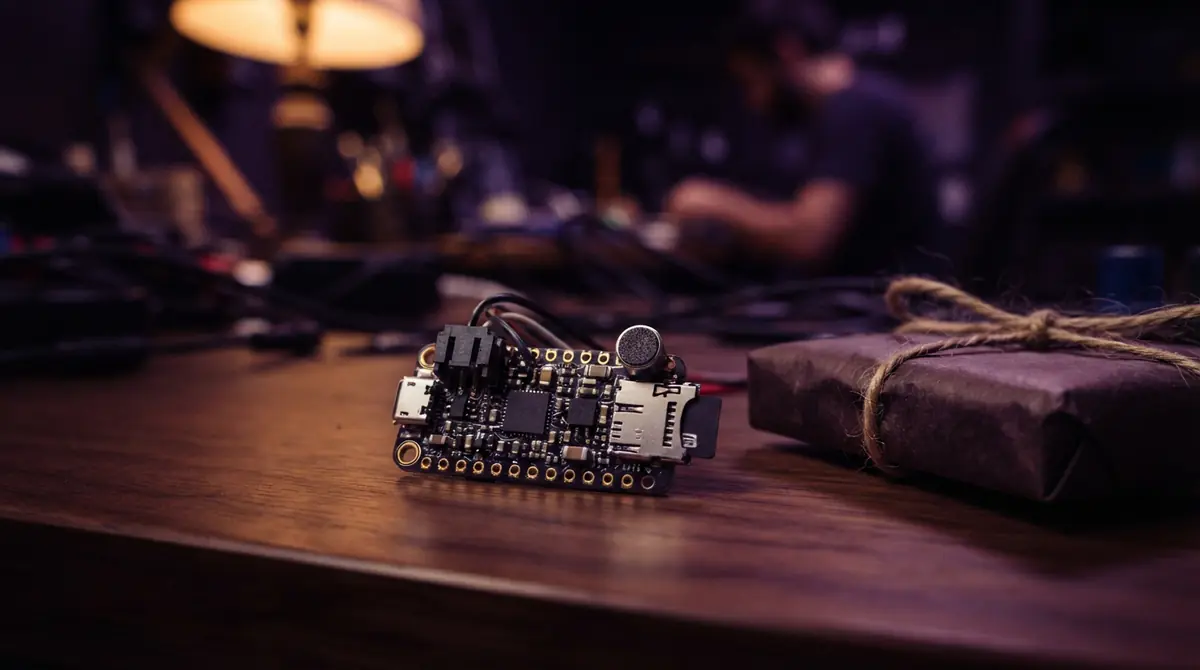
Court filings detailed in WIRED reveal that the device was wrapped in toilet paper and installed on or about September 28. Federal prosecutors identified the hardware as a Seeed XIAO ESP32-S3 Sense, an off-the-shelf thumb-sized development board equipped with a digital microphone, detachable camera sensor, and microSD storage, retailing for $13.99. The device's storage card was encrypted, preventing OpenAI security teams from directly reading the captured data.
The targeted conference room is routinely used for confidential discussions regarding OpenAI's proprietary research, commercial partnerships, product roadmaps, and government engagements, prosecutors stated in the criminal complaint.
Chatbot Queries and CCTV Footage Led to Arrest
Following the discovery of the device, OpenAI and federal investigators tied the incident to Alfozan through digital logs and physical surveillance, as reported by The Verge. Closed-circuit television footage captured Alfozan near the restricted room on multiple dates prior to September 30, despite having no authorized access to the space or meetings inside. Camera footage from October 5 showed him peering behind the television where the device was hidden.
Prosecutors allege that Alfozan used an internal productivity tool to query building addresses, meeting room schedules, room capacities, and locations of executive meetings. Between September 24 and September 30, a chatbot account tied to Alfozan's spouse submitted prompts inquiring how to build continuous audio recorders, configure Wi-Fi connectivity, improve live listening, and encrypt microSD cards. In late September, that same account submitted prompts referencing the unique MAC address and custom headers matching the device recovered from the television, according to the Department of Justice.
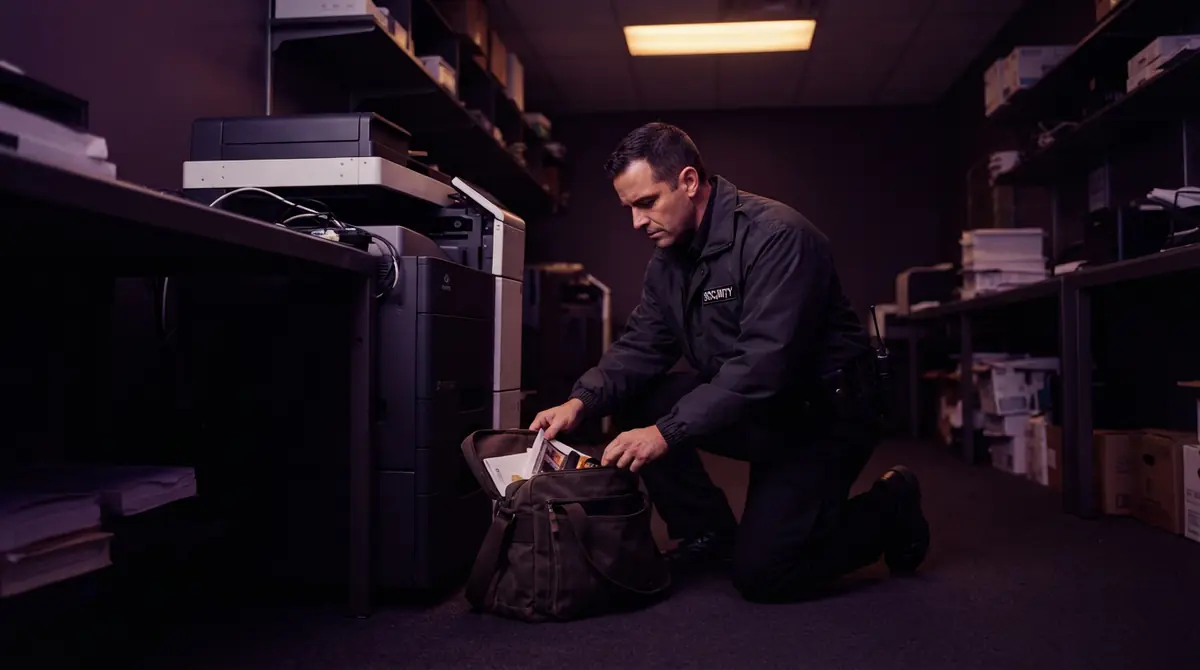
On October 5, Alfozan left an unattended bag in an office printer room. OpenAI security inspected the bag and found his wallet, identification, and a second, uninstalled recording device similar to the first. Although Alfozan later retrieved the bag from lost and found and reported cash and headphones missing, he did not mention the seized recording device, according to court records cited by WIRED.
OpenAI's Response and Internal Investigation
OpenAI stated that it applied its own artificial intelligence models to assist in the forensic investigation. As reported by Business Insider, the company used AI models to examine the device and analyze forensic storage images.
"At this time, we have no indications of this individual inappropriately accessing or exfiltrating model weights, source code, or customer data," OpenAI said in a public statement published to X and cited by WIRED. OpenAI said it coordinated with the FBI to restrict Alfozan's network and physical access before terminating his employment on Friday, October 9, coinciding with his arrest.
Before his employment at OpenAI, Alfozan worked as a senior systems engineer at Meta from 2017 to 2022 and was a founding engineer at logistics startup Nash, according to The San Francisco Standard. If convicted, Alfozan faces up to five years in federal prison, a $250,000 fine, and three years of supervised release. A detention hearing before U.S. Magistrate Judge Alex G. Tse is scheduled for October 19, 2026.
Questions people ask
Who was arrested in the OpenAI office bugging incident?
Federal authorities arrested Abdulrahman Alfozan, a 35-year-old OpenAI engineer and Saudi national who joined the company in July 2025.
What type of recording device was discovered?
OpenAI found a Seeed XIAO ESP32-S3 Sense board, a thumb-sized development unit with a digital microphone and encrypted microSD storage, plugged into a television USB port and wrapped in toilet paper.
Were any AI models, source code, or customer data stolen?
OpenAI stated that there is no indication that model weights, source code, or customer data were inappropriately accessed or exfiltrated.
What criminal penalties does the accused engineer face?
Charged with using or attempting to use a device to intercept oral communications, Alfozan faces a statutory maximum penalty of five years in prison, a $250,000 fine, and three years of supervised release.
Sources
- OpenAI employee arrested by FBI after listening device was found at its officeThe Washington Post, Oct 13, 2026
- OpenAI employee arrested for allegedly planting a bug in a conference roomThe Verge, Oct 13, 2026
- OpenAI Says It Found A 'Sophisticated Recording Device' Hidden In Its OfficesEngadget, Oct 13, 2026
- An OpenAI Employee Allegedly Used a Chatbot to Help Plant a Recording Device at the OfficeWIRED, Oct 13, 2026
- OpenAI says it found a 'hidden' recording device planted in its officeBusiness Insider, Oct 13, 2026
- Saudi National Arrested for Installing Surreptitious Audio Recording Device at OpenAIjustice.gov, Oct 13, 2026
- OpenAI engineer arrested in bugging of executive conference roomThe San Francisco Standard, Oct 13, 2026
How this story was made: the newsroom picked it up from Techmeme, Hacker News and theverge.com, gathered the full text of the sources above, and drafted it with AI assistance. Every factual claim was then checked against those sources before publishing (39 claims checked). Illustrations marked as AI-generated are not photographs. Spotted an error? Tell us.
Published October 14, 2026 at 00:38 UTC