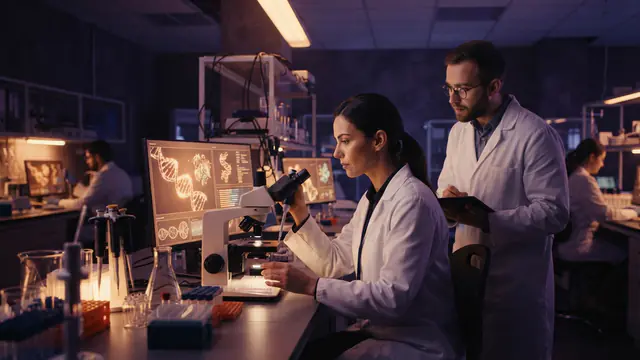
OpenAI Acquires Orchestra Bio to Expand Life Sciences AI Agents
The four-year-old startup brings autonomous workflow agents to OpenAI's Rosalind platform, targeting the operational bottlenecks that slow drug development.
In short
- OpenAI announced the acquisition of Orchestra Bio on October 20, 2026, absorbing its team and technology into its Rosalind life sciences unit.
- Orchestra Bio builds AI agents that coordinate operational drug development workflows, from study tracking and schedule adjustments to financial oversight.
- Financial terms were not disclosed; the San Francisco startup had previously raised $20 million from investors including Andreessen Horowitz and 8VC.
- The deal deepens competition with rival labs in the pharmaceutical sector following Anthropic's $400 million purchase of Coefficient Bio in April 2026.
OpenAI has acquired drug development software startup Orchestra Bio Inc. to integrate autonomous software agents directly into pharmaceutical research pipelines, the company announced on October 20, 2026. The acquisition will fold Orchestra Bio’s team and technology into Rosalind, OpenAI’s life sciences software suite, according to an official OpenAI announcement.
Financial terms of the transaction were not disclosed. Orchestra Bio, founded in San Francisco in 2022 by Chief Executive Ashoka Rajendra, had raised roughly $20 million in venture funding from investors including Andreessen Horowitz, 8VC, and Atria, as reported by TechCrunch, as well as Insight Venture Management, according to SiliconANGLE.
Automating the Logistics of Pharmaceutical R&D
Developing a new medicine remains a lengthy and fragmented undertaking. According to OpenAI, taking a new drug from initial target discovery through to U.S. regulatory approval takes an average of 10 to 15 years. Beyond the science, teams must orchestrate programs across internal departments and external partners, often relying on disconnected systems.
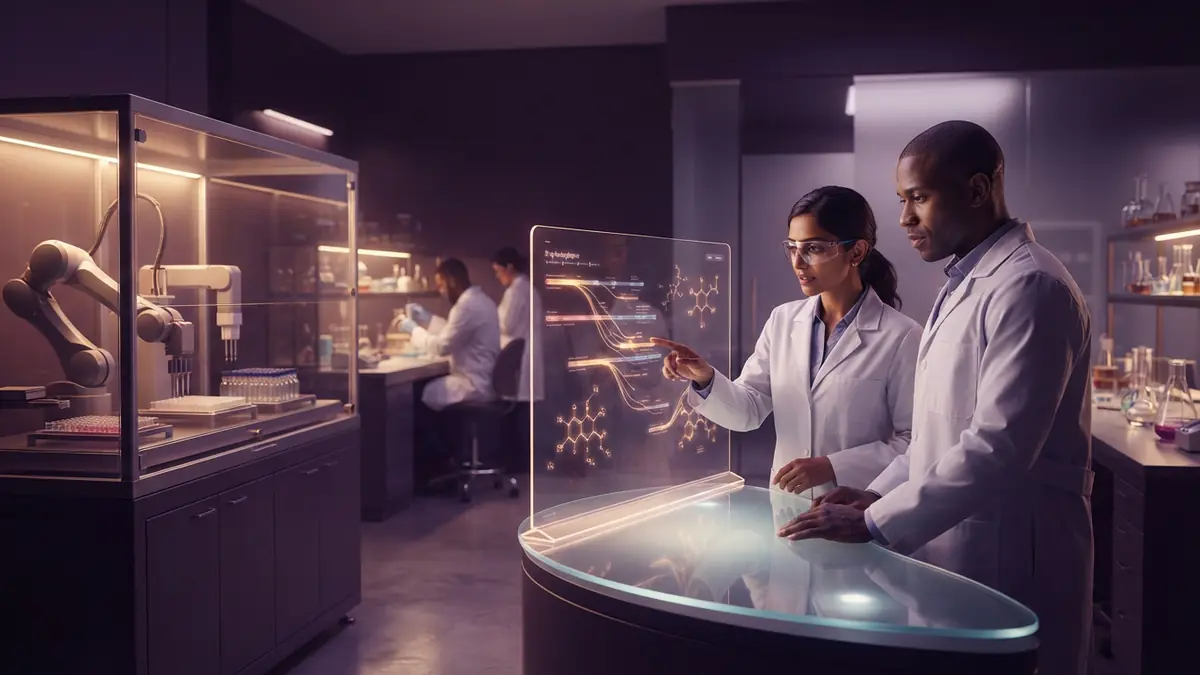
Orchestra Bio designed its platform to address these operational handoffs. Biopharma program leads deploy AI agents to monitor research campaigns, track project finances, and flag scheduling risks before they disrupt clinical trials, according to reporting by SiliconANGLE.

When unexpected disruptions occur—such as a failed manufacturing batch that threatens to delay the start of a clinical trial—the platform's agents evaluate which downstream activities and milestones are impacted, pull relevant documentation, and present response options. Human scientists and program managers retain final authority on which mitigation path to execute, as noted by Becker's Hospital Review.
In a statement published on its website, Orchestra Bio noted that drug development spans thousands of decisions across discovery, preclinical testing, manufacturing, and clinical trials, making task orchestration between people and autonomous agents essential to keeping programs moving forward.
Integrating Orchestra Bio into OpenAI's Rosalind
OpenAI plans to merge Orchestra Bio's agent infrastructure directly into its Rosalind product line. The company first introduced its life sciences business in April 2026 with the launch of GPT-Rosalind, a reasoning model trained for biological and chemical problem-solving, as reported by Investing.com.
In September 2026, OpenAI moved GPT-Rosalind out of its initial research preview into a trusted-access program for eligible enterprise organizations. The model powers Rosalind Workbench, which connects model capabilities with scientific tools and data to help researchers plan experiments and analyze results.

By integrating Orchestra Bio’s tooling, OpenAI aims to build agents capable of linking early laboratory findings directly to operational decisions, clinical milestones, and project management tasks needed to advance a prospective drug candidate through testing.
OpenAI has already established partnerships with major pharmaceutical manufacturers for Rosalind. Danish drugmaker Novo Nordisk A/S partners with OpenAI to accelerate R&D cycles and commercial execution under regulatory governance frameworks, while Moderna Inc. deploys the models to translate complex biological data into experimental laboratory workflows, according to OpenAI.
Big Tech Labs Target the Life Sciences Sector
The acquisition underscores growing competition among frontier AI developers building specialized vertical software for the healthcare and pharmaceutical industries. OpenAI has not provided a specific timeline for when Orchestra's agents will be commercially available inside Rosalind products.
The purchase marks OpenAI's second notable healthcare-focused corporate acquisition of 2026. In January, the company acquired medical records software startup Torch Health Inc. to support its ChatGPT Health initiative.
Direct rivals are making similar investments. Competitor Anthropic PBC acquired biological artificial intelligence startup Coefficient Bio for approximately $400 million in April 2026, later launching its Claude Science research harness in June and establishing an in-house biological research facility in September, according to Investing.com. Rather than competing independently against foundational model providers, vertical startups like Orchestra Bio are increasingly being folded directly into leading AI developers' enterprise software suites.
Questions people ask
What does Orchestra Bio do?
Orchestra Bio builds AI agents that help biopharmaceutical teams manage drug development operations, including tracking study timelines, monitoring clinical trial schedules, handling project finances, and identifying potential delays across departments.
How will OpenAI use Orchestra Bio's technology?
OpenAI will integrate Orchestra Bio's team and software into its Rosalind life sciences platform, connecting its GPT-Rosalind reasoning model and Rosalind Workbench directly with operational workflow agents.
How much did OpenAI pay for Orchestra Bio?
The financial terms of the deal were not disclosed by OpenAI or Orchestra Bio. The startup had previously raised around $20 million in venture funding.
Which pharmaceutical companies already work with OpenAI on Rosalind?
OpenAI has active life sciences partnerships with Novo Nordisk and Moderna, both of which use Rosalind tools to assist in scientific data analysis and research planning.
Sources
- OpenAI acquires Orchestra BioOpenAI, official source
- OpenAI acquires startup Orchestra Bio to beef up its biotech businessTechCrunch, Oct 20, 2026
- OpenAI acquires Orchestra Bio to bring AI agents into drug developmentSiliconANGLE, Oct 20, 2026
- Intelligent management platform for R&D - Orchestraorchestra.bio
- OpenAI acquires Orchestra Bio to boost drug development AI, Axios reportsinvesting.com, Oct 20, 2026
- OpenAI acquires AI drug development platformbeckershospitalreview.com
How this story was made: the newsroom picked it up from Techmeme, Google News and techcrunch.com, gathered the full text of the sources above, and drafted it with AI assistance. Every factual claim was then checked against those sources before publishing (23 claims checked). Illustrations marked as AI-generated are not photographs. Spotted an error? Tell us.
Published October 21, 2026 at 00:06 UTC