Malaysian Customs Intercepts $12.1M Illicit AI Server Shipment
Customs officials at Kuala Lumpur International Airport halted 30 servers carrying dual-use AI hardware bound for transit across Asia.

In short
- Malaysian customs officers confiscated 30 server units containing high-performance AI chips valued at RM49.5 million ($12.1 million) at KLIA.
- The shipment was falsely declared as basic electronic components on a single air waybill while transiting between two undisclosed Asian nations.
- The operation marks the fifth AI chip seizure linked to the same syndicate in 2026, pushing the total seized value past RM100 million.
- Under Malaysian Strategic Trade Controller Directive No. 1/2025, chips exceeding specific compute and density thresholds require permits 30 days prior to arrival.
Malaysian customs authorities at Kuala Lumpur International Airport intercepted an unpermitted shipment of 30 servers containing advanced artificial intelligence chips valued at 49.5 million ringgit ($12.1 million). Disclosed during an October 28, 2026 press conference, the seizure took place on October 15 at around 11:30 a.m. inside a warehouse at the airport's Free Commercial Zone. Officials stated that the high-performance computing hardware was brought into the country without authorization and was destined for re-export across Asia.
According to KLIA customs director Aspalila Ag Tuah, the cargo arrived from an undisclosed Asian country under a single air waybill that falsely declared the hardware as ordinary electronic components to avoid detection, as reported by Free Malaysia Today. Investigators reported that the operation was arranged to use Malaysia as a neutral transit point to bypass export controls before dispatching the systems to another Asian destination.
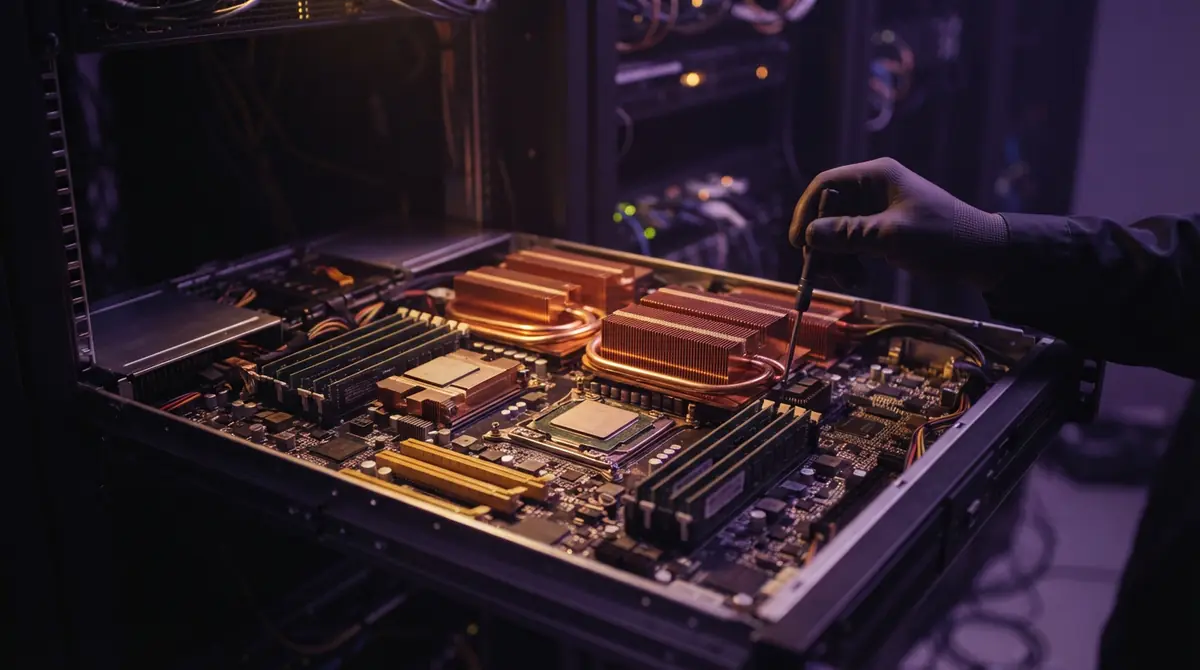
Seizure at the KLIA Free Trade Zone
The intercepted consignment includes 30 server units with an estimated commercial value of RM45 million and unpaid duties of RM4.5 million, bringing the total valuation to RM49.5 million, according to details reported by the New Straits Times. The servers were inspected at a warehouse at the KLIA Free Trade Zone before being re-exported.
Aspalila confirmed that the freight forwarding entity responsible for handling the shipment has been summoned by authorities to assist with the ongoing inquiry. As of October 28, no individuals have been arrested. Customs and ministry officials declined to specify the hardware manufacturer, the specific country of origin, or the final intended destination, citing the active status of the investigation.
Technical Thresholds and Dual-Use Regulations
The seized hardware falls under dual-use regulatory oversight due to its computational performance and potential application in military systems or weapons of mass destruction, according to Masyita Ismail, senior assistant director of the strategic trade secretariat at the Ministry of Investment, Trade and Industry. Dual-use technologies in Malaysia are governed by the Strategic Trade Act 2010.
Enforcement for high-end semiconductor logistics relies on Strategic Trade Controller's Directive No. 1/2025, issued by the trade ministry to stop illicit transshipment to sanctioned destinations. The directive mandates strategic trade permits for computing silicon reaching specific performance thresholds. Hardware with a total processing performance value of 4,800 or higher requires a permit. Additionally, chips with a total processing performance of 1,600 or higher combined with a performance density of 3.2 or higher fall under mandatory notification and permitting rules. Importers, exporters, and logistics handlers must apply for these permits at least 30 days prior to bringing the hardware into Malaysian territory.
Penalties under Section 12 of the Strategic Trade Act 2010 are substantial. A corporation convicted of willful violations faces fines of up to RM20 million. Individuals convicted of the offense face fines up to RM10 million, prison sentences of up to 10 years, or both.

Fifth Bust Linked to Regional Transit Syndicate
The October 15 enforcement action represents the fifth time in 2026 that Malaysian customs has intercepted illicit consignments of advanced AI chips tied to the same smuggling syndicate, according to The Standard. Together, the five seizures carry an estimated combined valuation exceeding RM100 million (over $24 million).
Earlier enforcement actions this year included a June operation at Kuala Lumpur International Airport that seized 72 AI servers valued at approximately $13 million, as noted by AI Weekly.
Broader Export Enforcement Across Southeast Asia
The seizures come amid tighter scrutiny on semiconductor supply chains across Southeast Asia. The United States has expanded controls on advanced semiconductor exports routed through Malaysia and Thailand to prevent the unauthorized diversion of restricted processors to China.
Malaysia, which is expanding its domestic data-center capacity, has intensified monitoring of transshipment corridors to avoid becoming a funnel for unauthorized silicon rerouting. Previous inquiries by Malaysian authorities investigated reports of servers carrying United States-manufactured Nvidia chips destined for Singapore that ended up in Malaysia, though officials confirmed at the time that those specific checks found no evidence of illicit semiconductor trade. The Strategic Trade Secretariat continues to require mandatory 30-day advance alerts whenever logistics handlers suspect that computing shipments could be tied to restricted regional destinations.
Questions people ask
What specific hardware was seized at Kuala Lumpur International Airport?
Customs enforcement officers seized 30 server units containing advanced artificial intelligence chips valued at RM49.5 million ($12.1 million), which had been misdeclared as standard electronic components.
What regulatory rules apply to advanced AI chips in Malaysia?
Under Strategic Trade Controller's Directive No. 1/2025 and the Strategic Trade Act 2010, chips with a total processing performance of 4,800 or more, or 1,600 with a performance density of 3.2 or more, require a permit submitted at least 30 days prior to transit or export.
Have any arrests been made in connection with the October 2026 seizure?
No arrests have been announced. Authorities have summoned the freight forwarding firm handling the air waybill to assist in the live investigation.
Sources
- KLIA customs seizes 30 servers containing AI chips with potential military useFree Malaysia Today, Oct 28, 2026
- Customs foils bid to transit RM49.5mil AI chips through Malaysia, with potential weapons applications [WATCH]nst.com.my, Oct 28, 2026
- Malaysia foils $12 mn AI chip smuggling bidThe Standard 英文虎報, Oct 28, 2026
- Malaysia Seizes $12.1M AI Chip Haul at KLIA, Fifth of 2026AI Weekly, Oct 28, 2026
How this story was made: the newsroom picked it up from Google Search and Techmeme, gathered the full text of the sources above, and drafted it with AI assistance. Every factual claim was then checked against those sources before publishing (14 claims checked). Illustrations marked as AI-generated are not photographs. Spotted an error? Tell us.
Published October 29, 2026 at 03:11 UTC