SK Hynix AI Memory Demand Drives Record Q3 Profit, $75B Return
Operating profit at the South Korean memory maker jumped 632% to 83.33 trillion won as high-bandwidth memory sales surged, backing an expanded capital return program.

In short
- SK Hynix posted record Q3 2026 revenue of 104.62 trillion won and operating profit of 83.33 trillion won, achieving an 80% operating margin.
- The chipmaker committed to returning approximately 100 trillion won ($75 billion) to shareholders in fiscal 2026 via cash dividends and share cancellations.
- Shipments of next-generation HBM4 began during the quarter and are projected to surpass HBM3E in volume and revenue during the fourth quarter of 2026.
- Standard five-year long-term agreements with 14 major cloud and AI customers cover more than 50% of the firm's production capacity for 2027 and 2028.
- Management discontinued its strategic review of an initial public offering for NAND subsidiary Solidigm, citing financial market conditions.
South Korean semiconductor manufacturer SK Hynix reported record third-quarter financial results on October 28, 2026, fueled by global demand for advanced memory hardware used in artificial intelligence infrastructure. Operating profit for the July-to-September quarter surged 632% year-over-year to 83.33 trillion won ($62.8 billion), while quarterly revenue topped 100 trillion won for the first time in corporate history, reaching 104.62 trillion won. Backed by expanding cash reserves, the company committed to returning approximately 100 trillion won ($75 billion) to shareholders through cash dividends and share repurchases for fiscal year 2026, according to an official earnings announcement from SK Hynix.
The performance marks the sixth consecutive quarter of record revenue and operating profit for the supplier, which provides high-bandwidth memory (HBM) to hardware makers including Nvidia. The broader acceleration of data center expansion has tightened supply for high-end DRAM and enterprise storage. As reported by The Economic Times, SK Hynix attributed its ongoing growth to a virtuous cycle where commercial productivity gains in software development, customer service, and search are spurring broader AI adoption, requiring aggressive capital deployment by cloud service providers.
Unprecedented Margins and Revenue: What SK Hynix AI Memory Delivered
The company’s operational metrics revealed high profitability across its core product lines. Operating margin reached 80% during the third quarter, while gross margin expanded to 86%, according to financial slides compiled by Investing.com. SK Hynix recorded an EBITDA of 87.68 trillion won, representing an EBITDA margin of 84%.
However, net income presented a different picture. Net profit reached 39.78 trillion won, up 216% from the prior year but down 58% sequentially from the second quarter of 2026. The bottom line was impacted by 32.63 trillion won in net non-operating expenses, including an 11.63 trillion won foreign exchange loss stemming from falling exchange rates and a 22.92 trillion won valuation loss on investment assets, alongside 10.93 trillion won in corporate taxes. Despite these accounting factors, operating cash generation strengthened the balance sheet: cash and cash equivalents grew by 26.5 trillion won to 114.5 trillion won, while total debt fell to 15.8 trillion won, leaving the company with a net cash position of 98.7 trillion won.
Product Breakdown: HBM4 Takes the Lead Over HBM3E
DRAM products served as the primary growth engine, accounting for 75% of total third-quarter revenue. DRAM bit shipments rose approximately 10% sequentially, while average selling prices climbed in the high-20% range. Server memory comprised 50% to 55% of total DRAM revenue, graphics memory—including high-bandwidth memory—represented 10% to 15%, and mobile devices accounted for 20% to 25%.
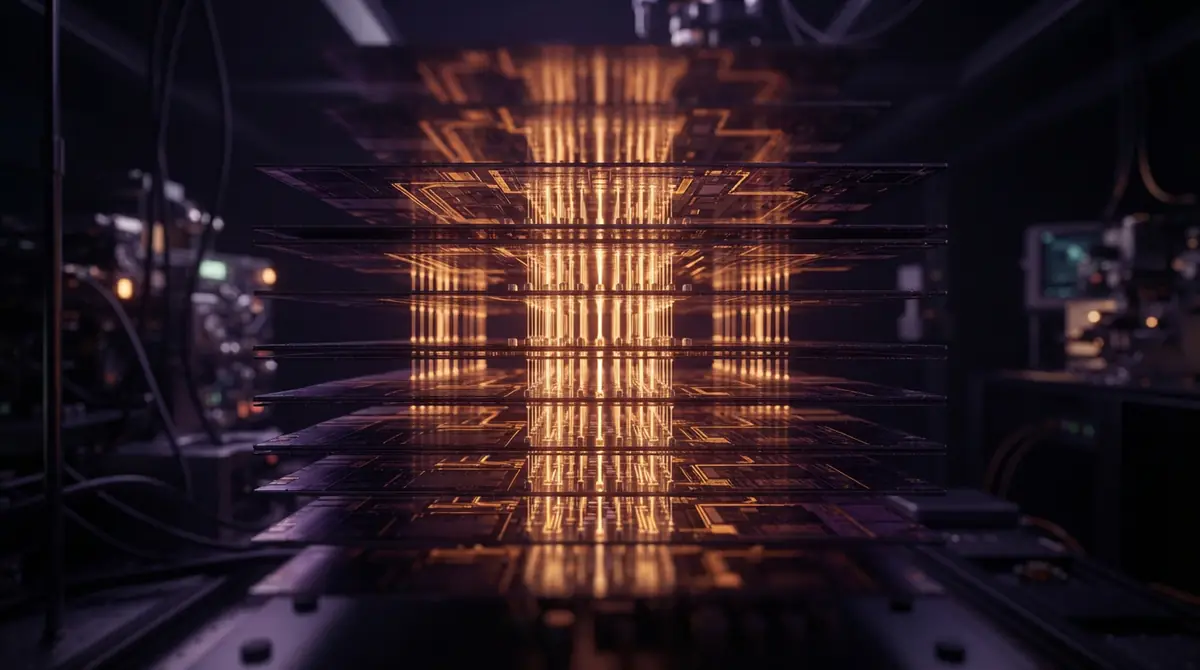
Product transitions are moving swiftly. SK Hynix confirmed that initial shipments of HBM4 commenced during the quarter. To meet customer orders, the company is ramping production at its M15X fabrication facility to maximum capacity before the end of 2026. Management expects HBM4 to surpass HBM3E in both shipment volume and revenue share in the fourth quarter, solidifying its status as the company's mainstream AI memory product. Concurrently, the firm is transitioning production lines to 10-nanometer class sixth-generation (1c) process technology while expanding shipments of server DDR5 and LPDDR5 SOCAMM modules.
NAND flash storage contributed 24% of third-quarter sales, bolstered by a mid-20% increase in average selling prices. Enterprise solid-state drives (eSSDs), including solutions from subsidiary Solidigm, generated 70% to 80% of NAND revenue. SK Hynix plans to increase 321-layer triple-level cell (TLC) eSSD manufacturing to encompass more than half of its domestic NAND production capacity during the fourth quarter, targeting storage tiers for AI model caching and inference workloads.
A 100 Trillion Won Shareholder Return and the Solidigm Decision
To address shareholder demands following months of stock price volatility, the Board of Directors approved a capital allocation framework designed to return at least 50% of free cash flow, according to SK hynix's official news release. The program targets approximately 100 trillion won for fiscal 2026, combining more than 30 trillion won in cash dividends with over 60 trillion won in share repurchases and cancellations.
For the third quarter, the board declared a total cash dividend of 14 trillion won, translating to 20,000 won per share. This payout consists of a base dividend of 10,000 won per share reflecting quarterly operating earnings and a special dividend of 10,000 won per share funded by realized gains from the company's investment in Japanese memory manufacturer Kioxia. SK Hynix also authorized a 20 trillion won share buyback: 10 trillion won will be retired to enhance shareholder value, while the remaining 10 trillion won is allocated to employee compensation.
During the earnings briefing, Chief Executive Officer Kwak Noh-Jung announced that SK Hynix has discontinued its strategic review regarding an initial public offering for Solidigm. The proposed listing had been considered as a mechanism to fund manufacturing expansions independently. Kwak explained that after evaluating recent conditions across global financial markets, management concluded that proceeding with an IPO would not yield the intended strategic outcomes.

Securing Capacity Through 2030 Amid Market Volatility
SK Hynix is working to secure multi-year commitments through long-term contracts. The chipmaker has executed standard five-year long-term agreements (LTAs) with 14 key technology customers, including major cloud service providers, and is actively discussing contract extensions. According to SK Hynix's earnings announcement, the volumes covered under these agreements already exceed 50% of the company's total production capacity for both 2027 and 2028. The contracts incorporate pricing formulas linked to market parameters, providing visibility alongside downside protection.
Addressing investor concerns over sustainability, SK Hynix projected that the supply deficit for leading-edge memory will persist until 2030, driven by the technical difficulty of advanced processes and lengthy construction schedules for new fabs. While market research firm Counterpoint pointed to potential price volatility should major hyperscalers trim procurement in a manner reminiscent of the 2018 chip downturn, SK Hynix noted that capital expenditures among tier-one cloud providers are projected to expand by more than 60% in 2027. To meet long-term commitments, SK Hynix will expand capital expenditures next year as its primary Yongin Phase 1 fabrication site enters full commercial operations.
Questions people ask
What were SK Hynix's financial results for Q3 2026?
SK Hynix reported record consolidated revenue of 104.62 trillion won, operating profit of 83.33 trillion won (an 80% operating margin), and net profit of 39.78 trillion won for the third quarter of 2026.
How much capital is SK Hynix returning to shareholders?
The company committed to approximately 100 trillion won ($75 billion) in shareholder returns for fiscal 2026, comprising at least 30 trillion won in cash dividends and over 60 trillion won in share repurchases and cancellations.
What is the timeline for SK Hynix's HBM4 chip production?
HBM4 shipments began in the third quarter of 2026. The company is ramping up the M15X fab to achieve maximum capacity by the end of 2026, expecting HBM4 to surpass HBM3E in shipments and revenue during the fourth quarter of 2026.
Why was the Solidigm IPO review discontinued?
CEO Kwak Noh-Jung stated that management discontinued the review of an IPO for Solidigm due to prevailing financial market conditions, determining that a public offering would not achieve the desired strategic goals.
Sources
- AI chip giant SK hynix says quarterly operating profit soars 630%Economic Times, Oct 28, 2026
- SK hynix Announces 3Q26 Financial Results | SK hynix NewsroomSK hynix Newsroom
- SK hynix smashes records in Q3 revenue, profit amid global AI boomenglish.news.cn
- SK hynix Q3 2026 slides: revenue tops 100T, 80% margin on AI boominvesting.com, Oct 27, 2026
- SK Hynix unveils $75 billion shareholder return plan after posting record profitCNA, Oct 27, 2026
How this story was made: the newsroom picked it up from Techmeme, gathered the full text of the sources above, and drafted it with AI assistance. Every factual claim was then checked against those sources before publishing (28 claims checked). Illustrations marked as AI-generated are not photographs. Spotted an error? Tell us.
Published October 28, 2026 at 05:19 UTC