Goldman Sachs Forecasts $1.2 Trillion Big Tech AI Spend by 2027
Big Tech is projected to invest $1.2 trillion in AI infrastructure by 2027 as debt issuance rises and revenue hurdles mount.
Key takeaways
- Amazon, Alphabet, Microsoft, Oracle, and Meta are projected to spend a combined $1.2 trillion on AI capital expenditures in 2027, surpassing Wall Street's $1.1 trillion consensus.
- The 2027 outlay represents a larger share of GDP than any technological investment wave since the late 19th-century railroad expansion.
- Hyperscalers require an estimated $300 billion in annual AI revenue to break even, while current annualized AI cloud revenue sits roughly $200 billion below that threshold.
- Over one-third of the buildout is increasingly financed through corporate debt, with 2027 investment-grade bond issuance projected to hit $400 billion to $420 billion.
- Physical constraints like power supplies, memory chips, and pipeline delays—such as Oracle's delayed 2.45 GW Project Jupiter campus—threaten delivery schedules.
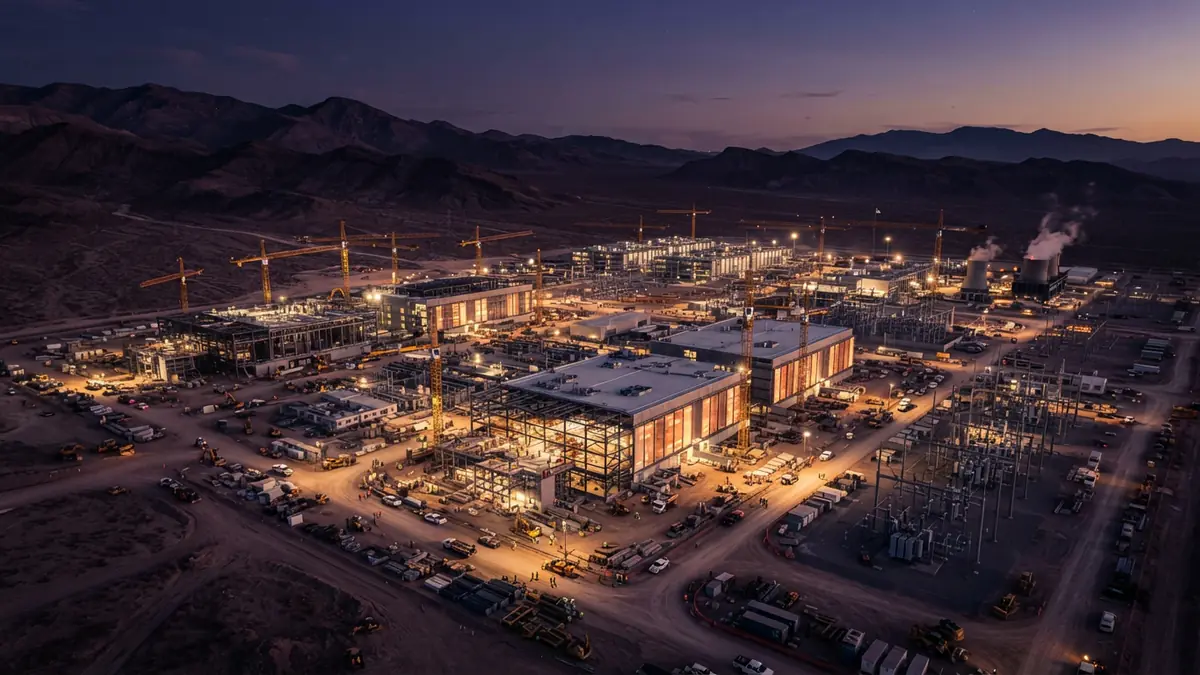
Capital spending on artificial intelligence infrastructure across major technology giants is accelerating beyond previous financial models. According to research from Goldman Sachs led by strategist Ryan Hammond, Amazon, Alphabet, Microsoft, Oracle, and Meta are projected to spend a combined $1.2 trillion on AI infrastructure in 2027. The forecast, reported by The Decoder and Briefs Finance, exceeds the existing Wall Street consensus of $1.1 trillion.
Relative to gross domestic product, the investment cycle represents the largest infrastructure push since the railroad expansion of the late 1800s. The anticipated $1.2 trillion total represents a 54 percent jump over the approximately $750 billion to $800 billion projected for 2026, which itself nearly doubled the $405 billion the five hyperscalers spent in 2025.
The AI Infrastructure Trajectory and Financial Hurdles
While gross capital expenditures continue to set records, Goldman Sachs strategists note that the rate of year-over-year growth will begin to normalize. After surging nearly 100 percent in 2026, capex growth is expected to slow to 54 percent in 2027 and step down to 12 percent in 2028, when total outlays are projected to reach $1.4 trillion.

To justify these unprecedented outlays, Goldman Sachs calculates that the hyperscalers need approximately $300 billion per year in AI-specific revenue just to break even on their capital spending. As reported by startupfortune.com, cloud revenue across the cohort is annualizing at roughly $70 billion above its pre-AI trend line as of the second quarter of 2026. This creates an annualized revenue gap of more than $200 billion against the breakeven threshold.
For hyperscalers and application developers to achieve attractive investment returns, Goldman Sachs estimates that end users globally would need to purchase roughly $1 trillion per year in AI application software. For scale, total worldwide software spending across all categories stands at approximately $1.5 trillion in 2026.
Shifting to Debt Financing as Capex Outpaces Cash Flow
Because capital spending has now pushed past the cash generated from day-to-day operations, the hyperscaler group is increasingly turning to debt markets to fund its data center construction. According to reporting by startupfortune.com, the reliance on investment-grade bond sales is expanding rapidly.
In 2025, the five hyperscalers issued $108 billion in investment-grade bonds, which funded about 26 percent of their capital expenditures. In the first half of 2026 alone, bond issuance reached $194 billion, on track to near $250 billion for the full year—equivalent to roughly one-third of 2026 capex. For 2027, Goldman Sachs projects global investment-grade issuance will reach between $400 billion and $420 billion, meaning more than one-third of the buildout will be funded through debt rather than free cash flow.
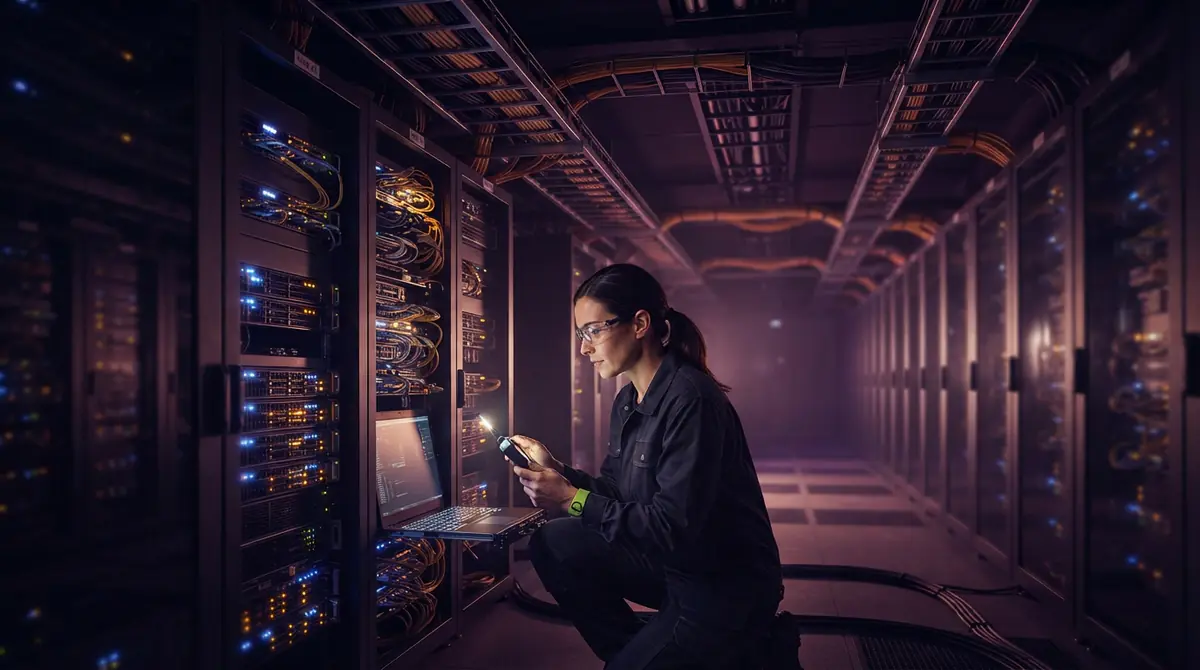
This shift brings increased fixed financial obligations, as debt must be serviced regardless of whether end-market AI software monetization matches current forecasts.
Supply Bottlenecks and Physical Delivery Pressures
Financial limits are not the only headwinds confronting hyperscalers. The rapid deployment of capital is colliding with physical constraints in electrical power grids, pipeline infrastructure, specialized labor, data center zoning, and memory chip supplies.
These real-world frictions recently surfaced in major facility timelines. On September 24, 2026, Oracle issued a force majeure notice to a unit of Blue Owl Capital concerning Project Jupiter, a 2.45-gigawatt Stargate data center campus located in New Mexico powered by natural gas fuel cells. The notice followed a six-month delay on an Energy Transfer supply pipeline, pushing pipeline completion to February 1, 2027. While Oracle remains the anchor tenant, the notice allows it to delay payments if the site misses its 2028 operational target.
Investor Sentiment and Cloud Growth Trends
Despite mounting physical and balance-sheet pressures, top-line demand indicators continue to show strong activity. Cloud revenue growth across Amazon, Alphabet, Microsoft, and Oracle accelerated to 48 percent in the second quarter of 2026, up from 25 percent in 2024. Furthermore, Amazon, Alphabet, and Microsoft hold a disclosed combined cloud backlog of $1.7 trillion.
However, public market equity valuations reflect growing investor caution regarding the AI payback timeline. The median AI infrastructure stock trades at a forward price-to-earnings ratio of 22x, down from 32x in April. Valuation multiples for the primary hyperscalers have compressed to their lowest levels in over a decade, with their valuation premium over the broader S&P 500 shrinking to a record low as markets weigh heavy capital expenditures against the pace of enterprise software adoption.
Frequently asked questions
Which companies are included in Goldman Sachs' $1.2 trillion AI projection?
The forecast includes Amazon, Alphabet, Microsoft, Oracle, and Meta Platforms.
How much revenue do hyperscalers need to break even on AI spending?
Goldman Sachs estimates the companies need roughly $300 billion in annual AI revenue to break even, compared to an annualized run rate of about $70 billion above the pre-AI trend as of Q2 2026.
How is Big Tech financing the $1.2 trillion AI infrastructure buildout?
Because capex now exceeds cash flow from operations, companies are using corporate debt. Investment-grade bond issuance is projected to reach between $400 billion and $420 billion in 2027, covering more than one-third of total capex.
What physical constraints are slowing down AI data center construction?
Key bottlenecks include electricity availability, gas pipeline delays, labor shortages, memory chip supply constraints, and local data center building restrictions.
Sources
- Goldman Sachs expects Big Tech to spend $1.2 trillion on AI infrastructure by 2027, dwarfing Wall Street estimatesThe Decoder · Sep 27, 2026
- Goldman Sachs says hyperscalers will spend $1.2 trillion on AI in 2027startupfortune.com · Sep 25, 2026
- Hyperscaler AI Capex Could Reach $1.2T in 2027 - Briefs FinanceBriefs Finance · Sep 25, 2026
- Spending by AI Giants Expected to Exceed $1.2 Trillion by 2027 - Sada News AgencySada News Agency
How this story was made: the newsroom picked it up from the-decoder.com, gathered the full text of the sources above, and drafted it with AI assistance. Every factual claim was then checked against those sources before publishing (24 claims checked). Illustrations marked as AI-generated are not photographs. Spotted an error? Tell us.
Published September 28, 2026 at 01:08 UTC