Advisers Push for $3.7T SpaceX-Tesla Merger by Early 2027
Advisers want to seal the largest corporate combination in history before political and market conditions shift.
In short
- Advisers are pushing to announce a SpaceX-Tesla merger by the first half of 2027 to close while President Donald Trump remains in office.
- A combined company would hold an estimated market value of $3.7 trillion, making it the largest corporate transaction in history.
- The transaction faces governance hurdles, requiring approval from 50% of all outstanding Tesla shares, while Elon Musk plans to recuse himself.
- Cross-company priorities center on AI, including the Terafab chip facility, robotics, and 13 gigawatts of planned SpaceX compute by late 2027.
Advisers within Elon Musk's corporate orbit are pushing to announce a merger between SpaceX and Tesla by the first half of 2027, according to a Bloomberg report cited by investingLive. The proposed deal aims to combine the two companies while President Donald Trump remains in office to ensure a favorable political and regulatory environment.
The combined valuation of both entities stands at approximately $3.7 trillion, which would make the transaction the largest corporate merger ever attempted. On SpaceX's earnings call, Musk described the combination as a "good idea" while cautioning that nothing has been finalized. "I think some people out there assume that a SpaceX and Tesla merger is a certainty, and I think that would be overstating it," Musk said, noting that special committees have been set up to evaluate terms.
Timing, Politics, and Market Pressures
The target window in early 2027 reflects concerns that favorable regulatory and financial conditions could narrow. As Stocktwits reported, upcoming U.S. midterm elections on November 3, 2026, pose a political risk; a Democratic victory in either chamber of Congress could trigger investigations into Musk's businesses and complicate federal reviews.
Market volatility also threatens the proposal. A sustained selloff across semiconductor and artificial intelligence equities would reduce SpaceX's valuation leverage. SpaceX shares have rebounded 47% since August 5, 2026, after dipping below their $135 initial public offering price following a June listing. Nicolas Owens, an analyst at Morningstar, stated that SpaceX's price recovery makes its equity viable currency for a transaction, but warned that any decline could disrupt negotiations.
Following initial reports of the timeline, Tesla shares slipped 3% in overnight trading, while SpaceX shares fell more than 1%. Year to date in 2026, Tesla stock is down 14%, whereas SpaceX stock has dropped 1%.
Governance Hurdles and Shareholder Math
Closing the deal requires navigating disparate ownership structures and strict voting requirements. Musk holds more than 80% of SpaceX's voting power, making approval straightforward on the aerospace side. At Tesla, however, Musk owns roughly 20% of the equity, and the transaction must clear a demanding voting hurdle.
Musk noted that the deal must win approval from 50% of all outstanding Tesla shares, rather than just a majority of votes cast at a meeting. Musk stated he would recuse himself from negotiations, leaving independent special committees at each company to negotiate terms. Less than a year ago, Tesla shareholders and its board approved a trillion-dollar compensation package for Musk, but securing agreement on merger valuations remains uncertain.
Financial modeling highlights deep trade-offs for equity holders. Brett Winton, an analyst at Cathie Wood's ARK Investment Management, calculated that if the companies merge at the current share price ratio, Tesla shareholders would be roughly 1.6 times better off by 2031, while SpaceX shareholders would be twice as well off. By 2036, however, ARK projects Tesla holders would be approximately five times better off compared to 1.3 times for SpaceX holders. Winton noted that balancing these projections suggests a 30% premium for Tesla shares under a 2031 horizon, but a 50% discount under a 2036 horizon.
Shared AI Infrastructure and Heavy Capital Outlays
The strategic push behind the merger focuses heavily on artificial intelligence and computing infrastructure. Musk highlighted operational synergies during SpaceX's earnings call, citing work across chip architecture, supercomputing software, robotics, and mass to orbit with the Starmind constellation. SpaceX is targeting 13 gigawatts of compute capacity online by the end of 2027.
Tesla is simultaneously working toward commercial milestones, targeting early deliveries of its Optimus humanoid robot to external customers around late 2027 and expecting its Robotaxi network to reach financial significance in the second half of 2027. Analyst Dan Ives noted that initial Optimus production aligns directly with the strategic logic of a unified company.
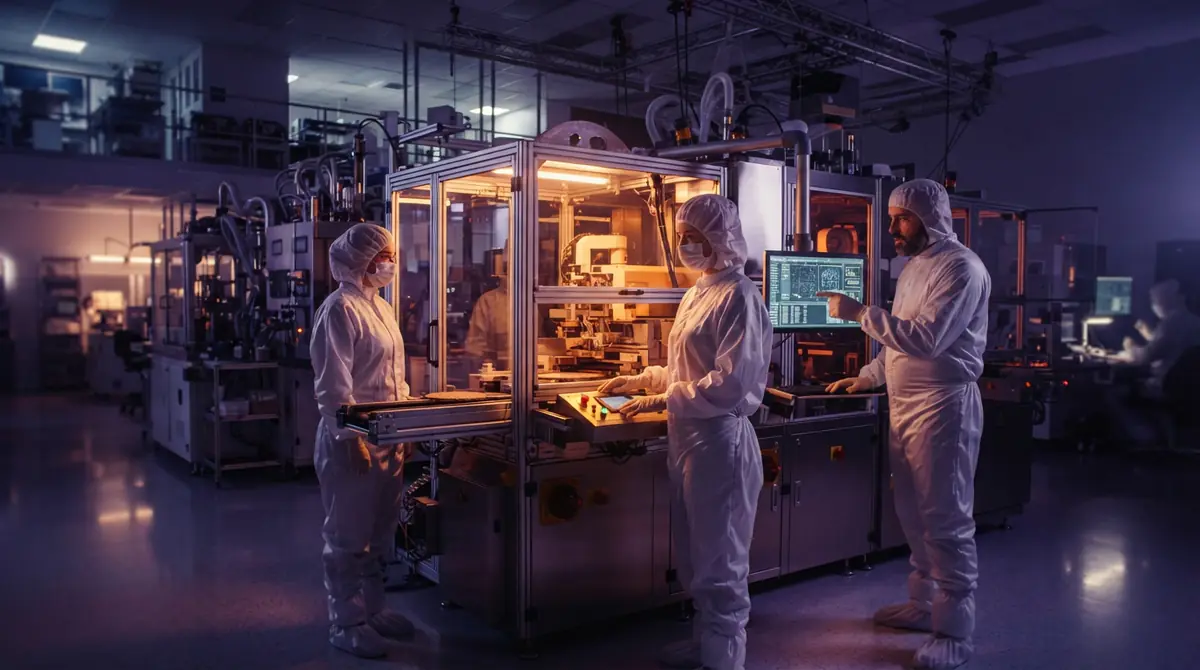
Both companies are already collaborating on the "Terafab" semiconductor facility in Texas, though cost-sharing arrangements remain unresolved. Musk explained on Tesla's earnings call that capital equipment for the facility will reach tens of billions of dollars through early 2028, and likely exceed $100 billion over the long term. Tesla Chief Financial Officer Vaibhav Taneja confirmed that orders for initial research equipment have been placed, with test chips planned for May or June 2027 and volume manufacturing slated for 2028.
These initiatives require immense cash resources. SpaceX projected fourth-quarter capital expenditures between $35 billion and $40 billion. Tesla trimmed its full-year 2026 capital budget to approximately $20 billion, though it generated more than $1.5 billion in free cash flow in the third quarter and closed the period with over $45 billion in cash and investments.
National Security and Regulatory Complexities
Even with White House backing, the proposed union faces substantial regulatory friction. In a research note highlighted by investingLive, JPMorgan pointed out that SpaceX serves as a critical U.S. defense contractor, while Tesla maintains a substantial manufacturing base and supply chain footprint in China. JPMorgan noted that balancing these two competing exposures will be a central hurdle in securing antitrust and regulatory clearance.
JPMorgan also indicated that any eventual agreement would likely take the form of an all-stock transaction led by SpaceX. For now, with formal terms still unwritten, the corporate committees must reconcile complex governance demands and valuation splits before the mid-2027 window closes.
Questions people ask
Why is the first half of 2027 targeted for the SpaceX-Tesla merger announcement?
Advisers want to announce the transaction in time to complete regulatory reviews and close the deal while President Donald Trump remains in the White House, before potential political shifts occur.
What approvals are required for Tesla to agree to the merger?
Independent special committees must first negotiate the terms. Because Elon Musk is recused due to conflicts of interest, the transaction must win the approval of 50% of all outstanding Tesla shares, not merely a simple majority of votes cast.
What are the primary regulatory challenges facing the deal?
JPMorgan identified tensions between SpaceX's sensitive U.S. national security and defense contracts and Tesla's extensive manufacturing operations and supply chain footprint in China.
What shared projects already link Tesla and SpaceX?
The companies are jointly developing the Terafab semiconductor plant in Texas, collaborating on AI robotics and software, and planning shared compute infrastructure, with SpaceX aiming for 13 gigawatts of compute online by late 2027.
Sources
- Musk races to seal $3.7 trillion SpaceX-Tesla merger before Trump exits, Bloomberg saysinvestingLive, Oct 22, 2026
- SpaceX (SPCX) and Tesla (TSLA) are reportedly pushing for a merger deal by H1 2027, Bloomberg sources say;…newsquawk.com, Oct 22, 2026
- TSLA, SPCX Slip Overnight: Musk Reportedly Pushes Merger Before Trump's Exit — ARK Sees Tesla Holders '5x Better Off' By 2036stocktwits.com, Oct 22, 2026
How this story was made: the newsroom picked it up from Techmeme, gathered the full text of the sources above, and drafted it with AI assistance. Every factual claim was then checked against those sources before publishing (25 claims checked). Illustrations marked as AI-generated are not photographs. Spotted an error? Tell us.
Published October 22, 2026 at 02:16 UTC