OpenAI Publishes 722 Math Manuscripts from Internal Frontier Model
OpenAI has published hundreds of mathematical manuscripts and Lean proofs generated by an unreleased model, drawing scrutiny and interest from the research community.

Key takeaways
- OpenAI released 722 manuscripts grouped into 372 result families under an Apache-2.0 license on GitHub.
- According to OpenAI, the vast majority of findings were generated by an unreleased internal frontier model using roughly three hours of ChatGPT Pro thinking compute per result across approximately 4,000 posed problems.
- The repository includes Lean proof artifacts, 10 reasoning summaries, and claims addressing problems across 17 mathematical disciplines.
- Mathematicians and the independent Advisory Group on Mathematics and Artificial Intelligence (AGMAI) have raised concerns regarding research ethics, verification burdens, and the use of proprietary models.
On October 6, 2026, OpenAI published a GitHub repository containing 722 mathematical manuscripts organized into 372 result families, all generated by an unreleased internal frontier model. The release includes proof artifacts formalized in the Lean interactive theorem prover alongside 10 abridged summaries of the model's reasoning traces.
According to an official announcement by OpenAI, the company initiated this evaluation on open research problems after its existing mathematical benchmarks saturated. OpenAI reported that the vast majority of the results followed a standardized procedure where the model tackled approximately 4,000 problems, consuming an average equivalent of roughly three hours of ChatGPT Pro thinking compute per result.
Scope of the Mathematical Claims
The repository, published under an Apache-2.0 license, spans 17 mathematical disciplines. Theoretical computer science represents the largest group with 40 result families, followed by combinatorics with 37, algebraic and complex geometry with 36, and number theory with 31, as detailed by Kingy AI's analysis of the catalogue.
Key claims in the release span several major mathematical domains:
- Number Theory: Family 003 claims a fixed zero-free region for Dirichlet L-functions, including the Riemann zeta function, in the half-plane Re(s) > 7/8. Family 005 asserts that Catalan's constant is irrational, while Family 017 claims the irrationality exponent of π is exactly two.
- Algebraic Geometry: Family 032 claims the rational Hodge conjecture for complex abelian varieties with complex multiplication across all dimensions and codimensions.
- Theoretical Computer Science: Claims include ordinary NP-hardness at the basic semidefinite threshold in Family 102 and resolutions touching the Unique Games Conjecture.
- Algebra and Logic: Family 004 proposes a reduction regarding Hilbert's tenth problem over the rationals, while Family 197 provides an argument on Kaplansky's direct-finiteness conjecture in characteristic two.
- Mathematical Physics and PDEs: Manuscripts address the three-dimensional relativistic Vlasov–Maxwell system (Family 362) and the Mézard–Parisi formula for diluted spin glasses (Family 221).
OpenAI noted two exceptions to its fixed automated generation procedure: its work on the zero-free region for the Riemann zeta function and its proof of the Hodge Conjecture for CM abelian varieties. The writeup covering the Re(s) > 11/12 zero-free region was human-edited for readability, according to the openai/math repository README.
Verification Status and Lean Formalization
OpenAI stated that the published collection spans multiple stages of verification. Many manuscripts feature accompanying formal proofs written in Lean, a programming language enabling computer verification of mathematical arguments. However, not all 722 manuscripts are fully formalized.
OpenAI cautioned in its repository documentation that unformalized results "could have issues" and committed to fixing errors quickly while progressively adding Lean formalizations. The company established protocols to record corrections and revisions as distinct versions while preserving the public release history.
To provide insight into model behavior, OpenAI published abridged reasoning traces for 10 specific problems, detailing how the model evaluated hypotheses, checked Liouville-type counterexamples, and navigated technical proof steps.
Academic Reaction and Community Guidelines
The release follows debate this year between AI developers and the mathematical community. In September 2026, OpenAI announced that an internal model had solved open problems, including an argument regarding finite-time singularities for the 3D Navier–Stokes equations. As reported by daily.dev, that announcement prompted an open letter signed by 25 Fields Medalists cautioning against treating unsolved problems merely as AI benchmarks.
OpenAI stated it consulted with the independent Advisory Group on Mathematics and Artificial Intelligence (AGMAI) at the Institute for Advanced Study to guide its release process. In late September 2026, AGMAI issued recommendations urging AI laboratories to avoid proprietary, closed evaluations, deposit results in neutral academic repositories with persistent identifiers, disclose compute costs and prompts, and provide formal proofs whenever feasible. AGMAI explicitly stated in its recommendations that it does not endorse AI labs testing advanced mathematical problems on proprietary models without broader scientific access.
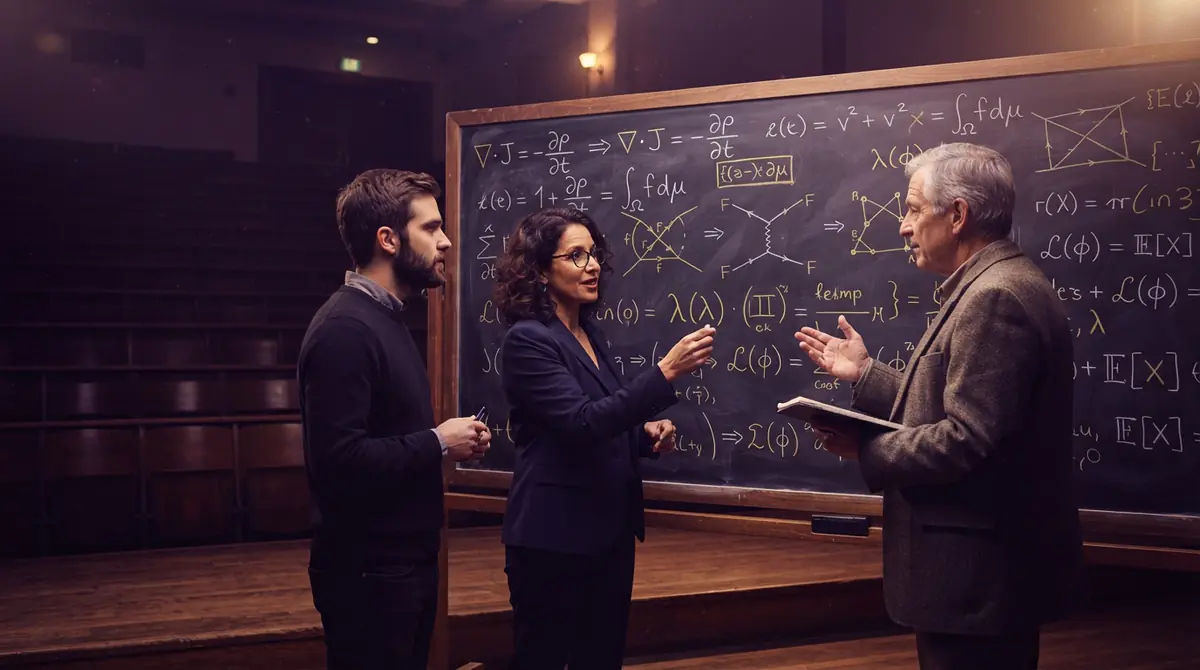
Reaction among researchers remains mixed. Reports from daily.dev indicate that some mathematicians, including Fields Medalists Peter Scholze and Geordie Williamson at the Heidelberg Laureate Forum, criticized large-scale repository dumps of unreviewed manuscripts as shifting the heavy labor of peer review onto the research community.
Compute Costs and Future Availability
While OpenAI detailed that the average result required roughly three hours of ChatGPT Pro thinking compute, the company did not disclose aggregate dollar costs, token volumes, hardware accelerator hours, or the training budget for the underlying model, according to Kingy AI.
Addressing future plans, OpenAI stated that it is "working to responsibly release the model that produced these results." The company also announced plans to fund a series of academic workshops, conferences, and special programs to assist the research community in analyzing and understanding AI-generated mathematical findings.
Frequently asked questions
What did OpenAI publish on GitHub?
OpenAI published 722 mathematical manuscripts organized into 372 result families, including supporting Lean proof formalizations and 10 reasoning summaries, in the openai/math repository under an Apache-2.0 license.
How much compute was used to produce these results?
OpenAI reported that the average result required the equivalent of roughly three hours of ChatGPT Pro thinking compute on an unreleased internal frontier model, tested across approximately 4,000 posed problems.
Are all the mathematical results verified?
No. While many manuscripts include formal computer-checked proofs in Lean, others remain unformalized. OpenAI acknowledged that unformalized papers could contain errors and stated it will update the repository as new formalizations are completed.
How did the mathematical community respond to the release?
Responses have been cautious and skeptical. While the Institute for Advanced Study's AGMAI group provided disclosure recommendations, several prominent mathematicians expressed concern over the burden of verifying hundreds of unreviewed AI-generated manuscripts.
Sources
- openai/mathGitHub · Oct 6, 2026 · Official
- Sharing AI progress in mathematicsOpenAI · Official
- OpenAI drops another batch of mathematical breakthroughsThe Verge · Oct 6, 2026
- OpenAI Releases 722 Math Manuscripts From an Unreleased AI ModelUnite.AI · Oct 6, 2026
- OpenAI’s 722 Math Manuscripts: The Results, Proofs, Compute and CostsKingy AI · Oct 6, 2026
- OpenAI's math dump has mathematicians saying 'not like that'daily.dev · Oct 6, 2026
- OpenAI shares new math results from internal modelbreakingthenews.net
How this story was made: the newsroom picked it up from GitHub, Techmeme and Reddit, gathered the full text of the sources above, and drafted it with AI assistance. Every factual claim was then checked against those sources before publishing (33 claims checked). Illustrations marked as AI-generated are not photographs. Spotted an error? Tell us.
Published October 7, 2026 at 00:39 UTC