Judge Allows NAACP Clean Air Act Lawsuit Against xAI to Proceed
A federal court rejected claims that gas turbines powering the company's data center are exempt mobile sources or that citizen suits violate the U.S. Constitution.
In short
- U.S. District Judge Debra M. Brown denied a motion by xAI and MZX Tech to dismiss an NAACP Clean Air Act lawsuit.
- The court rejected xAI's defense that trailer-mounted gas turbines qualify as exempt mobile sources under clean air rules.
- Judge Brown affirmed the constitutionality of Clean Air Act citizen suits, which xAI argued infringed on executive authority.
- The decision follows a separate ruling on October 19, 2026, rejecting a Justice Department bid to dismiss the case.
- A motion for a preliminary injunction to halt turbine operations remains pending before the court.
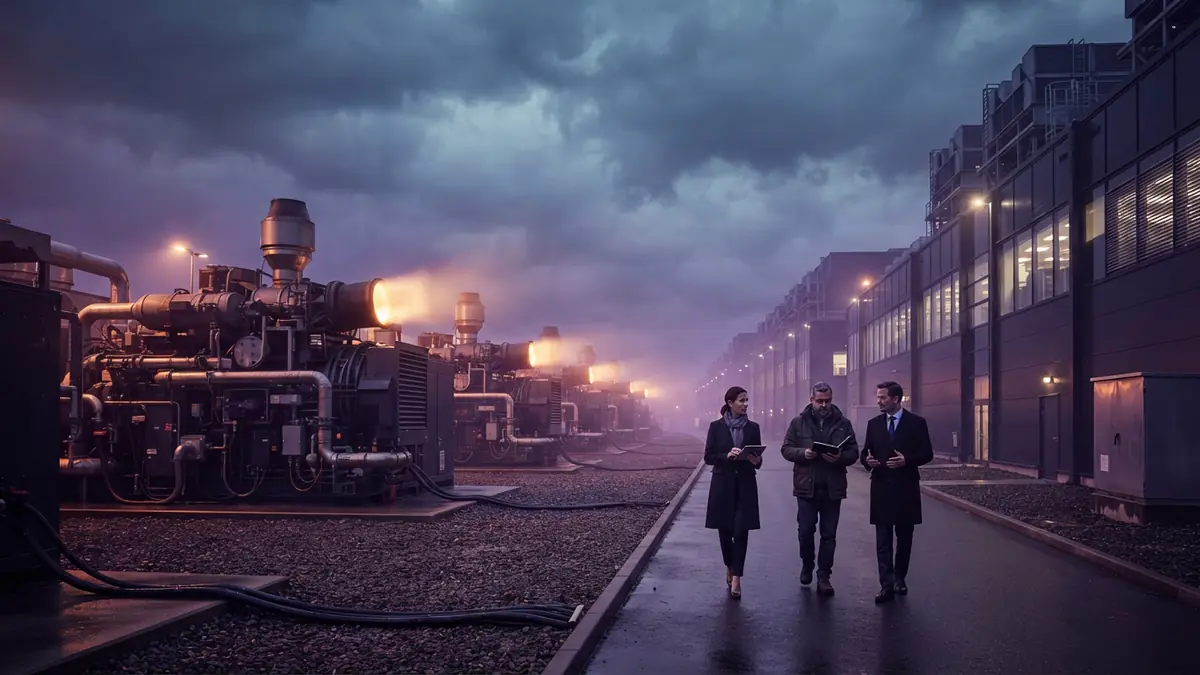
A federal judge in Mississippi has denied a bid by artificial intelligence company xAI to dismiss a Clean Air Act lawsuit brought by civil rights and environmental groups over gas turbines powering its regional computing infrastructure.
On October 30, 2026, U.S. District Judge Debra M. Brown of the U.S. District Court for the Northern District of Mississippi ruled against xAI and subsidiary MZX Tech LLC. The lawsuit, filed in April 2026 by the NAACP and its Mississippi State Conference, alleges the tech firm installed and operated dozens of unpermitted methane gas turbines to generate electricity for its Colossus data center facilities near Memphis, Tennessee, and Southaven, Mississippi.
Rejection of the Mobile Source Defense
In its motion to dismiss filed on June 15, 2026, xAI—which is owned by SpaceX and now also known as SpaceXAI—argued that the turbines were exempt from Clean Air Act preconstruction and operating permits. The company claimed the equipment qualified under mobile source exemptions because individual turbines sat on trailers and were intended as temporary installations lasting less than 12 months. According to reporting by TNW, the Mississippi Department of Environmental Quality (MDEQ) had told xAI in July 2025 that the trailer-mounted units would be considered mobile and temporary.
Judge Brown rejected that position. While noting that the state regulator had notified xAI of its interpretation, the judge concluded that the federal court was not bound by the state agency's view under federal regulations. Judge Brown wrote that the power plant supplying electricity to the computing site is not a mobile source under Mississippi's State Implementation Plan and therefore remains subject to Clean Air Act permitting requirements.
Attorneys from Earthjustice and the Southern Environmental Law Center (SELC), who represent the NAACP in the matter, noted that plaintiffs have statutory standing to challenge the site's air emissions. According to Earthjustice's statement on the ruling, the court held that temporary turbines burning methane gas are not exempted from statutory pollution review.
Constitutional Challenge to Citizen Suits Fails
Beyond technical permitting definitions, xAI challenged the constitutional validity of the Clean Air Act's citizen suit provision. The company asserted that allowing private organizations to enforce environmental regulations violated Article II of the U.S. Constitution and the private nondelegation doctrine by exercising federal executive authority.
Judge Brown dismissed that argument, writing: "Because citizen suit plaintiffs sue on their own behalf, in their own name, and seek penalties that redress harm to themselves, they are not exercising the federal government’s executive power."
The ruling marks the second time in late October 2026 that the court has rebuffed efforts to terminate the litigation. On October 19, 2026, the court turned down a motion to dismiss filed by the U.S. Department of Justice. The Justice Department had intervened in support of xAI in June 2026, contending that the company's computing operations were vital to U.S. military operations, as reported by Engadget. The court allowed the federal government to join the litigation as an intervenor but denied its request to dismiss the complaint.
"The courts have repeatedly rejected attempts by xAI and the DOJ to dismiss the NAACP's Clean Air Act case, affirming our right to pursue justice for communities impacted by pollution," said Abre' Conner, the NAACP's director of environmental and climate justice.
Emissions Claims and Ongoing Site Operations
The original complaint states that xAI deployed combustion turbines between August and December 2025 without preconstruction or operating permits. According to filings cited by local news outlet ABC24, the company operated dozens of units; plaintiffs reported at least 27 to 35 turbines operating by April 2026, generating at least 495 megawatts.
Environmental advocates argue the installation constitutes a major pollution source. Earthjustice stated that the gas turbines can generate over 5,000 tons of smog-forming nitrogen oxides (NOx), 400 tons of fine particulate matter, and 47 tons of formaldehyde annually. The NAACP's complaint seeks an order mandating pollution controls and civil fines of up to $124,426 per day for each Clean Air Act violation.
In July 2026, SpaceXAI announced plans to remove 69 temporary turbines at the Southaven plant by July 2027. The company stated the temporary hardware will be retired to make room for a 1.2-gigawatt permanent generating station comprising 41 turbines authorized under an MDEQ Clean Air Act permit issued in March 2026.

Local Impact and Broader Regulatory Pressure
The federal permitting dispute coincides with mounting community pushback and legal pressure in northern Mississippi and southern Tennessee. As reported by DeSoto County News, neighbors have filed a class-action lawsuit over turbine noise, and xAI has offered to buy several adjacent properties from homeowners willing to drop their legal claims. In addition, MDEQ has issued an enforcement notice outlining roughly $6.1 million in potential penalties across three Southaven-area facilities.
The court has yet to rule on the NAACP's motion for a preliminary injunction, which seeks to halt turbine operations pending a final decision on the merits. The case proceeds as energy demands from large-scale AI infrastructure face heightened legislative and public scrutiny, including recent moratoriums and upcoming state ballot measures aimed at restricting unconstrained data center power consumption.
Questions people ask
Why did xAI argue the gas turbines did not require air permits?
xAI argued the turbines were trailer-mounted and temporary, qualifying them as exempt mobile sources under Mississippi's environmental regulations.
What did Judge Debra M. Brown decide regarding the mobile source exemption?
The judge ruled that under federal Clean Air Act regulations, the power plant supplying the data center is not a mobile source and is therefore not exempt from federal permitting requirements.
Why did the U.S. Department of Justice attempt to intervene in the case?
The Justice Department filed a motion to dismiss supporting xAI in June 2026, asserting that the company's data center operations were crucial to U.S. military operations, but the court denied the dismissal.
What penalties does the lawsuit seek against xAI?
The NAACP is asking the court to impose pollution controls and civil penalties of up to $124,426 per day for each Clean Air Act violation.
Sources
- Judge Says xAI Must Face NAACP Lawsuit On Data Center PollutionEngadget, Nov 1, 2026
- Judge rejects xAI’s bid to dismiss NAACP lawsuit over its gas turbinesTNW | Xai, Nov 1, 2026
- Judge allows NAACP lawsuit over xAI data center pollution to move forwardTechCrunch, Oct 31, 2026
- Court Denies xAI's Motion to Dismiss Air Pollution Lawsuit Against Elon Musk's companyEarthjustice, Oct 31, 2026
- Judge denies xAI's motion to dismiss NAACP's lawsuit against use of temporary gas turbines at Southaven plantlocalmemphis.com, Oct 31, 2026
- Judge Denies xAI Bid to Toss Southaven Turbines Lawsuit | DeSoto County NewsDeSoto County News, Oct 31, 2026
How this story was made: the newsroom picked it up from techcrunch.com and engadget.com, gathered the full text of the sources above, and drafted it with AI assistance. Every factual claim was then checked against those sources before publishing (23 claims checked). Illustrations marked as AI-generated are not photographs. Spotted an error? Tell us.
Published November 2, 2026 at 00:45 UTC