Alibaba Launches Qwen Glasses N1 Series and Bose-Powered Earbuds
The Chinese tech giant unveils a new generation of smart glasses with swappable batteries, iris payments, and multimodal assistant features.

In short
- Alibaba began official sales of the Qwen Glasses N1 and N1 Pro alongside the Qwen Clip earbuds in China on October 13, 2026.
- The glasses run on the Qualcomm Snapdragon AR1 platform, feature a 50-megapixel camera, and offer hot-swappable temple batteries.
- The premium N1 Pro model introduces eye tracking, iris verification for Alipay, and biometric health tracking including heart rate and blood oxygen.
- Priced from 2,899 to 2,999 yuan ($450) before subsidies, the hardware competes directly on features with market leader Meta.
Alibaba Group is expanding its foray with a new generation of smart glasses, rolling out its Qwen Glasses N1 series and Qwen Clip earbuds in China on October 13, 2026, roughly a year after a first edition launched the prior November. First unveiled at the company's Apsara Conference in September 2026, the wearables serve as an everyday physical interface for Alibaba's proprietary Qwen models. The hardware aims to move artificial intelligence beyond passive chat boxes into proactive assistance that perceives what wearers see and hear.
The launch positions the Chinese tech giant in direct competition with Meta Platforms, whose Ray-Ban smart glasses lead the sector. Rather than undercutting competitors on price alone, Alibaba has priced the standard Qwen Glasses N1 from 2,899 to 2,999 yuan (approximately $450) before regional subsidies and promotional offers, according to reporting from The Next Web and TechNode.
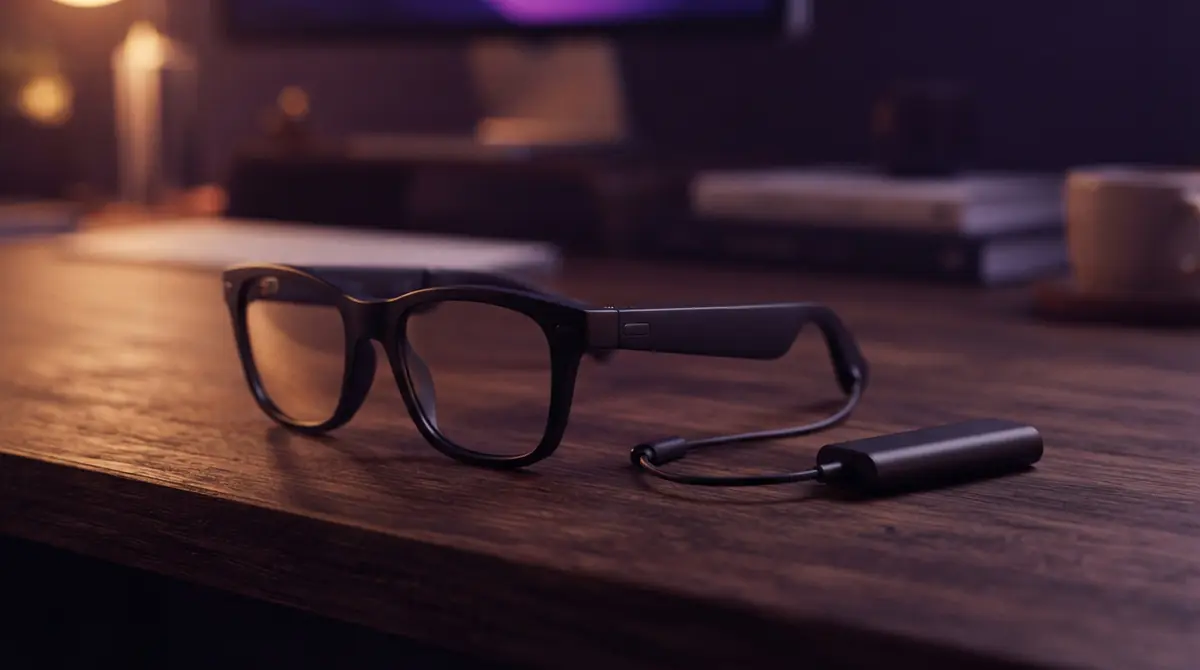
Hardware Architecture and Swappable Power
Both the standard Qwen Glasses N1 and the upgraded N1 Pro rely on a screenless design built around Qualcomm's Snapdragon AR1 platform, as detailed by eWeek. The glasses incorporate a 50-megapixel camera capable of recording 4K video, complete with image stabilization and software optimized for low-light capture.
Audio input relies on bone-conduction microphones. To solve the persistent battery limitations of wearable hardware, Alibaba designed the glasses with replaceable 272mAh battery modules housed in the temples. Users can swap them out without powering down the device, while an optional 700mAh MiniBag accessory provides additional auxiliary power on the move.
According to company specifications reported by TechNode, the base N1 delivers around nine hours of active music playback and up to 25 hours of standby time according to Bloomberg, whereas the N1 Pro is rated for approximately eight hours of active use.
Pro Capabilities: Eye Tracking and Iris Payments
The premium Qwen Glasses N1 Pro, priced at 3,499 yuan (discounted to around 2,600 yuan at launch), adds eye tracking and iris verification. As reported by Business Standard, general manager of Qwen AI hardware products Wu Jianjun noted the Pro edition features new eye-tracking functions. Wearers can simply fix their gaze on a physical object to trigger queries from the assistant.
The Pro edition also supports iris verification specifically configured for Alipay transactions, enabling hands-free payment confirmation. In addition, the N1 Pro includes biometric sensors to monitor heart rate, heart-rate variability, blood oxygen, skin temperature, and stress. However, eWeek noted that Alibaba has not submitted these sensors for clinical validation, meaning the health metrics serve wellness tracking rather than certified medical diagnosis.

Qwen Clip Earbuds and Multimodal Software
Alongside the eyewear, Alibaba debuted the Qwen Clip, an open-ear pair of clip-on earbuds co-engineered with Bose and priced at 1,299 yuan, according to Bloomberg. The earbuds provide an audio-only entry point to Qwen, supporting face-to-face cross-language translation, voice dictation, and meeting notes without a camera.
Across the N1 series, the software suite focuses on ambient assistance. Features include real-time translation, travel alerts, and an "AI Inspiration Album" that automatically logs scenes. Song Gang, vice president of Alibaba's Qwen business, explained to media that the objective is to build a Personal Agent that understands situations and provides proactive support without waiting for explicit prompts every step of the way, according to TradingView.
To expand third-party integrations, Alibaba opened its hardware platform portal, enabling developers to build voice-activated Skills and link internal systems through APIs or Model Context Protocol tools.
Privacy Protections and Market Context
The launch arrives amid heightened scrutiny over wearable imaging. In September 2026, Chinese authorities issued voluntary guidelines advising smart glasses manufacturers to display an overt recording indicator whenever cameras are active. Alibaba's environmental visual-perception policy stipulates that ambient scene recognition relies on local grayscale image processing, with full-color photos only uploaded to the cloud after wearers manually confirm transmission.
Alibaba CEO Eddie Wu has described consumer wearables as a critical end-user layer in the group's full-stack strategy, which also encompasses cloud data centers, internal chips, and foundational models. With the N1 and N1 Pro currently available across Taobao, Tmall, JD.com, and Douyin, the hardware tests whether mainstream consumers will adopt multimodal AI on their faces.
Questions people ask
What is the price of the Alibaba Qwen Glasses N1 series?
The base Qwen Glasses N1 retails for 2,899 to 2,999 yuan (about $450) before discounts, with introductory and subsidized pricing dropping as low as 2,218 yuan. The N1 Pro is listed at 3,399 to 3,499 yuan, with promotional pricing starting around 2,600 yuan.
What makes the Qwen Glasses N1 Pro different from the base model?
The N1 Pro includes eye tracking for visual search, iris identity verification for Alipay payments, and physiological sensors that monitor heart rate, blood oxygen, and skin temperature.
Can users swap the battery on the Qwen Glasses N1?
Yes. Both models feature swappable 272mAh battery modules located in the frame temples, allowing users to exchange batteries without shutting down the system.
What are the Qwen Clip earbuds?
Qwen Clip is an open-ear clip-on wearable co-developed with Bose, priced at 1,299 yuan, that provides voice access to the Qwen assistant for live translation and meeting notes.
Sources
- Alibaba starts selling its Qwen N1 AI glasses in China from $450TNW | Launch, Oct 13, 2026
- Alibaba launches Qwen N1 AI glasses with swappable batteries, starting at RMB 2,899TechNode, Oct 14, 2026
- Alibaba Unveils Agentic Computer, AI Wearables and More at 2026 Apsara Conferencealizila.com, Sep 24, 2026
- Alibaba Launches Qwen N1 and N1 Pro AI Glasses in Chinaeweek.com, Oct 14, 2026
- Alibaba Takes AI Beyond Chatbots With Smart Glasses, Bose-Powered Earbudsbenzinga.com, Oct 14, 2026
- Alibaba unveils $450 Qwen AI glasses in expanding push into gadgetsBusiness Standard, Oct 13, 2026
- Alibaba Takes AI Beyond Chatbots With Smart Glasses, Bose-Powered EarbudsTradingView, Oct 14, 2026
How this story was made: the newsroom picked it up from Techmeme, Google Search and technode.com, gathered the full text of the sources above, and drafted it with AI assistance. Every factual claim was then checked against those sources before publishing (29 claims checked). Illustrations marked as AI-generated are not photographs. Spotted an error? Tell us.
Published October 15, 2026 at 00:43 UTC